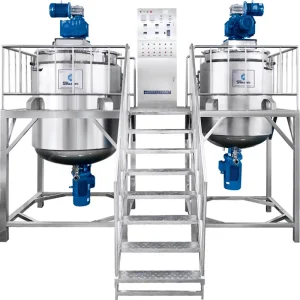
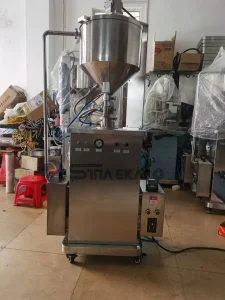
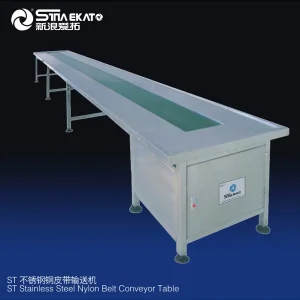
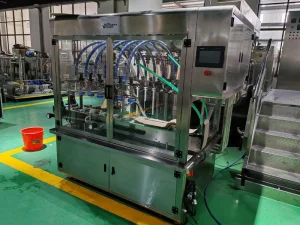
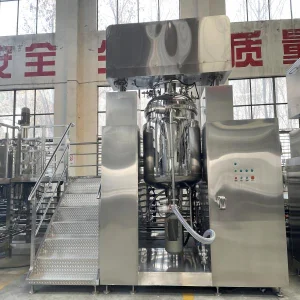
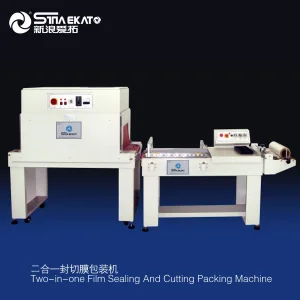
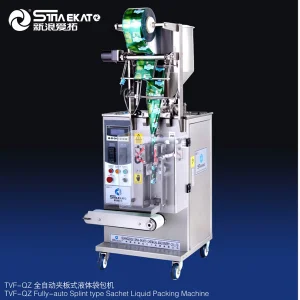
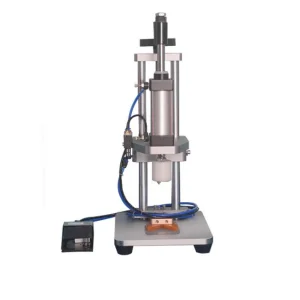
Explore our top-performing industrial liquid-washing, mixing, filling, and packaging systems engineered for global standards.
An in-depth analysis of kinetic particle motion, chaotic trajectories, and dispersion kinetics.
In modern powder processing across food, pharmaceutical, and precision chemical industries, achieving high homogeneity remains a central engineering challenge. Traditional mixing mechanisms—such as V-mixers, double-cone blenders, and ribbon mixers—rely primarily on convective transport or shear planes along simple rotational axes. While effective for simple formulations, these systems frequently encounter segregation challenges. Heavy particles drift to the bottom, fine particles accumulate in low-velocity zones, and centrifugal forces cause component isolation, leaving dead zones that compromise batch quality.
The Industrial 3D Three-Dimensional Food Powder Mixer (often called a multi-directional rotation blender) operates on kinematic principles that combine rotation, translation, and inversion. The mixing barrel is suspended by two cardan-joint drive shafts that permit full, multi-axial movement. Rather than spinning around a fixed line, the vessel undergoes a continuous, complex motion path defined by three spatial coordinates.
The combination of translation, inversion, and rotation generates a continuous chaotic flow inside the vessel. Centrifugal segregation is eliminated as particles are constantly redirected, ensuring uniform distribution across different particle sizes and densities.
While standard tumbling mixers require a limit of 40% to 50% filling volume to permit cascading, 3D rotation blenders operate efficiently at up to 85% charging capacity, increasing throughput per footprint unit.
By relying on bulk motion dynamics instead of high-shear mechanical blades, the physical structure of delicate spray-dried powders, fragile crystals, or organic flakes is preserved without heat generation.
During the cycle, the material shifts through three primary phases: convection (bulk displacement), diffusion (particle distribution across newly formed surfaces), and shear (particle layer sliding). The absence of centrifugal force keeps gravity-induced sorting to a minimum, enabling consistent blending of materials with mismatched bulk densities, such as heavy metal oxides and light starch powders.
Demanding compliance for sterile lab environments, high-throughput food installations, and chemical synthesis.
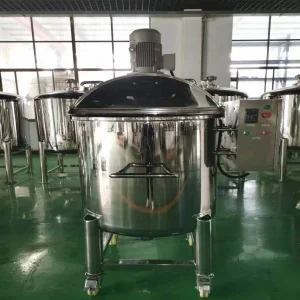
For pharmaceutical processing, baby formula production, and cleanroom lab operations, the material design of the mixing vessel is a critical factor in quality control. SINA EKATO mixers are built using high-grade austenitic stainless steel (SS304 or SS316L) to prevent contamination, withstand chemical corrosion, and support clean-in-place (CIP) protocols.
To verify compliance with global safety standards, systems undergo strict testing. This includes surface roughness verification, weld quality inspections using non-destructive dye-penetrant methods, and performance verification to meet FDA and GMP guidelines.
Examining automation requirements, safety integration, and the growth of batch processing.
As manufacturers face rising labor costs and stricter quality audits, industrial mixing processes are shifting toward automated, dust-free operations. Global demand shows a strong preference for closed-loop production chains, which minimize operator exposure to fine powders and protect formulations from environmental contamination.
To meet these needs, manufacturers are adopting vacuum conveyance systems that load powders directly into the mixer, along with automated pneumatic discharge valves that feed materials to downstream packaging lines. Additionally, explosion-proof components (such as ATEX/IECEx certified motors and control panels) are increasingly requested for environments handling combustible dust, such as sugar, starch, or organic chemical compounds.
At the laboratory scale, versatility is the primary driver. R&D centers require smaller mixers with interchangeable vessels (ranging from 0.5L to 15L) to test multiple formulations sequentially. SINA EKATO accommodates this by developing modular drive assemblies that secure different canister sizes, helping labs scale up to industrial production with consistent parameter mapping.
Tracing 30+ years of high-performance machinery manufacturing, global supply chains, and international projects.
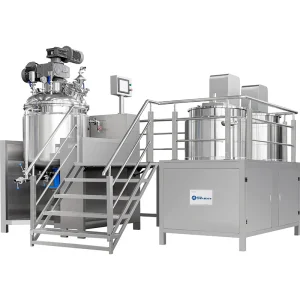
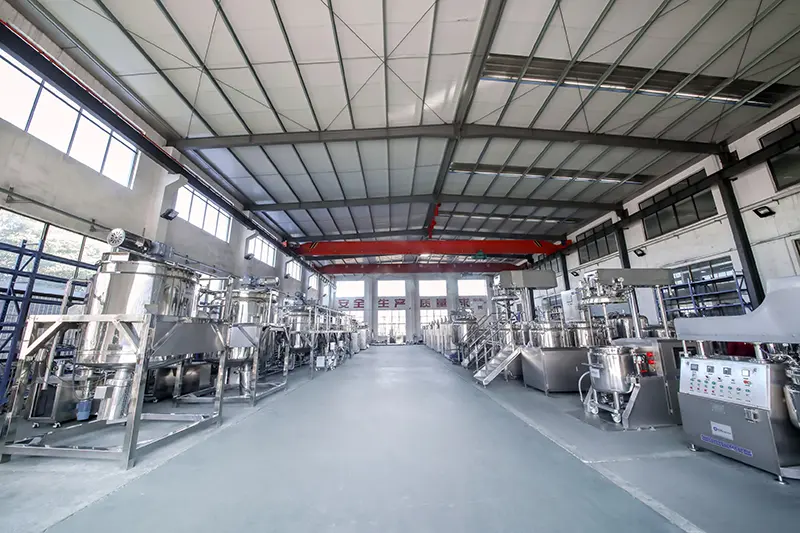
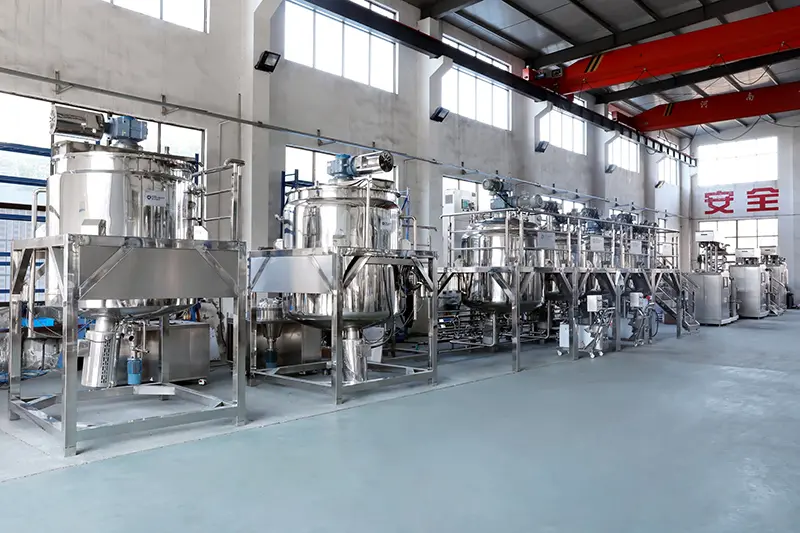
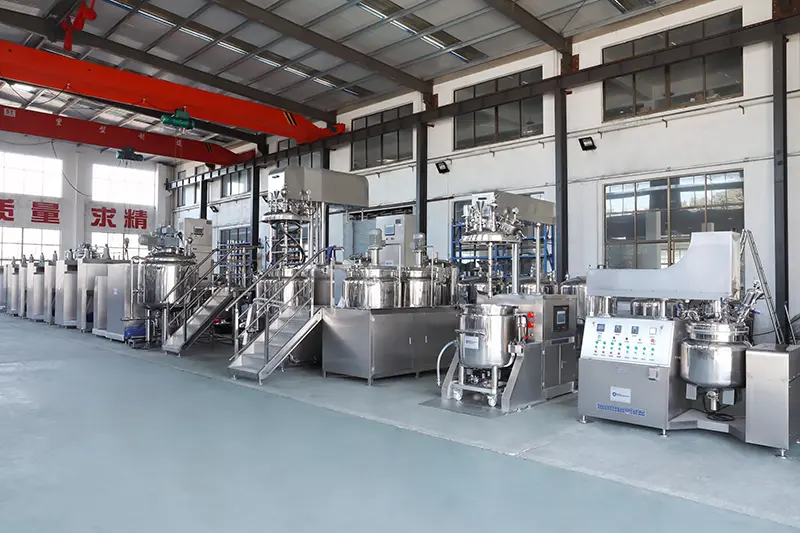
SINAEKATO, established in 1992, is a leading machinery brand in China with over 30 years of engineering experience. The company provides complete processing lines, including Vacuum Emulsifying Mixers, Liquid-washing Homogenizers, Perfume Chiller Production Lines, Toothpaste Mixers, semi-automatic and fully-automatic Filling Machines, Storage Tanks, RO Water Treatment systems, and Labeling and Packaging lines. These systems support the cosmetic, pharmaceutical, food, and chemical industries.
Operating in approximately 55 countries, SINAEKATO employs 150 specialists at its primary manufacturing plant in China, supported by an international team for installation and commissioning. Approximately 80% of major machine components are sourced from globally recognized suppliers, ensuring reliability, long-term performance, and access to replacement parts.
First steps and foundational engineering engaged in the chemical machinery industry.
Guangzhou Sina Cosmetics Engineering Equipment Co., Ltd. was established to address cosmetic processing demands.
Established Hong Kong Hantao International Investment Co., Ltd. to support overseas capital development.
Gaoyou Sina Chemical Machinery Equipment Factory was established; Guangzhou Sina Cosmetics Engineering changed its name to Guangzhou Sina Chemical Machinery Co., Ltd.
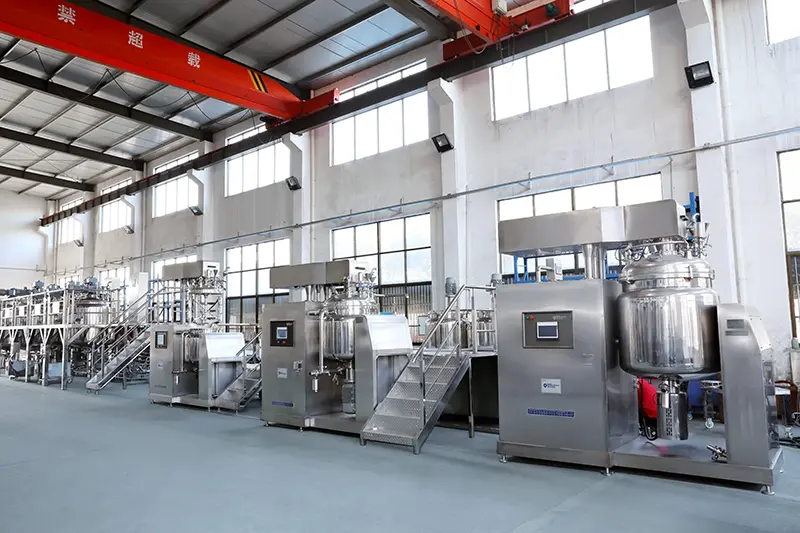
Established Gaoyou Sina Light Industry Machinery Equipment Factory to expand local production capability.
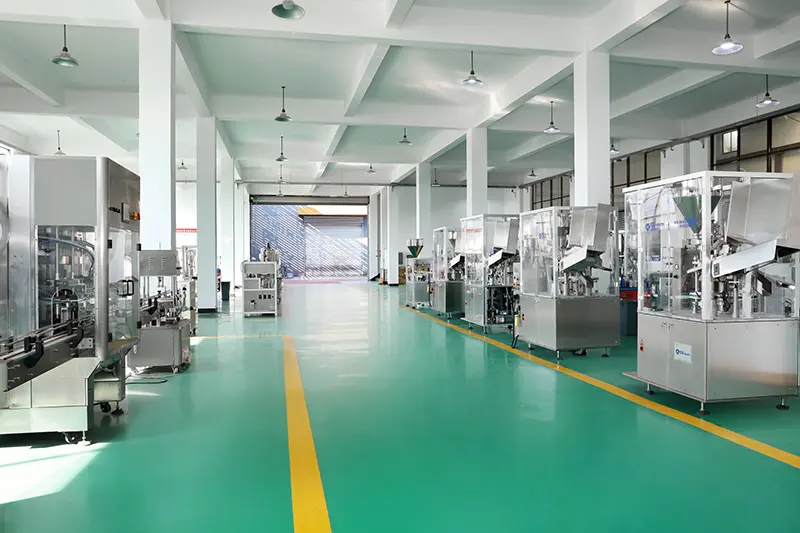
Purchased 10,000 square meters of land in Gaoyou; the new processing plant, SINA EKATO CHEMICAL MACHINERY CO., LTD (GAOYOU CITY), began operations.
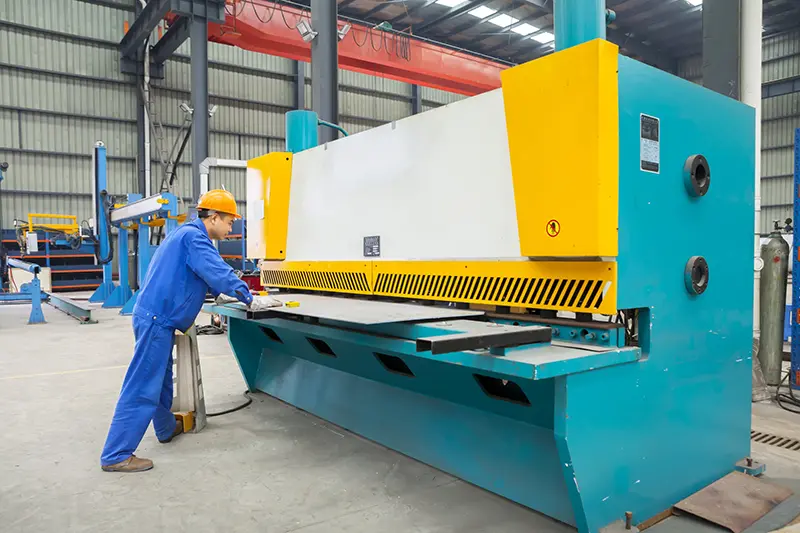
Established Yangzhou Hantao Chemical Machinery Co., Ltd. to support mechanical development and regional supply.
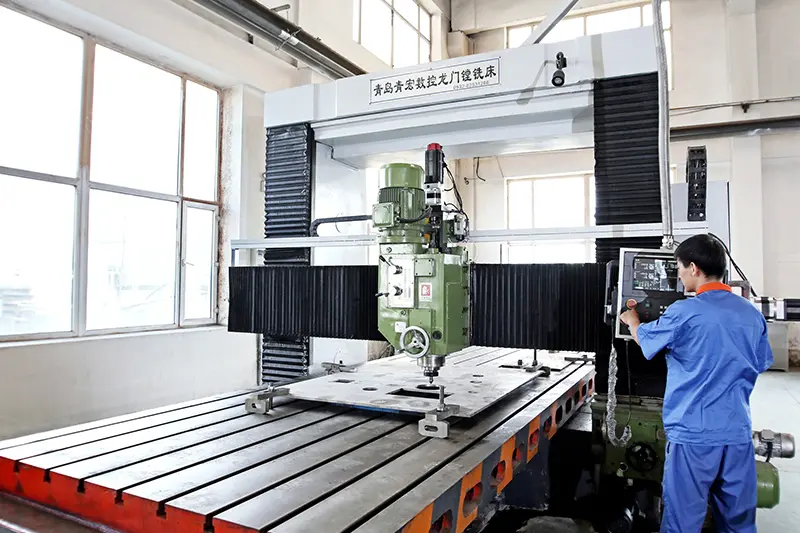
Acquired Guangzhou Jingcheng Machinery, established a large-scale exhibition center, and expanded export sales channels.
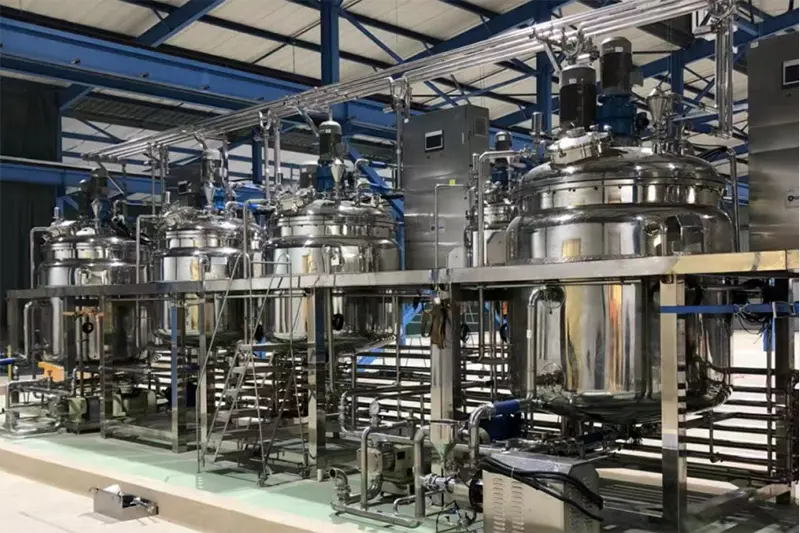
Renamed Guangzhou Sina Chemical Machinery Co., Ltd. to Guangzhou SINAEKATO Chemical Machinery Co., Ltd.
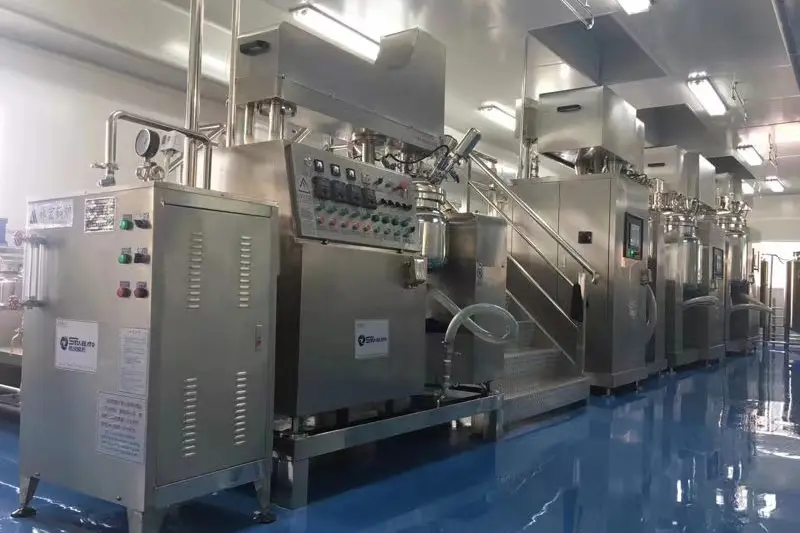
Acquisition of Guangzhou Suogao Machinery Equipment Co., Ltd. to broaden the technical portfolio.
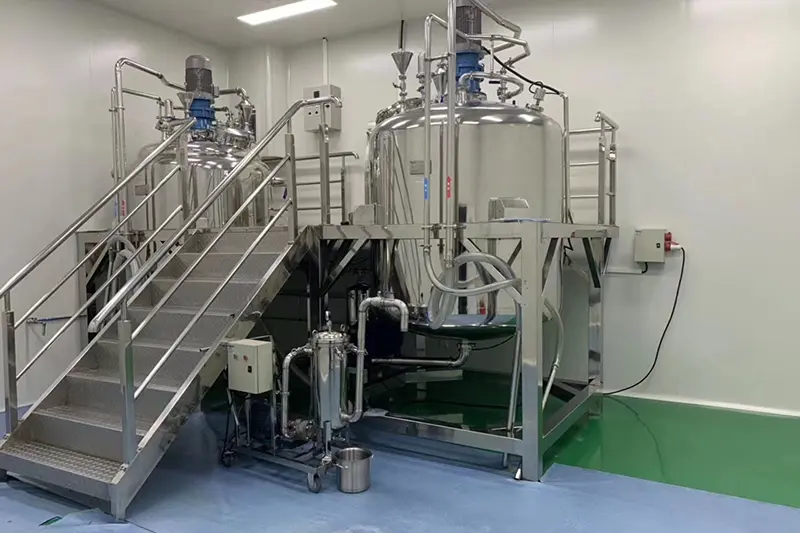
Established SINA EKATO CHEMICAL MACHINERY CO., LTD (GAOYOU CITY) as the corporate Headquarters for Production, Sales, and After-Sales Service.
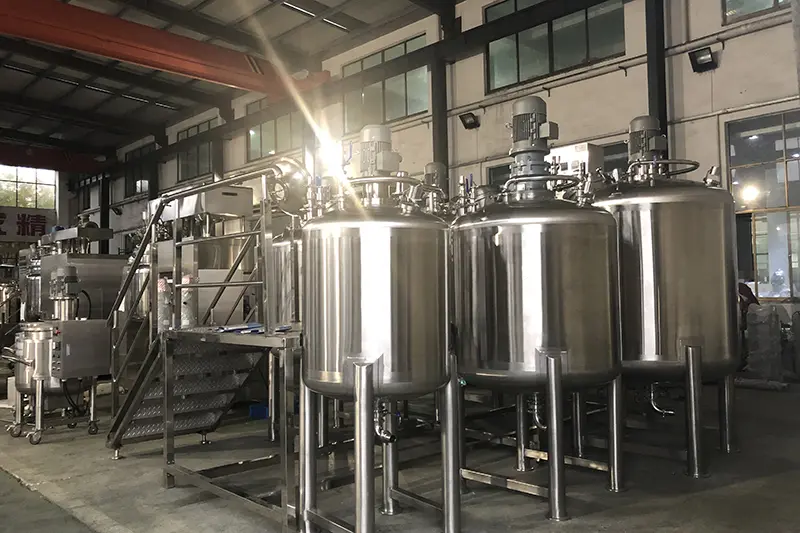
Established SINA EKATO Equipment (Jiangsu) Co., Ltd. to support international partnerships and technological exchange.
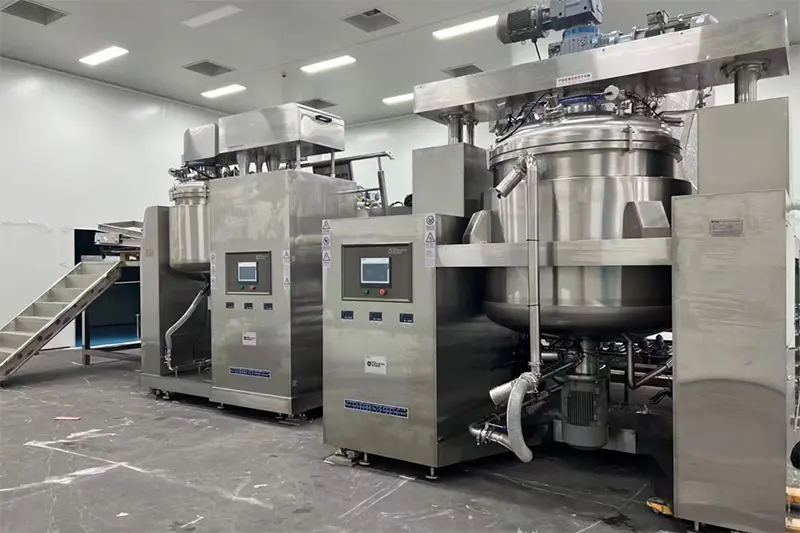
Collaborated with European group FLEMAC to establish Germany SINAEKATO Group Co., Ltd., introducing European standards to the manufacturing pipeline.
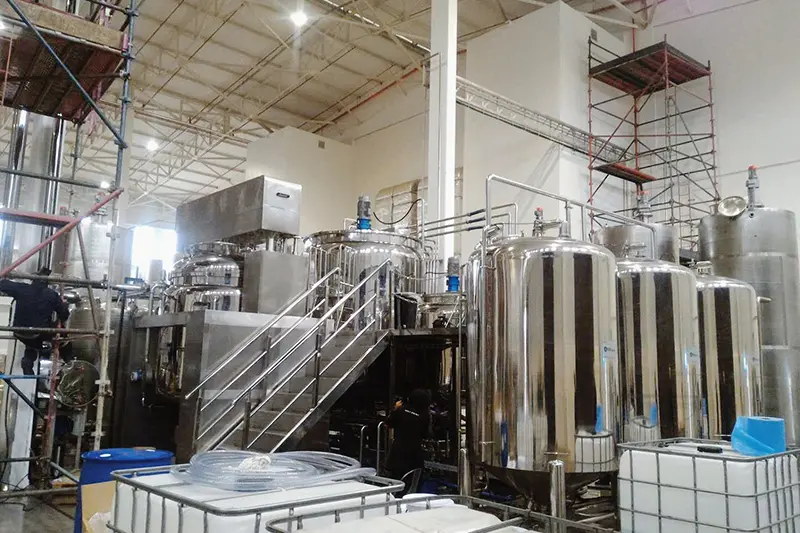
Partnered with Unilever South Africa on a cosmetic project ($800,000 order); collaborated with SK-II/Shiseido OEM partners on cosmetic machinery contracts ($1,500,000 order).
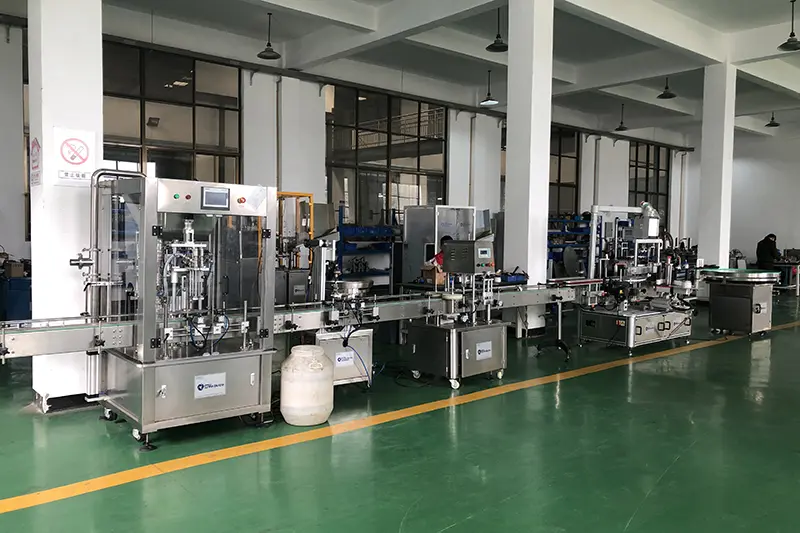
Delivered automated liquid detergent washing systems for major Japanese brands, completing orders valued over $1,000,000.
Key technologies shaping the future of industrial batch mixing and powder processing.
The mixing systems of the future are shifting toward real-time parameter tracking and data integration. The goal is to move from set-time cycles to active-sensing processes, where mixing continues until the batch reaches target homogeneity.
Near-Infrared (NIR) spectroscopy sensors can now be integrated directly into the mixing vessel. By monitoring spectral reflectance through a sapphire window, the system tracks real-time concentration variations of active ingredients. Mixing stops automatically once the target standard deviation is reached, reducing cycle times and preventing over-processing.
Additionally, modern systems utilize variable frequency drives (VFD) linked to PLC controllers, allowing operators to program multi-stage speed profiles. Slow, gentle intervals can be set for initial loading, followed by high-velocity multi-directional rotation for dispersion, and a slow cycle for discharge, helping protect materials from mechanical degradation.
Features dust-tight, explosion-proof enclosures for zones handling volatile organic starches, sugars, or fine chemical powders.
Supports OPC-UA protocols, allowing integration with manufacturing execution systems (MES) for batch logging and traceability.
Lab units feature quick-clamp mechanisms to swap drums easily, speeding up formulation testing for varying batch volumes.
Ensuring operational reliability through certified manufacturing and localized technical support.
A key component of SINAEKATO's equipment performance is the selection of drive and control components. Roughly 80% of critical parts—such as motors, gear reducers, PLC modules, and electrical components—are sourced from leading global suppliers, including Siemens, ABB, Schneider Electric, and Omron. This global sourcing model simplifies parts replacement and maintenance for operations worldwide.
In terms of compliance, SINAEKATO equipment is certified to meet CE standards, along with specific local regulations like ATEX in Europe and UL/CSA in North America. Every system is shipped with a comprehensive documentation package, including material test reports, weld maps, roughness verification logs, and wiring diagrams to facilitate installation and commissioning.
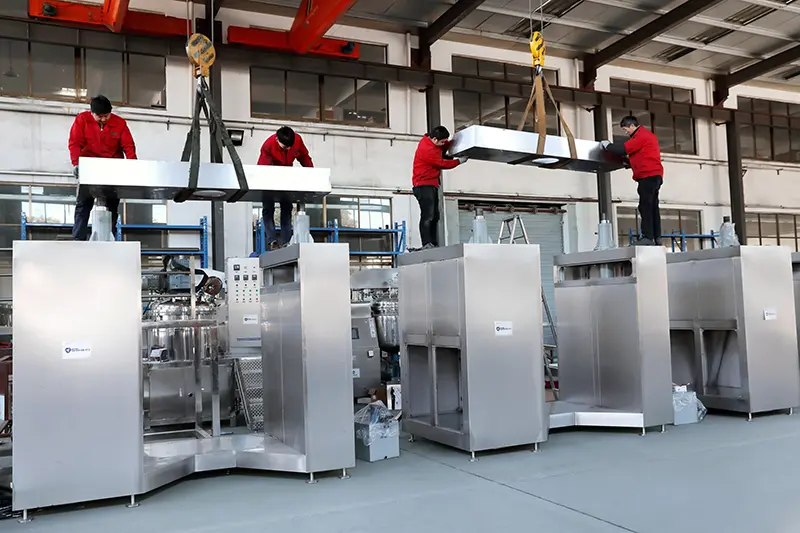
Our support teams manage the process from installation through start-up and operator training. Remote diagnostics capabilities allow our engineers to troubleshoot PLC systems online, reducing down-time and maintaining production schedules.
Addressing design variations, maintenance protocols, and processing parameters for 3D mixers.
Complete your processing setup with our high-performance emulsifiers, packaging machines, and storage options.
 Sina Ekato