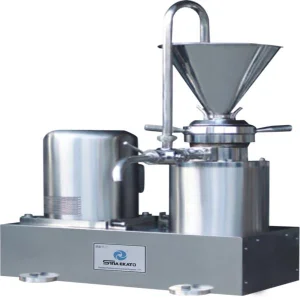
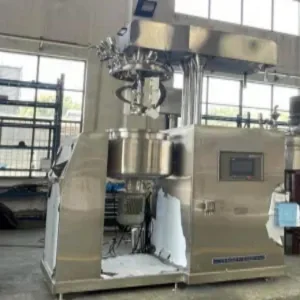
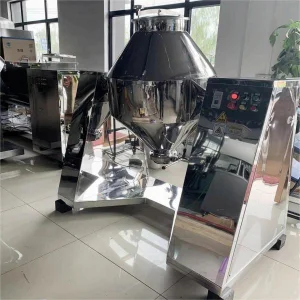
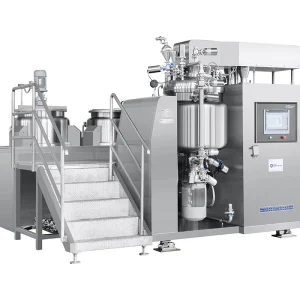
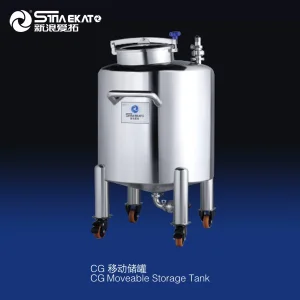
Explore our selection of CE-certified mixing, dispersing, and packaging solutions engineered for cosmetics, food processing, pharmaceuticals, and allied chemical sectors.
In the processing of highly viscous fluids—ranging from industrial printing inks, electronics packaging pastes, cosmetics, and specialty dental materials—conventional impellers fail to deliver the requisite particle size reduction. This is where three-roll mills (also known as triple roll grinders) serve as the gold standard.
The fundamental principle behind three-roll grinding relies on the differential speed of three horizontally mounted, adjacent rollers rotating in opposite directions. The feedstock is placed between the feed roll and the center roll. Due to the rapid differential speed, the material is drawn into the narrow gap where it is subjected to immense hydraulic shear forces.
As the material travels onto the center roll, it encounters the apron roll, which rotates at a significantly higher speed (often in a ratio of 1:3:9). This second gap, typically set narrower than the first, exerts an even higher rate of shear stress. The final dispersion is continuously scraped off the apron roll by a knife blade, yielding an incredibly homogeneous paste with sub-micron particle distribution.
High-performance three-roll grinders utilize rolls composed of centrifugally cast chilled iron (or alloy steel) to guarantee high surface hardness (typically HRc 60-65) and exceptional thermal conductivity. For contamination-sensitive processes (such as pharmaceutical and premium electronic silicones), alumina or zirconia ceramic rollers are deployed.
To achieve high information gain for technical buyers, we outline the mathematical relationship governing three-roll mills:
How procurement managers, plant engineers, and operations directors evaluate triple roll mill manufacturers in the era of supply chain realignment.
European and North American buyers prioritize compliance above all else. CE certification guarantees adherence to Machinery Directive 2006/42/EC, Low Voltage Directive 2014/35/EU, and Electromagnetic Compatibility (EMC) Directive 2014/30/EU. In volatile environments handling solvent-based inks, ATEX explosion-proof compliance is non-negotiable.
Modern manufacturing plants rely heavily on centralized control systems. High-end procurement demands PLC units (such as Siemens or Allen-Bradley) featuring Profinet or Modbus interfaces, allowing real-time monitoring of roller speed, temperature, torque, and automatic gap correction to feed directly into SCADA systems.
Beyond the initial capital expenditure, technical buyers analyze long-term wear characteristics. Rollers that can be repeatedly reground without losing their hardened layer drastically reduce maintenance costs. Rapid-change scraper systems and simple washdown processes further minimize downtime during batch changeovers.
The global industrial landscape has undergone dramatic shifts. In response to fluctuating shipping dynamics and energy resource constraints, SINAEKATO has optimized its production protocols to champion China’s **Industry 4.0** standards. We leverage a robust local supply chain of high-grade steel, CNC machining components, and specialized foundry resources to guarantee prompt equipment turnaround.
However, resilience does not compromise quality. Over **80% of our machinery components** are sourced from world-renowned global brands, bringing together Chinese production speed and Western precision:
Our manufacturing facility in Gaoyou, Jiangsu houses cutting-edge horizontal boring mills and precision grinding centers. Every single three-roll mill goes through a rigorous multi-hour testing phase using industrial testing media to monitor thermal performance, roller run-out, and structural alignment before shipment.
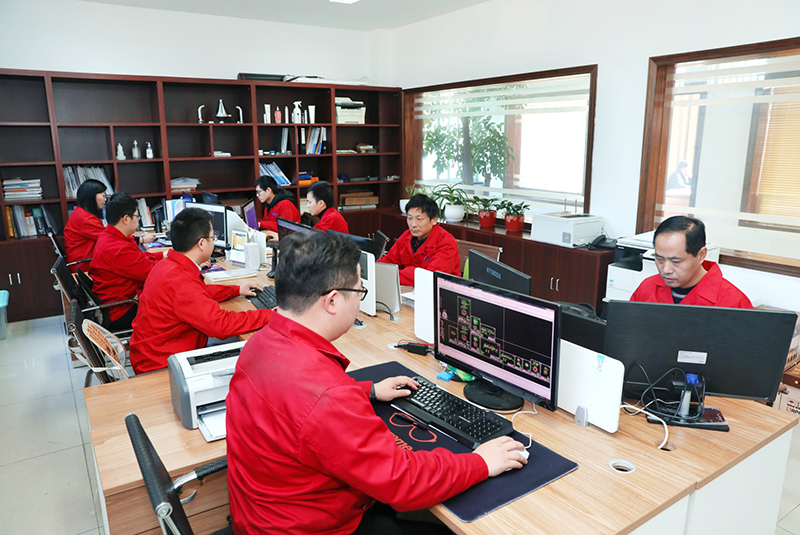
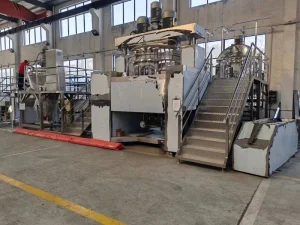
Inside the SINAEKATO heavy machinery workshop: Adhering to strict ISO 9001 and CE manufacturing standards.
Tracing our roots from local chemical engineering roots to our current standing as a global industrial machinery force partnered with giants like Unilever and SK-II.
Began foundational development and production within the domestic chemical machinery industry.
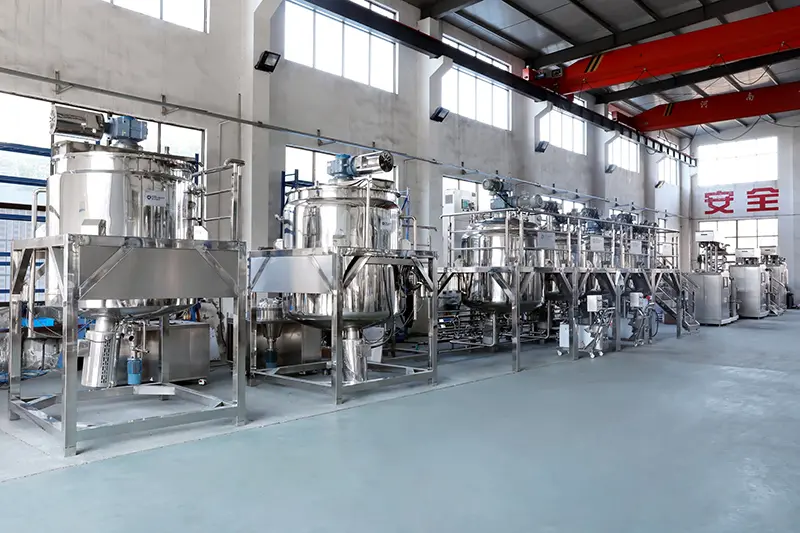
Guangzhou Sina Cosmetics Engineering Equipment Co., Ltd. was established to serve the cosmetic sector.
Established Hong Kong Hantao International Investment Co., Ltd. to initiate international trade relations.
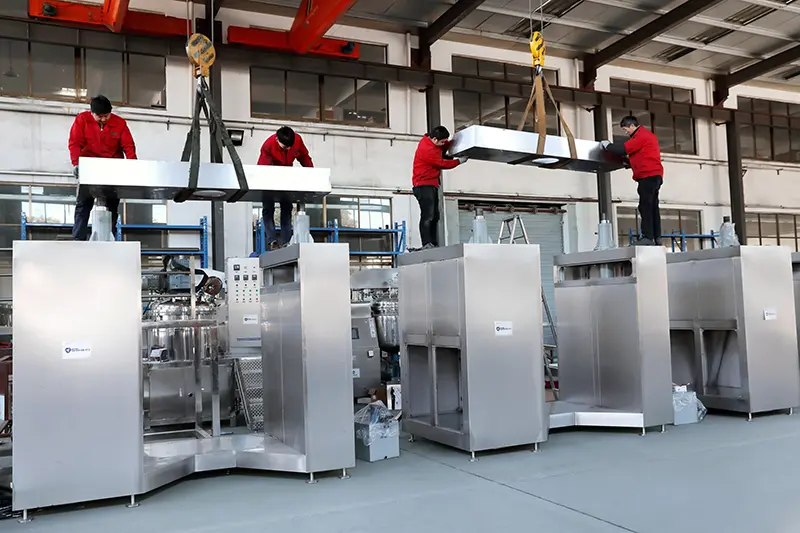
Gaoyou Sina Chemical Machinery Equipment Factory was established; Guangzhou headquarters renamed.
Established Gaoyou Sina Light Industry Machinery Equipment Factory to scale light industrial solutions.
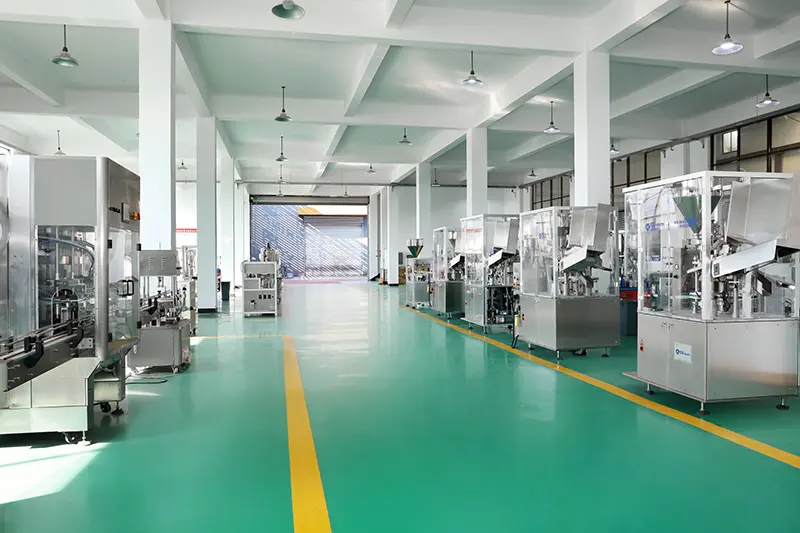
Acquired 10,000 sqm land in Gaoyou. A state-of-the-art production facility, SINA EKATO CHEMICAL MACHINERY CO., LTD, was put into operation.
Yangzhou Hantao Chemical Machinery Co., Ltd. was officially established to streamline regional supply lines.
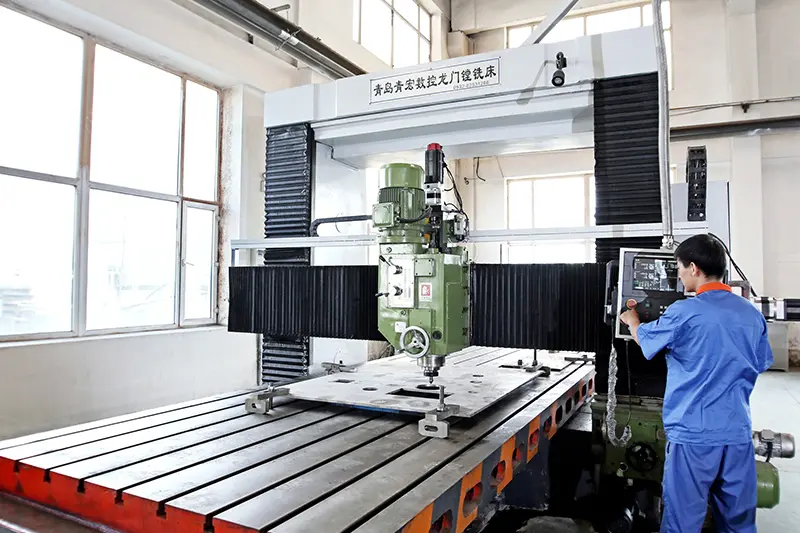
Acquisition of Guangzhou Jingcheng Machinery; Established our main exhibition center and launched extensive global export sales routes.
Guangzhou Sina Chemical Machinery Co., Ltd. was officially renamed to Guangzhou SINAEKATO Chemical Machinery Co., Ltd.
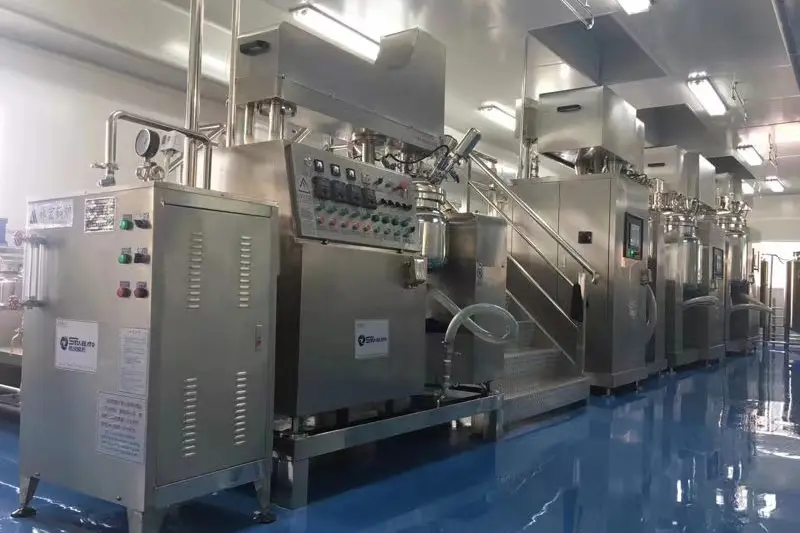
Acquired Guangzhou Suogao Machinery Equipment Co., Ltd. to expand vacuum homogenizing capabilities.
Consolidated SINA EKATO CHEMICAL MACHINERY CO., LTD (GAOYOU CITY) as global Production, Sales & Support HQ.
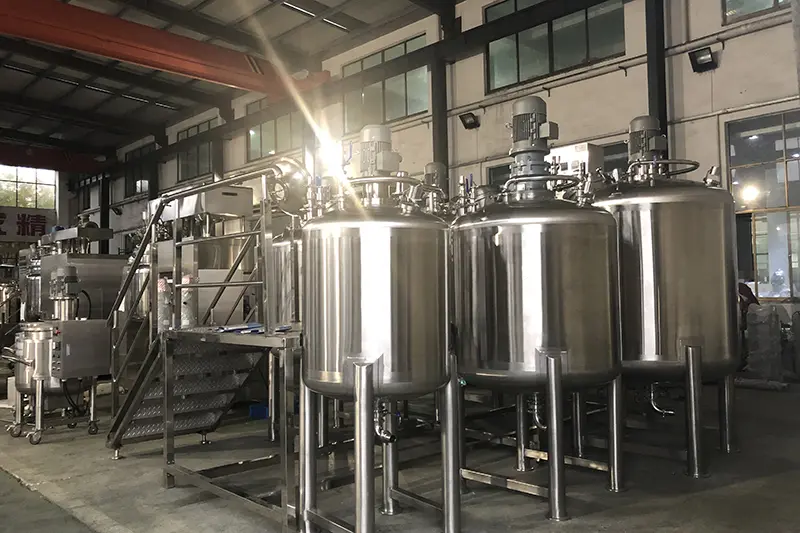
Established SINA EKATO Equipment (Jiangsu) Co., Ltd. to capture high-growth foreign investment projects.
Formed joint alliance with Europe FLEMAC, establishing Germany SINAEKATO Group Co., Ltd. in Europe.
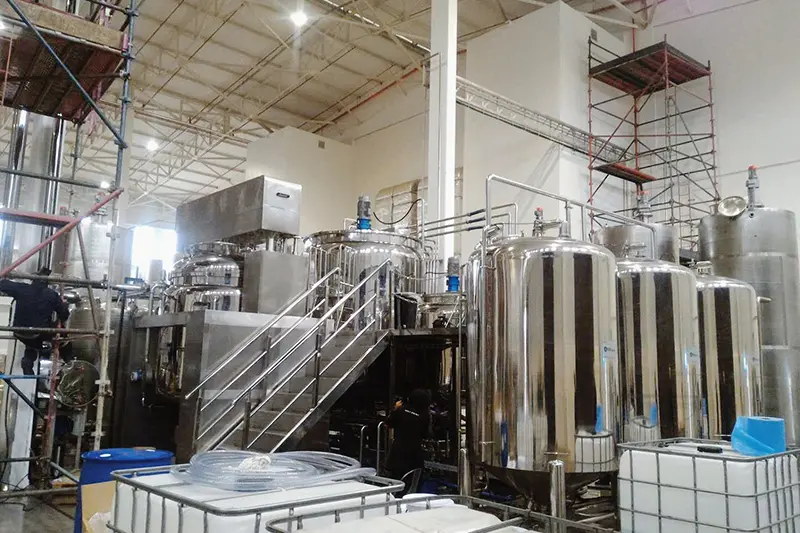
Cooperated with Unilever South Africa ($800k cosmetics project) and Japan SK-II / Shiseido OEM ($1.5M high-grade mixing system project).
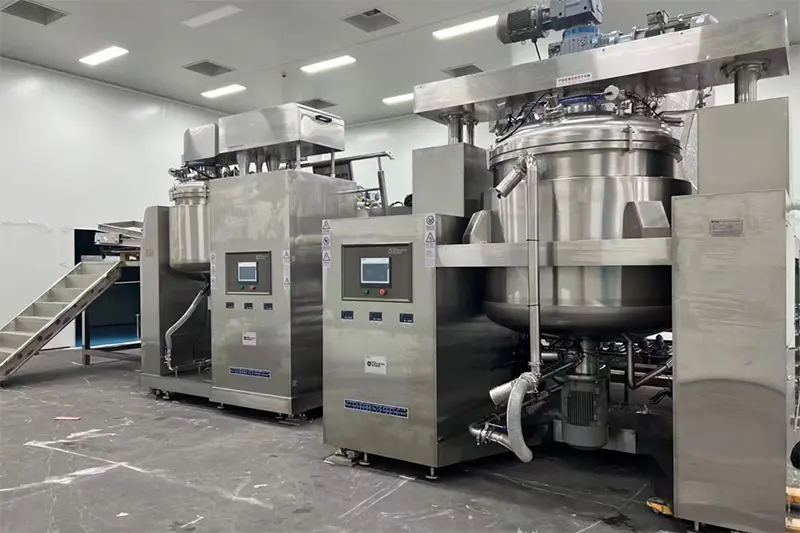
Expanded into liquid-detergent lines with a $1.0M project delivery for Japanese high-viscosity formulation clients.
How our three-roll mill solutions are adapted across diverse processing sectors to meet strict regional regulatory standards.
In cosmetic laboratories and factories, the dispersion of solid pigments in base creams is critical. Our three-roll mills eliminate agglomerates in lipsticks, sunscreens, foundations, and high-end makeup bases without structural heating, preserving active skincare compounds.
Advanced electronics inks (like silver and copper conductive pastes) require roll gaps below 2 microns to prevent clogging printer printheads. SINAEKATO’s three-roll mills are tailored with ultra-precise gap adjusters to provide uniform pigment wet-out and viscosity control.
Ointments and dental composites require non-reactive surface processing. We deliver GMP-compliant triple roll mills featuring pharmaceutical-grade alumina and zirconia ceramic rollers. These prevent metal contamination while maintaining chemical resistance to organic compounds.
Detailed answers from our head engineering team to help you navigate specifications, configuration, and safety compliance.
CE Certification ensures the equipment complies with the European Economic Area's safety, health, and environmental standards. For three-roll grinders, this covers three critical directives:
Selection depends on your feed formulation:
The three rollers are bored hollow. Coolant (chilled water or cooling glycol solution) or heating fluid is pumped through rotary joints located at the shafts. High shear creates extreme friction, especially with high-viscosity pastes. An integrated temperature control unit (TCU) monitors the discharge temperature and modulates water flow dynamically to maintain the product within safe temperature limits, preventing chemical denaturation or premature drying.
Manual grinders rely on handwheels and dial indicators to align and compress the rollers. This is highly reliable and cost-effective for medium batches but relies on operator skill. Hydraulic adjustment uses precision electronic sensors and pressure transmitters. The operator inputs the desired compression or gap value on the PLC touchscreen, and the hydraulic actuators dynamically adjust the position to ensure constant pressure and perfect roller parallelism across the entire face width.
We export to over 55 countries. All machines are packed in seaworthy, export-grade vacuum-sealed wooden cases to prevent corrosion during sea freight. We provide full commissioning documentation (IQ/OQ protocols for pharma clients). In addition, our field engineers and our German division (Germany SINAEKATO Group Co., Ltd.) offer localized European commissioning, operator training, and high-priority spare part delivery.
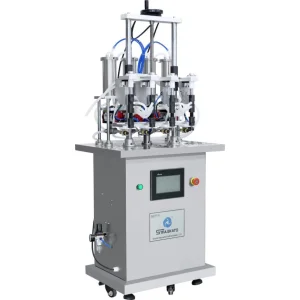
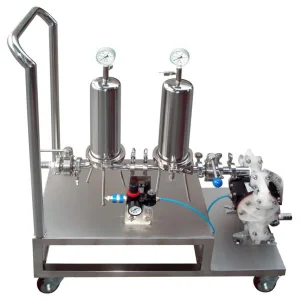
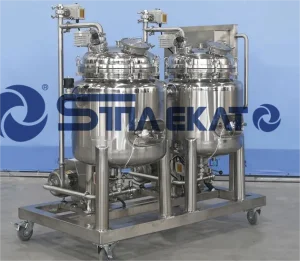
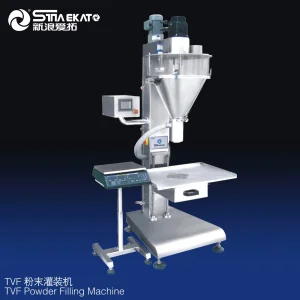
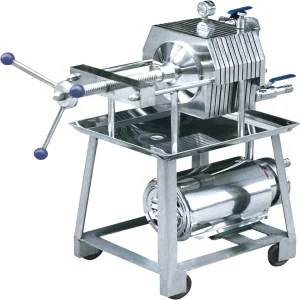
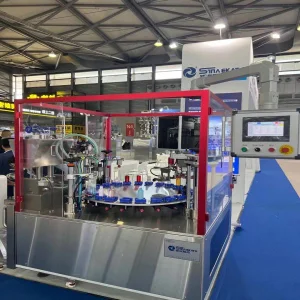
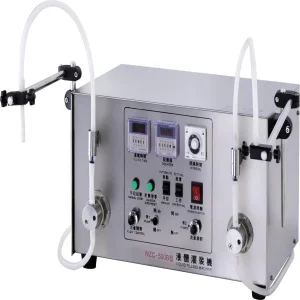
SINA EKATO offers comprehensive line layouts, supporting your process from raw material emulsification all the way to automatic powder and liquid filling.
 Sina Ekato