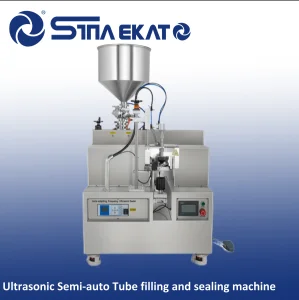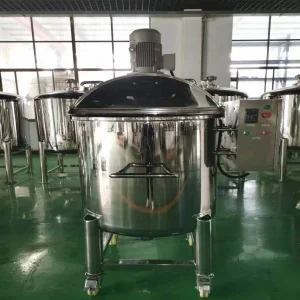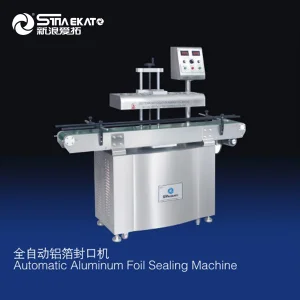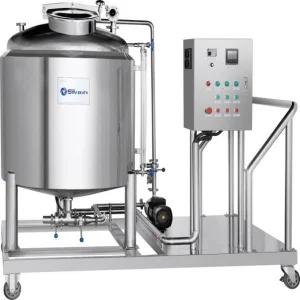
Cosmetics manufacturing is an domain governed by strict consistency tolerances, micro-precision filling requirements, and complex liquid rheology. Among all cosmetic formulas, mascara cream presents some of the most formidable challenges to automated and semi-automatic packaging machinery. Mascara is a highly structured, high-viscosity paste consisting of pigments (primarily iron oxides), waxes (such as carnauba wax, beeswax, or paraffin), film-forming polymers, volatile solvents, and structuring agents. This complex material displays thixotropic and pseudoplastic flow behavior, meaning its viscosity decreases under shear stress, but returns to a thick, semi-solid state immediately when static.
"From a production standpoint, maintaining the exact temperature, pressure, and volumetric consistency of a thixotropic paste like mascara during transfer is the key to preventing micro-voids, weight fluctuations, and packaging failures. This is where advanced piston dosing and temperature-controlled jacketed storage hoppers become non-negotiable."
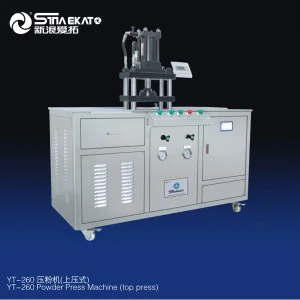
Standard chemical filling systems fail when dealing with mascara because they cannot handle the rapid crystallization of waxes inside the dosing valves or pump bodies. When temperature fluctuates by even 2°C, the viscosity of the mascara cream can shift by up to 30%, resulting in air pockets, incomplete filling of the narrow cosmetic vial, or drippage on the container rim. Modern manufacturers therefore demand specialized semi-automatic filling machines designed with precision heating elements, positive shut-off nozzles, and pneumatic or servo-driven piston metering modules.
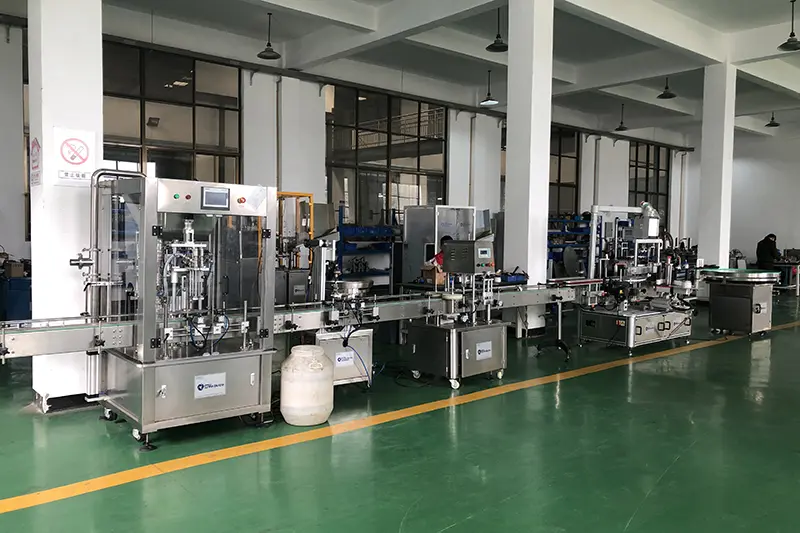
While fully automated filling lines (such as the SM-400 Automatic Mascara and Nail Polish Filling Machine) offer high throughput rates, semi-automatic machinery holds a crucial position in the modern manufacturing landscape. The B2B purchasing logic for choosing a semi-automatic variant centers on five main production metrics:
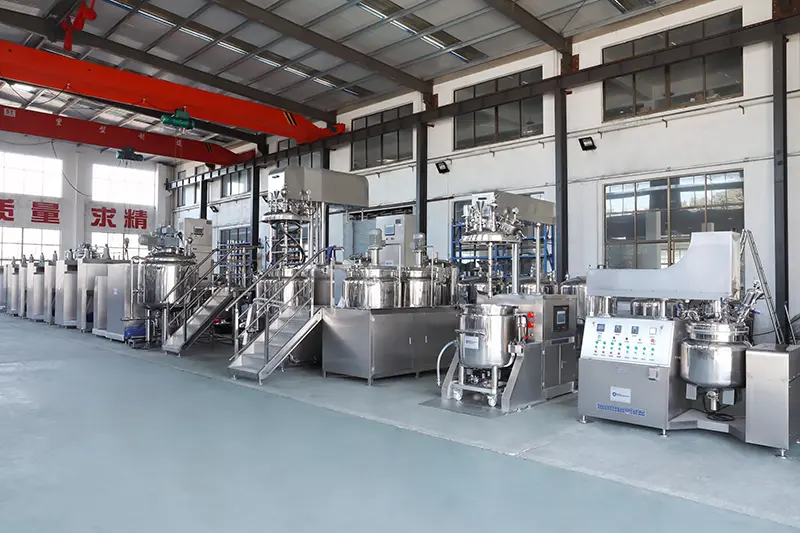
SINAEKATO, born in 1992, has dedicated over 30 years to the research, development, and manufacture of advanced machinery for skincare, cosmetics, pharmaceuticals, and food industries. Our core engineering philosophy is built around a singular premise: Science and technology are the primary productive forces. To ensure the performance, reliability, and precision of our filling machinery, 80% of our major components are sourced from globally renowned suppliers. This long-term industrial synergy allows us to integrate premier pneumatics, PLC controllers, sensors, and structural alloys into our production systems.
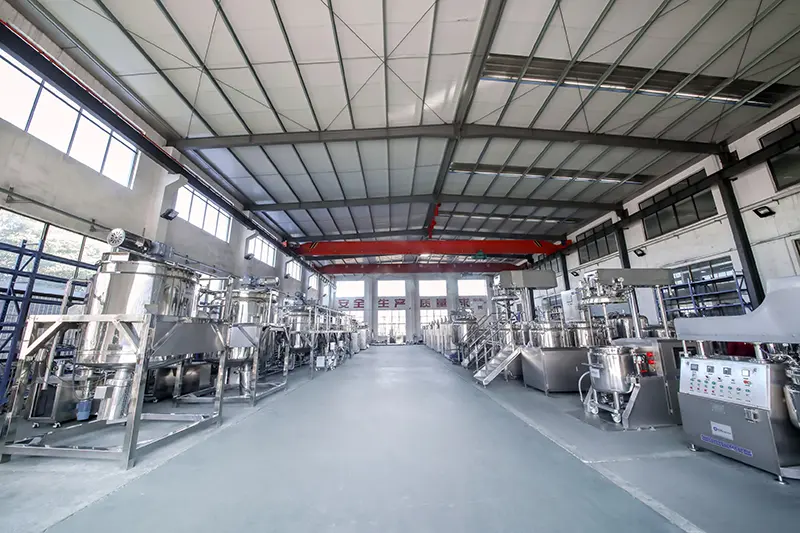
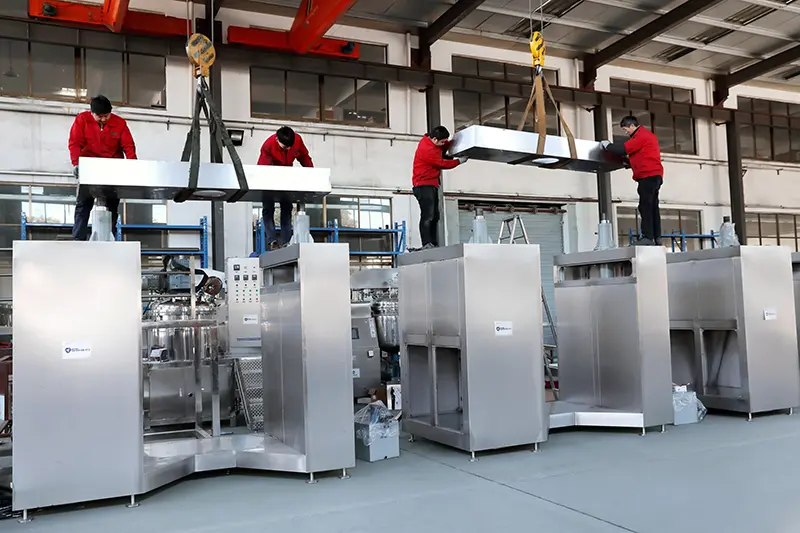
Our manufacturing facility in China employs around 150 skilled engineers, assembly technicians, and quality inspectors. To guarantee international quality standards, we maintain direct partnerships with industry giants. The reliability of SINAEKATO's machinery has led to high-value international projects, such as our $800,000 USD cosmetic production system integration for Unilever South Africa, and our $1,500,000 USD automated and semi-automated production lines engineered for premier Japan SK-II Shiseido OEM manufacturers.
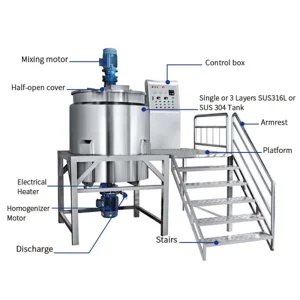
Our semi-automatic mascara filling systems are built as modular units. They feature standard SUS316L contact parts, sanitary tri-clamp fittings, and custom-designed rotary valves that handle sticky or highly viscous products without clogging. In addition, these machines are equipped with jacketed, hot-water heated hoppers with variable-speed agitators. This setup ensures that the mascara formula remains at its optimal processing temperature throughout the entire run.
Whether you run a laboratory-scale cosmetic development lab or a high-volume cosmetics manufacturing plant, our technical sales engineers will customize the nozzle configurations, cylinder dimensions, and pedal/button actuation configurations to perfectly integrate with your existing workforce capabilities.
Engaged in the chemical machinery industry, establishing primary metallurgical and casting techniques.
Guangzhou Sina Cosmetics Engineering Equipment Co., Ltd. was established to specialize in beauty and cosmetic process plants.
Established Hong Kong Hantao International Investment Co., Ltd., introducing global distribution and financing routes.
Gaoyou Sina Chemical Machinery Equipment Factory established; Guangzhou sister branch renamed to Guangzhou Sina Chemical Machinery Co., Ltd.
Established Gaoyou Sina Light Industry Machinery Equipment Factory to scale up the component production matrix.
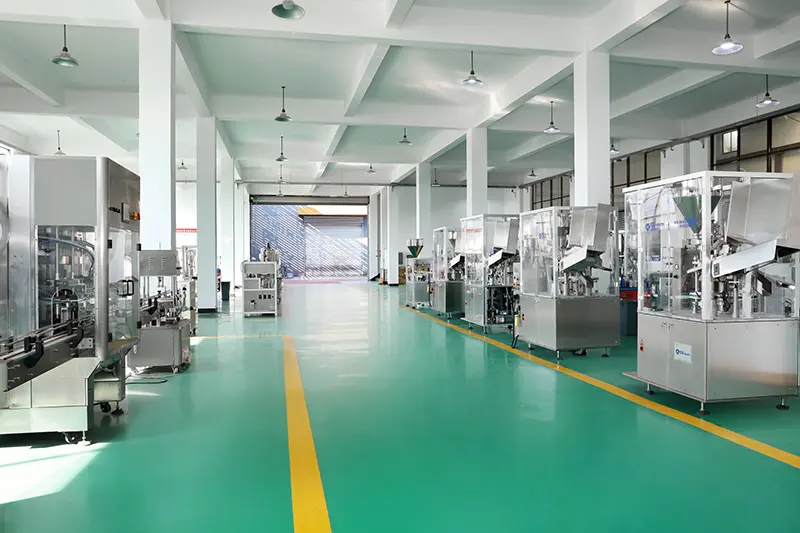
Purchased 10,000 sqm land in Gaoyou. SINA EKATO CHEMICAL MACHINERY CO., LTD (GAOYOU CITY) begins operation.
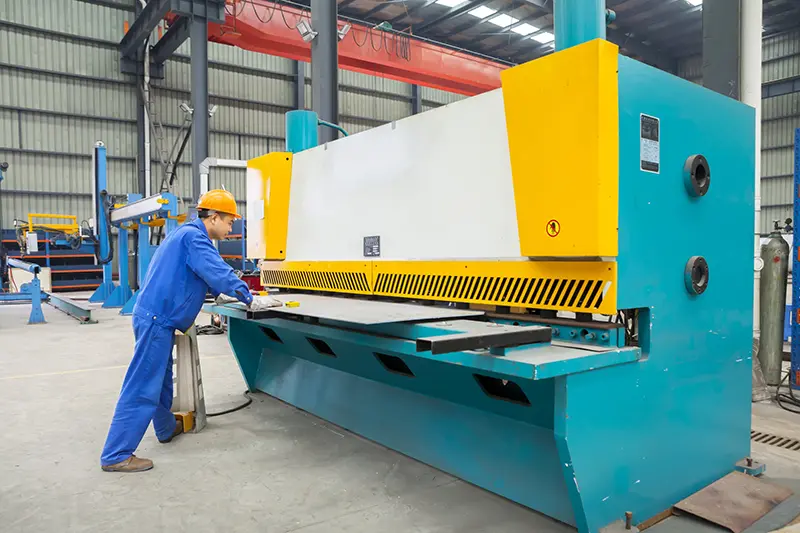
Established Yangzhou Hantao Chemical Machinery Co., Ltd. to optimize heavy mixing vessels engineering.
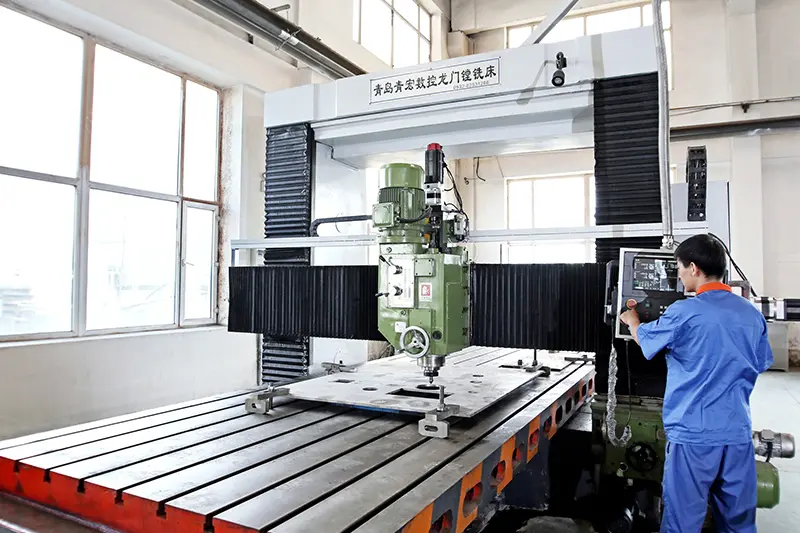
Acquisition of Guangzhou Jingcheng Machinery. Created our central machinery showroom and export routing division.
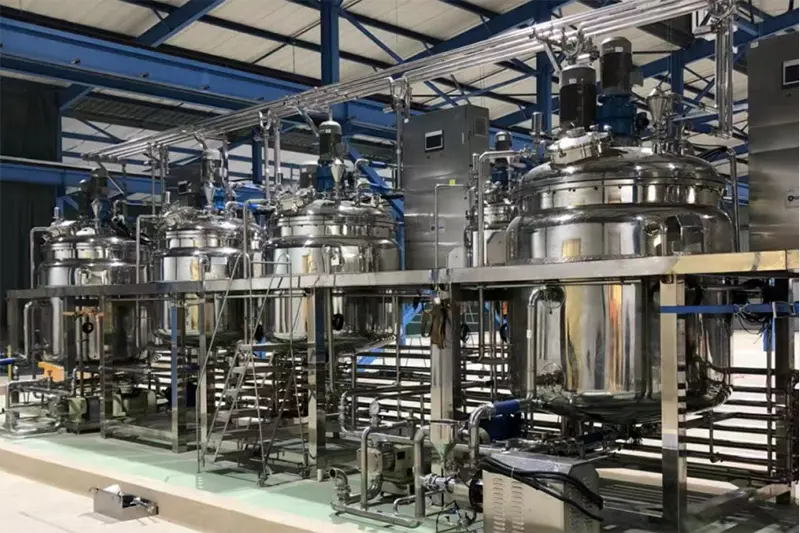
Guangzhou Sina Chemical Machinery officially renamed to Guangzhou SINAEKATO Chemical Machinery Co., Ltd.
Acquired Guangzhou Suogao Machinery Equipment Co., Ltd. to expand high-precision pneumatic valve engineering.
Designated SINA EKATO GAOYOU as headquarter for international sales, manufacturing, and global after-sales support.
Established SINA EKATO Equipment (Jiangsu) Co., Ltd. to secure major foreign manufacturing alliances.
Partnered with European standard-bearer FLEMAC to establish Germany SINAEKATO Group Co., Ltd.
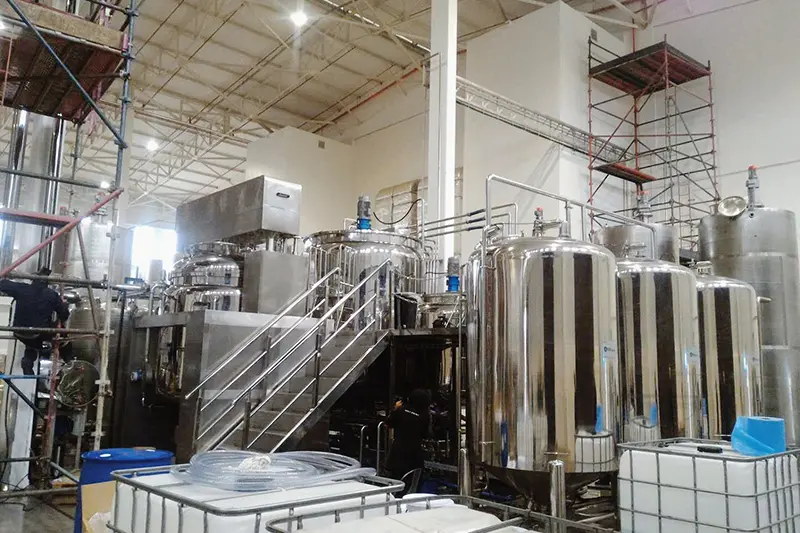
Delivered $800K cosmetic plant to Unilever South Africa and completed a $1.5M Shiseido OEM SK-II production line project.
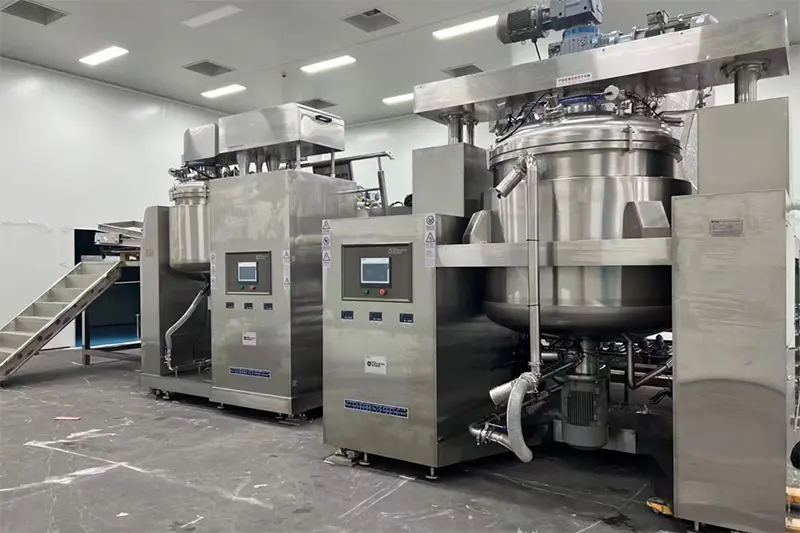
Executed $1,000,000 USD order for detergent and liquid washing plants bound for major Japanese cosmetics makers.
When evaluating suppliers for a Semi-Automatic Mascara Cream Filling Machine, B2B procurement officers should audit the system against strict mechanical benchmarks. At SINAEKATO, we engineer our filling systems to exceed these baseline expectations:
Utilizes custom honed pneumatic cylinders coupled with fine-pitch micro-meter adjustment spindles to ensure a repeatability variance of <0.5% by volume.
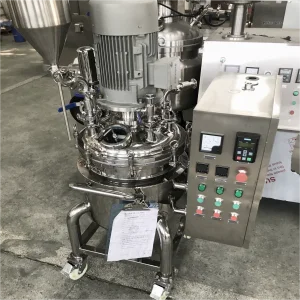
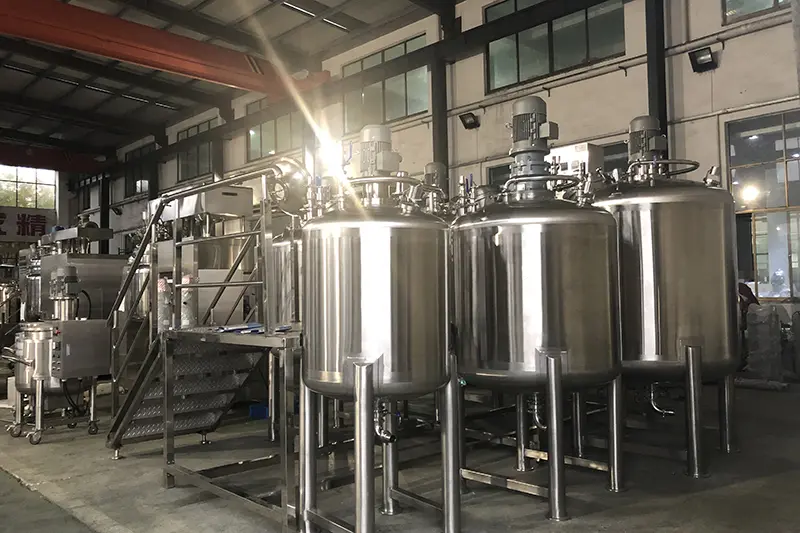
Configured with a double-layered SUS316L jacketed hopper. Water-circulated heat bands provide controlled heating up to 85°C to keep waxes at low viscosity.
Employs pneumatic positive-displacement cut-off nozzles. Sharp pneumatic snap-back action prevents stringing of high-elasticity mascara polymers.
Completely compliant with FDA, GMP, and ISO 22716 standards. Features toolless quick-release tri-clamp couplings for direct cleaning.
The integration of the dosing cylinder is particularly critical. If the cylinder seals cannot withstand the friction generated by thick mineral and iron oxide pigments, they will degrade, leading to product contamination. SINA EKATO utilizes premium reinforced PTFE or silicone scraper seals that resist the abrasive nature of cosmetic pigment slurries.
The cosmetic manufacturing sector is shifting rapidly. Brand dynamics are moving away from massive single-product runs toward limited editions, seasonal drops, and personalized beauty formulas. According to recent B2B market intelligence:
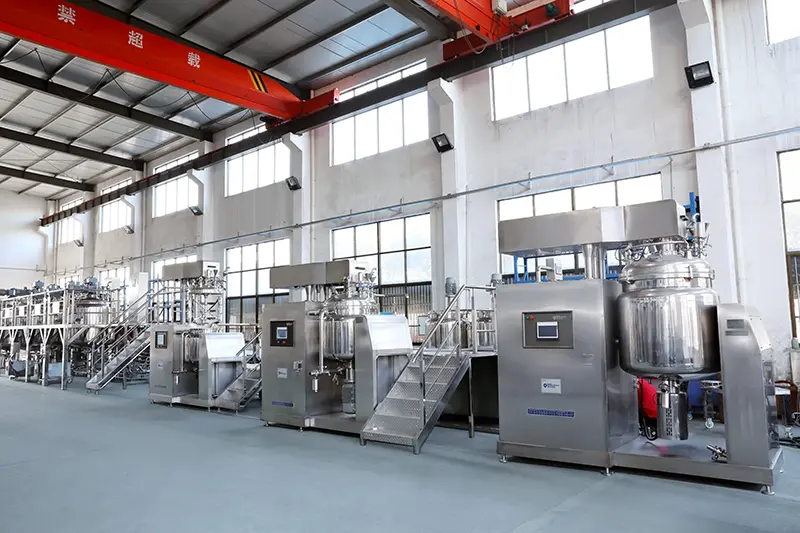
A semi-automatic filler is only as effective as the upstream compounding line feeding it. For maximum efficiency, we design our machinery as part of a complete, integrated process line.
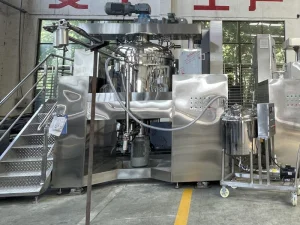
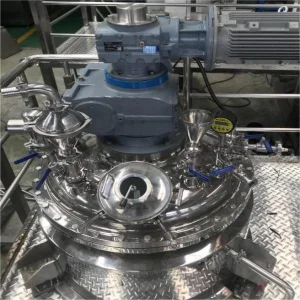
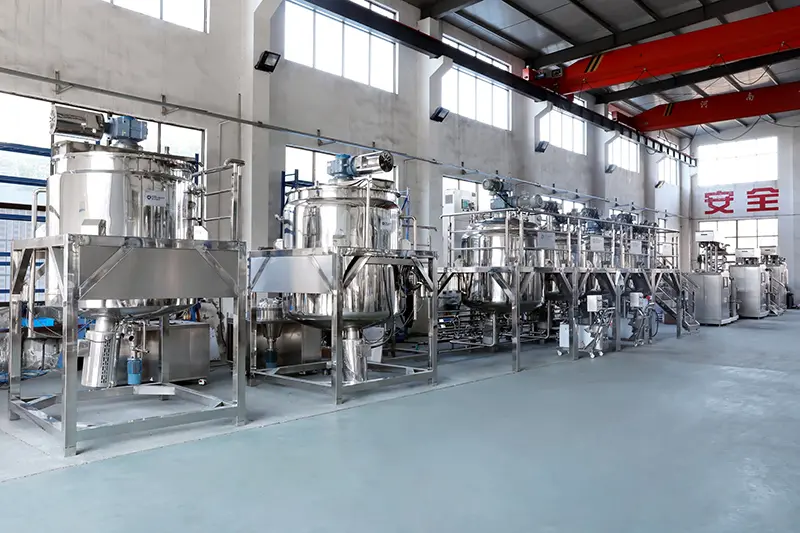
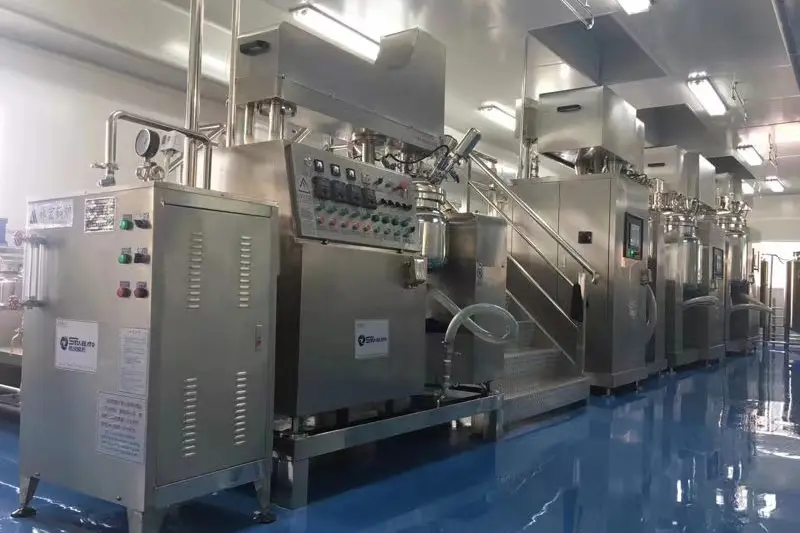
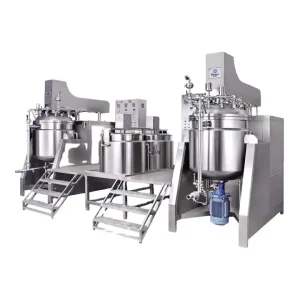
Upstream Compounding: Raw pigments and waxes are processed in our *Vacuum Emulsifying Mixers*. Homogenization reduces droplet sizes to sub-micron levels, preventing pigment agglomeration that could otherwise clog small filling nozzles.
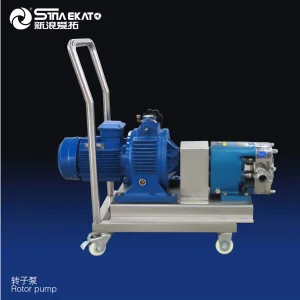
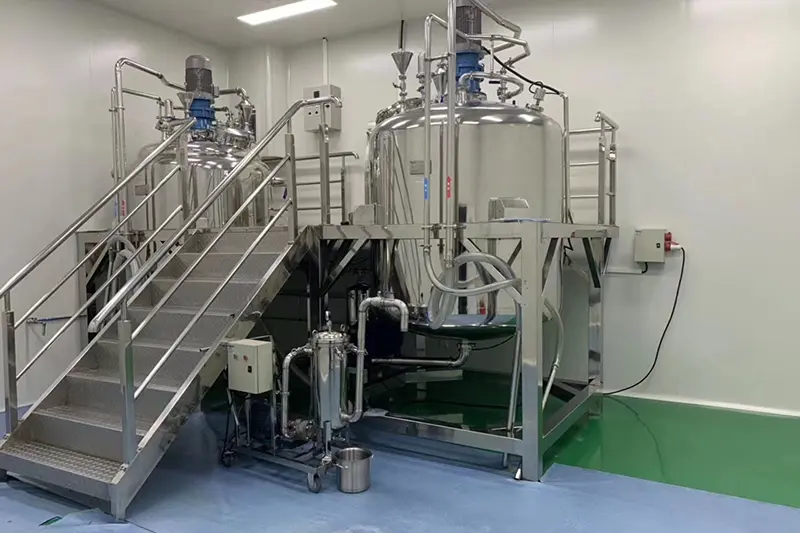
Sanitary Transfer: The finished mascara cream is transferred using our specialized *Rotary Lobed Transfer Pumps* or *Screw Pumps* into a mobile storage tank. These pumps are designed to transfer thixotropic materials without introducing high-shear damage or air bubbles.
Clean-In-Place (CIP) Protocols: A key aspect of our technical roadmap is ensuring compatibility with *CIP Cleaning Machines*. Our filling valves and manifolds can be connected directly to a sanitary CIP loop, allowing high-velocity cleaning solutions to sanitize all product contact zones without requiring manual disassembly.
We employ pneumatic positive cut-off nozzles with a blow-back or vacuum suction feature. This design draws any residual paste back into the nozzle orifice when the dosing stroke ends, preventing dripping or stringing on the container's threads.
Mascara formulations contain waxes (beeswax, carnauba) that solidify at room temperature. A double-jacketed heated hopper keeps the mixture above its melting point (typically 55°C–75°C), maintaining a flowable, consistent viscosity for accurate volumetric dosing.
Yes. Unlike automated lines that require custom puck transport systems, a semi-automatic filler relies on manual positioning or simple adjustable V-guides. This design accommodates irregular, cylindrical, square, or conical mascara tubes without requiring extra changeover parts.
All product-contact parts (dosing pump, hopper, nozzle, rotary valves) are constructed from certified SUS316L stainless steel. Non-contact structural elements are fabricated from SUS304 to ensure chemical resistance and GMP compliance.
Our volumetric piston pumps are driven by high-precision pneumatic cylinders with mechanical stroke-limiters. The volume is adjusted via an external handwheel with a digital indicator, ensuring repeatable dosing accuracy within ±0.5%.
Yes. We supply comprehensive documentation packages including Factory Acceptance Testing (FAT), Site Acceptance Testing (SAT) guidelines, and IQ/OQ validation protocols to assist in regulatory compliance.
Carbon black and iron oxides can wear down standard seals. We use specialized seals like reinforced PTFE and high-durometer Viton, combined with surface-hardened dosing cylinders, to resist abrasive wear and prevent product contamination.
Our semi-automatic pneumatic fillers require a clean, dry, compressed air supply of 0.4–0.6 MPa. The electrical controls and hopper heating elements run on standard 220V/380V (50/60Hz) power, customizable to local grid specifications.
 Sina Ekato