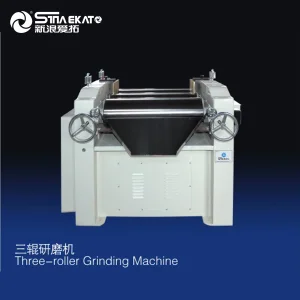
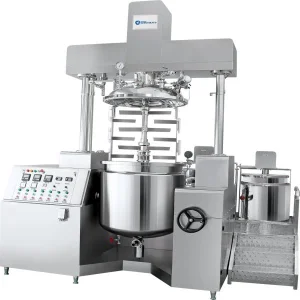
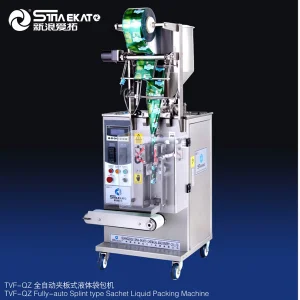
Explore our top-tier manufacturing lines featuring precision temperature control, homogenization, and automatic packaging systems.
The V-type mixing machine (also known as a V-cone blender) relies on gravity-driven convective and diffusive powder transport. Unlike high-shear mixers that rely on impellers which can generate heat and damage delicate structures, the V-blender's shell rotates around a horizontal axis. As the V-shaped cylinder rotates, the material undergoes continuous splitting and merging.
Symmetric rotation creates an alternating flow regime. The materials inside the two unequal or equal legs are split and then recombined, generating deep spatial homogeneity. For difficult-to-blend materials with similar particle sizes but highly disparate densities, or formulations where active ingredients form a minor percentage (e.g., <1% by weight), achieving uniformity without segregation is a complex optimization problem.
Optimization parameters like fill ratio (typically 40% to 50% of the total vessel capacity) and critical rotational speed determine the mixing kinetics. Exceeding the critical speed induces centrifugal forces, causing materials to cling to the walls and arresting the mixing process. Our designs balance these variables to ensure rapid blend times and low energy footprints.
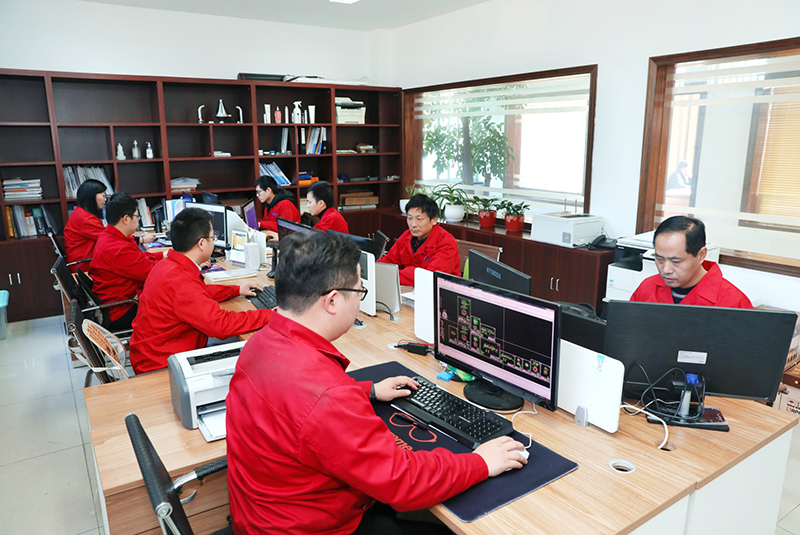
How next-generation process automation and cleanroom requirements are reshaping blending machinery engineering.
Integration of Near-Infrared (NIR) spectroscopy within the V-mixer vessel wall allows real-time monitoring of blend uniformity without halting the machine, optimizing production cycles.
Smart sensors trace rotation counts, bearing temperatures, and energy metrics, sending diagnostic data directly to manufacturing execution systems (MES) via OPC-UA.
To minimize operator exposure and airborne cross-contamination, modern V-type mixing machines utilize split-butterfly valves and vacuum conveying systems for dustless charging.
Navigating complex international standards, machinery validations, and application-specific configurations.
Modern pharmaceutical plants require comprehensive DQ, IQ, OQ documentation to comply with international regulations. Our mixing solutions are constructed using SS316L with inner contact surfaces polished to Ra < 0.4 µm to satisfy cleaning validation criteria.
Handling organic powders or dry active ingredients carries significant dust explosion risks. Integrating flame-proof motors, antistatic gaskets, and containment valves ensures safe operations in Zone 21 and Zone 22 hazardous zones.
When small volumes of binders, flavorings, or active fluids must be uniformly distributed into a powder bed, custom liquid injection manifolds or intensifying bars can be built directly inside the V-cylinder assembly.
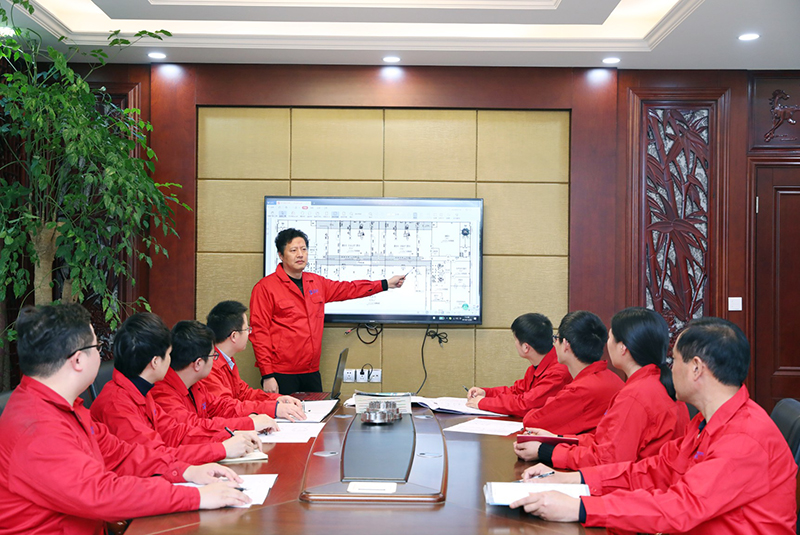
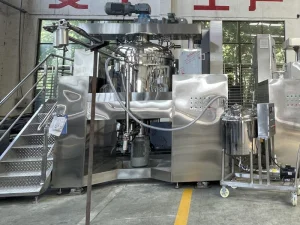
At SINAEKATO, our production facility in Gaoyou City integrates advanced Manufacturing Execution Systems (MES) to coordinate the entire lifecycle of industrial machinery fabrication. By relying on a vertically integrated domestic supply chain, we control raw material sourcing, automated laser cutting, precise robotic welding, and manual mirror finishing under one roof.
This regional clustering reduces component lead times while guaranteeing material quality. Over 80% of our core control and pneumatic components are procured from internationally recognized brands such as Siemens, ABB, Omron, and Schneider, combining domestic manufacturing speed with European and Japanese reliability.
This structural resilience means we consistently deliver complex projects on schedule—often 20% to 30% faster than western competitors—without sacrificing the strict geometric tolerances required for pharmaceutical-grade powder blending.
Tailored configurations engineered for regulatory, ambient, and production variations across different global regions.
Designed to comply with FDA 21 CFR Part 11 electronic record-keeping, CE directives, and ATEX/dust safety requirements. Includes digital data logging for batch traceability and validation cycles.
Optimized for high-volume, high-density environments. Focuses on rapid CIP/WIP (Clean-In-Place / Wash-In-Place) systems that reduce turnaround times when switching between product formulations.
Features heavy-duty thermal insulation, dust-tight sealed bearings, and high-ambient temperature cooling jackets to preserve raw material stability in non-air-conditioned processing spaces.
From 1988 to the present day: Over three decades of growth, engineering excellence, and international collaboration.
Engaged in the chemical machinery industry, establishing core capabilities in metallurgy and material engineering.
Guangzhou Sina Cosmetics Engineering Equipment Co., Ltd. was established to specialize in cosmetic manufacturing machinery.
Established Hong Kong Hantao International Investment Co., Ltd., paving the way for international trade operations.
Established Gaoyou Sina Chemical Machinery Equipment Factory, renaming the Guangzhou division to Guangzhou Sina Chemical Machinery Co., Ltd.
Established Gaoyou Sina Light Industry Machinery Equipment Factory to scale up local equipment manufacturing.
Acquired 10,000 square meters of land in Gaoyou. A new processing plant commenced operations under the name: SINA EKATO CHEMICAL MACHINERY CO., LTD (GAOYOU CITY).
Established Yangzhou Hantao Chemical Machinery Co., Ltd., focusing on heavy-duty pressure vessel production.
Acquired Guangzhou Jingcheng Machinery, established a large exhibition center, and initiated export sales routes globally.
Guangzhou Sina Chemical Machinery Co., Ltd. officially renamed to Guangzhou SINAEKATO Chemical Machinery Co., Ltd. to unify global branding.
Acquired Guangzhou Suogao Machinery Equipment Co., Ltd., expanding capabilities in precision filling technologies.
Designated SINA EKATO CHEMICAL MACHINERY CO., LTD (GAOYOU CITY) as the corporate Production, Sales, and After-Sale Service Headquarter.
Established SINA EKATO Equipment (Jiangsu) Co., Ltd. to facilitate high-end international joint ventures and tech-sharing.
Partnered with Europe-FLEMAC to establish Germany SINAEKATO Group Co., Ltd., integrating European-style GMP engineering standards.
Collaborated with Unilever South Africa on a cosmetic project ($800k USD order) and Japan SK-II Shiseido OEM Cosmetics ($1.5M USD order).
Secured a $1M USD contract with a major Japanese brand for automatic liquid detergent washing production systems.
Technology and innovation are the primary driving forces behind industrial productivity. Our engineers continuously optimize the geometry, drive mechanics, and containment profiles of our V-type mixing machines, striving to eliminate blend dead-zones and minimize cycle durations.
We are committed to displaying the capabilities of advanced Chinese manufacturing: "LET THE WORLD KNOW MADE IN CHINA." By combining high-performance machinery with local service networks, we ensure that operators are supported throughout the operational life of the equipment.
Stable, Reliable, Precise, and Intelligent—these principles form the foundation of our engineering standards. Partnering with us grants access to robust equipment design, factory validation services (FAT), and dedicated after-sales support.
Expert technical advice on operation, validation, customization, and maintenance of dry powder V-blending systems.
A V-type mixing machine consists of two cylinders welded together to form a V-shape. As the container rotates around a central horizontal axis, the powder bed splits and recombines repeatedly. This combination of convective and diffusive movement produces high-accuracy blends without relying on shear forces, making it suitable for friable materials.
The optimal filling volume typically ranges between 40% and 50% of the total vessel capacity. Exceeding 60% limits the free volume required for particle redistribution, which can extend blending times or result in incomplete mixing. Keeping the fill level within this range ensures consistent batch-to-batch uniformity.
Asymmetric V-mixers feature two cylinders of unequal lengths. This geometric asymmetry forces the powder split-point to shift along the axis during rotation, introducing axial movement alongside radial transport. This helps reduce mixing times for components with differing particle shapes.
To comply with cGMP requirements, we offer dust-tight options such as split-butterfly valves (SBV) and integrated vacuum loading systems. These seal the transfer path during feeding and discharging, minimizing dust release and protecting both the operator and the environment.
Yes, we can equip the unit with an intensifying bar or a rotary liquid spray shaft. Liquid additives are introduced through a rotary joint on the main drive axis and atomized into the powder stream, preventing localized clumping and ensuring uniform distribution.
Yes. We supply comprehensive Design Qualification (DQ), Installation Qualification (IQ), and Operational Qualification (OQ) protocols. Our engineering documentation supports direct compliance validation with bodies like the FDA, EMA, and NMPA.
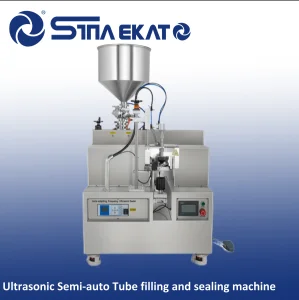
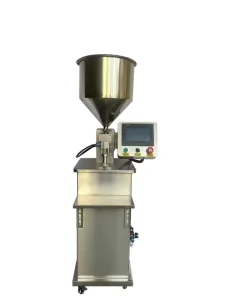
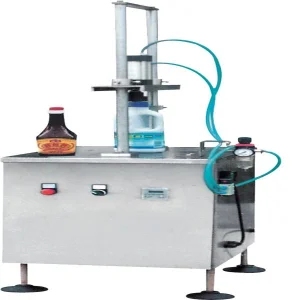
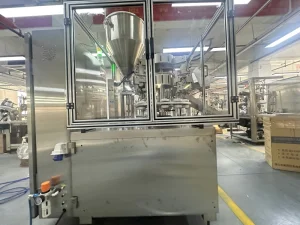
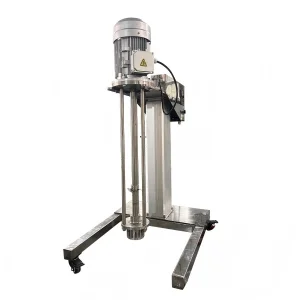
From semi-automatic tube filling machines to high-viscosity paste mills, discover our complete line of processing systems.
 Sina Ekato