Explore our core manufacturing line of industrial mixing systems, homogenizers, and downstream packaging machinery configured to meet strict international standards.
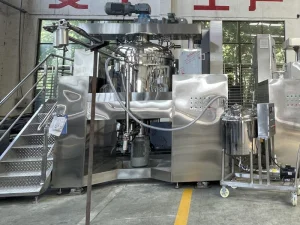
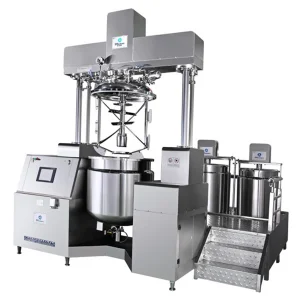
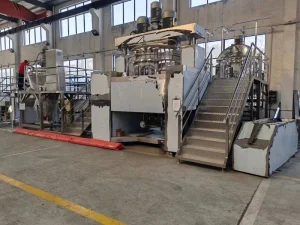
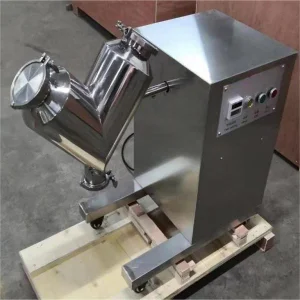
The global demand for liquid detergents, hand soaps, shampoos, and heavy-duty industrial surfactants has grown at an unprecedented compound annual growth rate (CAGR). As consumer preferences shift toward eco-friendly, highly concentrated, and multi-functional liquid formulations, processing plants are forced to adapt. No longer can a standard "one-size-fits-all" mixing vessel suffice. To achieve optimal formulation quality without physical separation or degradation of active agents, custom-engineered liquid detergent mixing tanks are essential.
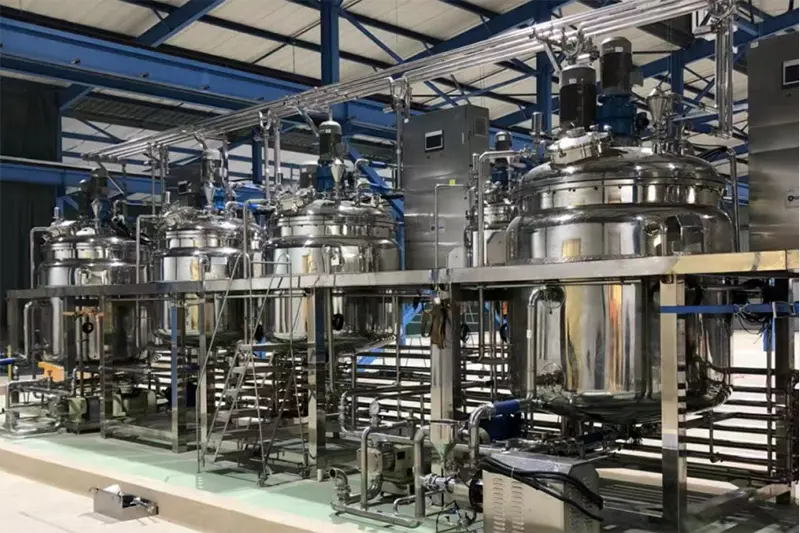
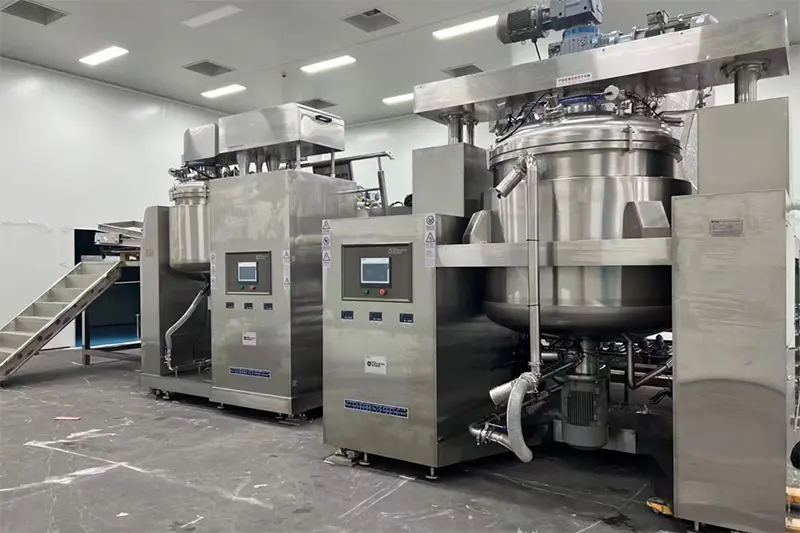
From a commercial standpoint, manufacturers are facing volatile raw material costs and strict sustainability mandates. Efficient blending operations require minimizing water and energy consumption while maximizing yield per batch. A specialized liquid soap mixing vessel equipped with sophisticated dual-directional agitating impellers, high-shear homogenizers, and integrated thermal jackets (either steam or thermal oil heated) represents the baseline requirement for modern chemical and cosmetic processing lines.
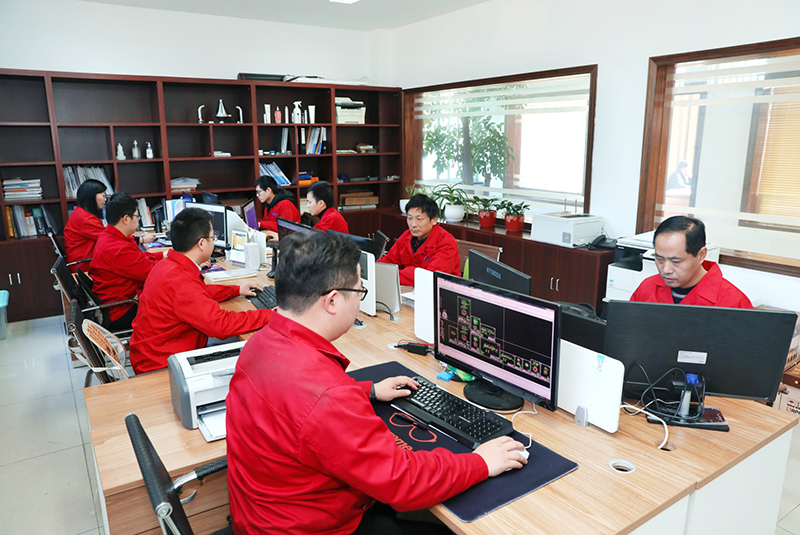
Understanding the fluid dynamics, metallurgy, and automated control architecture behind high-performance liquid detergent manufacturing.
Custom impeller layouts (anchor scraper, helical ribbon, paddle mixers) operate in conjunction with high-speed dispersers. Teflon wall scrapers prevent product crystallization on the vessel walls, ensuring uniform heat transfer.
Bottom or top-mounted homogenizers rotating between 0 to 3600 RPM utilize a precise stator-rotor configuration. This breaks down liquid droplets to sub-micron levels, preventing phase separation in shampoo, soap, and cosmetic lotion bases.
Contact surfaces are fabricated from premium SUS316L stainless steel, exhibiting superior corrosion resistance to acidic surfactant formulations, while non-contact panels are constructed from SUS304 to optimize cost-efficiency.
A standard liquid detergent soap manufacturing plant involves a sequence of hot and cold phase processing. The surfactant (commonly SLES, LABSA, or Cocamidopropyl Betaine) must be uniformly dissolved in deionized water. Because surfactant dissolution is highly susceptible to gel-phase formation, the mechanical shear and introduction speed must be carefully controlled. A customized mixing tank integrates dynamic control loops to supervise these physical transitions, eliminating manual operating errors.
| Technical Parameter | Standard Range | Customizable Modifications / Upgrades |
|---|---|---|
| Working Capacity | 50L - 15,000L | Explosion-proof configurations, scale-up geometrical sizing matching factory ceiling layouts. |
| Scraper Agitator Speed | 0 - 63 RPM | Variable frequency drives (VFD), dual-directional counter-rotating blade systems. |
| Homogenizer Shear Speed | 0 - 3600 RPM | Bottom-entry high-shear emulsifiers, inline high-shear mixers for continuous operations. |
| Heating Medium Options | Steam / Electricity / Oil | Dual jacket options, oil-fired external boilers, rapid-chilled water cooling integrations. |
| Control Architecture | Button-based / Siemens PLC | SCADA integration, automated load cell weight systems, formulation storage databases. |
Providing cutting-edge manufacturing lines globally with over 30 years of localized engineering and technological integration.
SINAEKATO, one of China's leading machinery brands, was born in 1992. With over 30 years of operational experience, we provide a comprehensive range of processing equipment, including Vacuum Emulsifying Mixers, Liquid-washing Homogenizer Mixers, Perfume Chiller Production Lines, Toothpaste Production Mixers, fully-automatic and semi-automatic Filling Machines, Storage Tanks, Reverse Osmosis (RO) Water Treatment systems, and high-efficiency Labeling and Packaging lines.
We serve international clients across the skincare, cosmetics, pharmaceutical, and food industries. SINAEKATO operates in nearly 65 countries with 150 dedicated professionals at our manufacturing plant in China and 10 expert representatives located internationally. Over 80% of our machinery components are sourced from internationally renowned suppliers, guaranteeing equipment durability, precision, and reliable longevity.
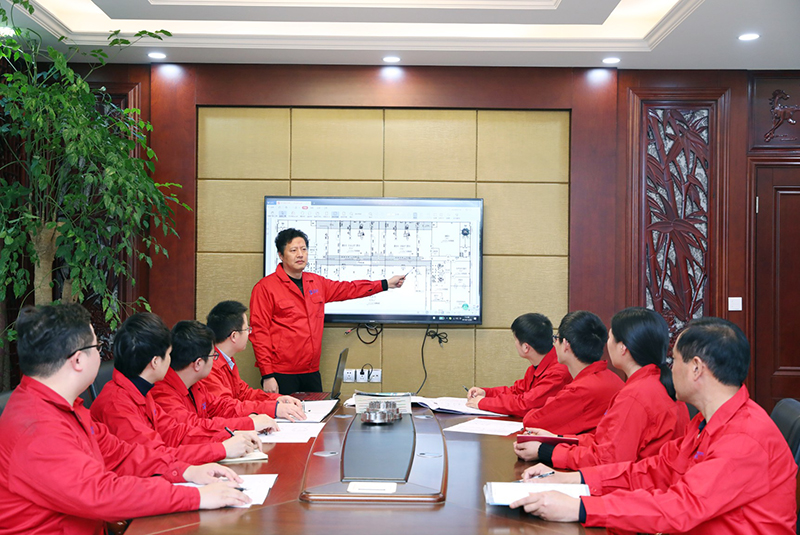
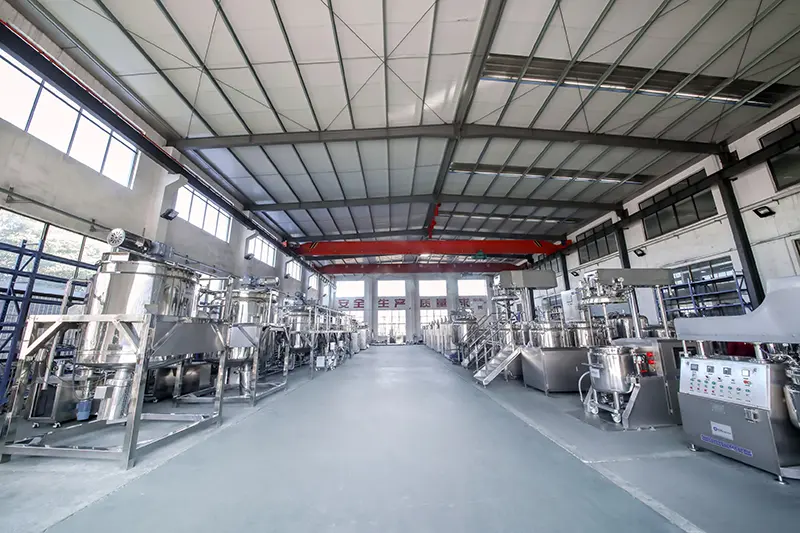
First engaged in the chemical machinery design and processing industry, laying the engineering foundations for modern fluid mixing technologies.
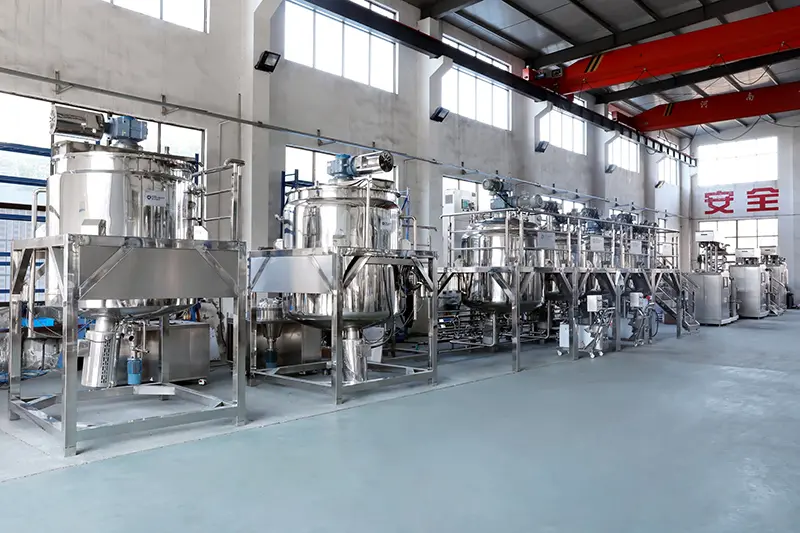
Guangzhou Sina Cosmetics Engineering Equipment Co., Ltd. was established to meet the soaring domestic and export demand for skincare machinery.
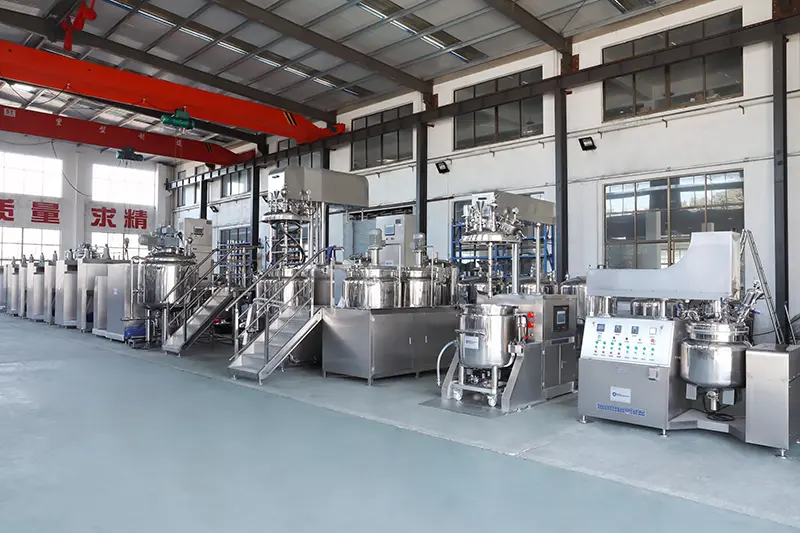
Established Hong Kong Hantao International Investment Co., Ltd., bridging regional manufacturing capabilities with international capital and quality standards.
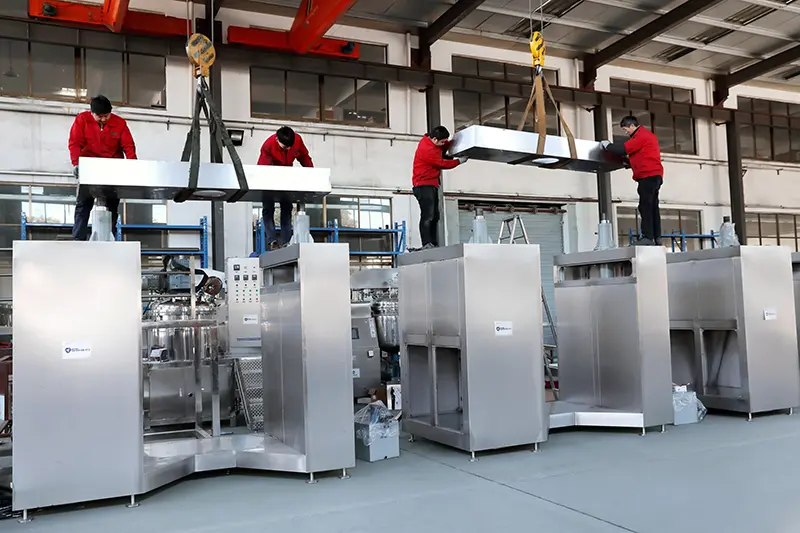
Gaoyou Sina Chemical Machinery Equipment Factory was established. Concurrently, the Guangzhou branch was renamed Guangzhou Sina Chemical Machinery Co., Ltd.
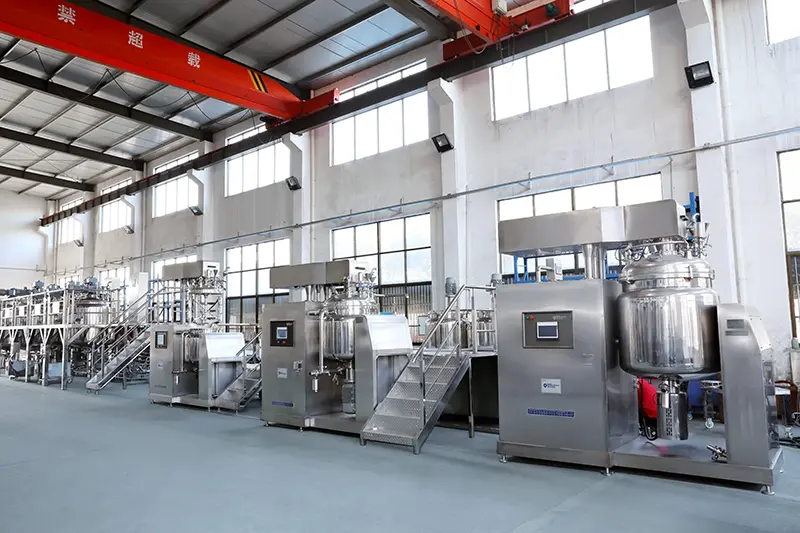
Established Gaoyou Sina Light Industry Machinery Equipment Factory to customize production lines for detergent, shampoo, and consumer household liquid products.
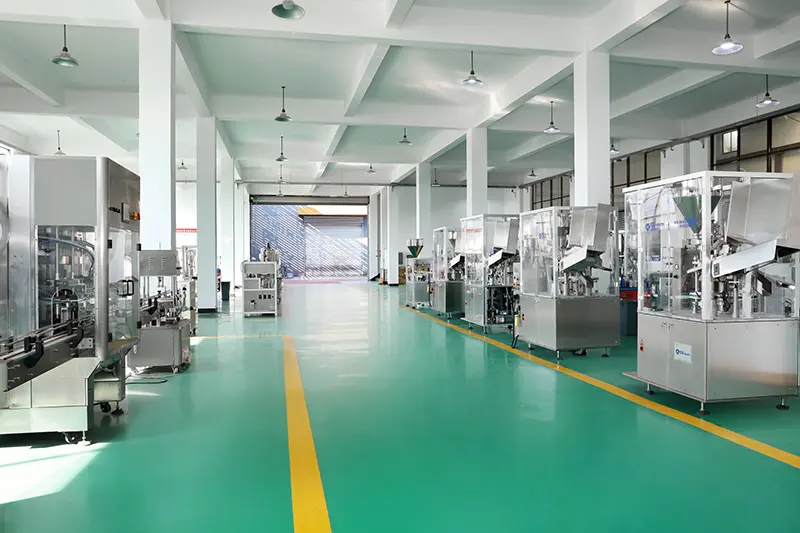
Purchased 10,000 square meters of land in Gaoyou. The new advanced processing plant commenced operations under the name: SINA EKATO CHEMICAL MACHINERY CO., LTD (GAOYOU CITY).
Established Yangzhou Hantao Chemical Machinery Co., Ltd. to optimize heavy industrial components machining and automated process system integrations.
Acquired Guangzhou Jingcheng Machinery. Set up a large exhibition center and established international export routes to Europe, the Americas, and Southeast Asia.
Guangzhou Sina Chemical Machinery Co., Ltd. was officially renamed Guangzhou SINAEKATO Chemical Machinery Co., Ltd., forming our unified international brand identity.
Acquired Guangzhou Suogao Machinery Equipment Co., Ltd., integrating advanced vacuum emulsification and dispersion technology patents into the company's product lines.
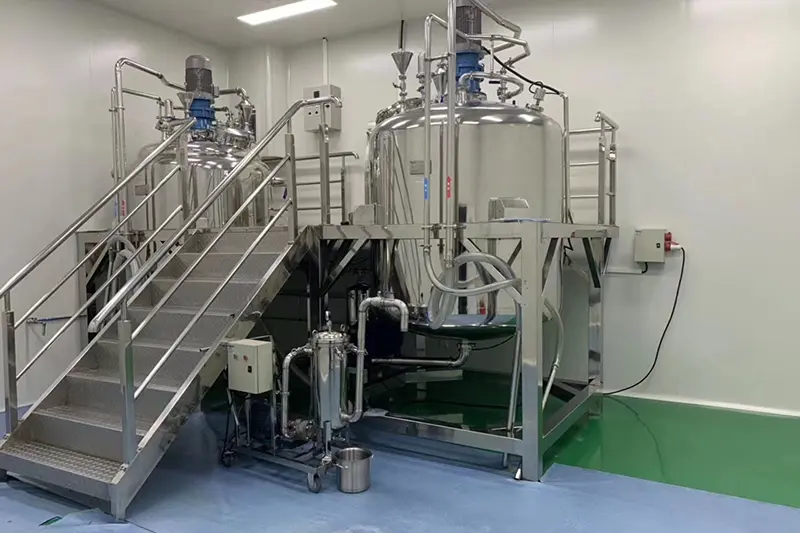
SINA EKATO CHEMICAL MACHINERY CO., LTD (GAOYOU CITY) designated as the official production, global sales, and after-sales service headquarters.
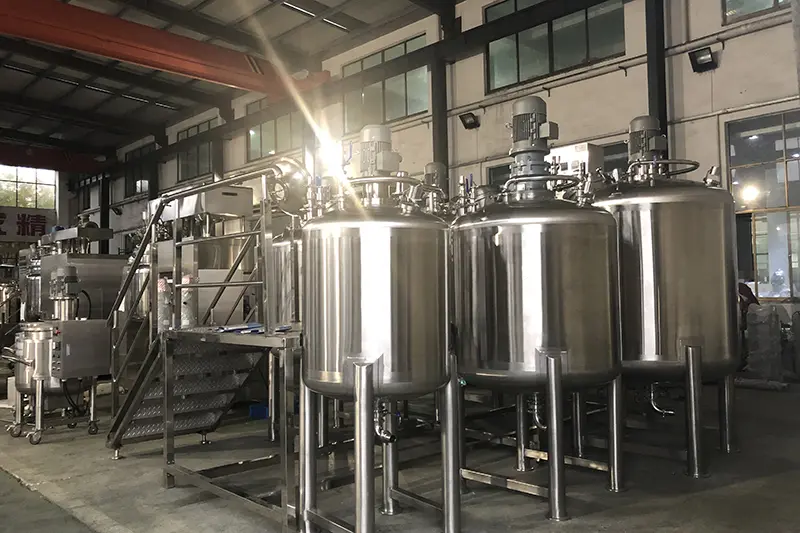
Established SINA EKATO Equipment (Jiangsu) Co., Ltd. specifically targeting complex foreign cooperative projects and high-precision fluid dynamics design.
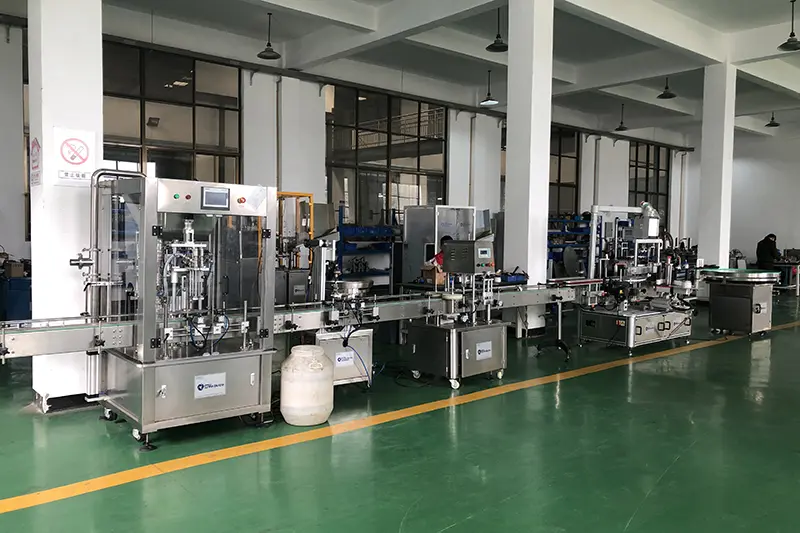
Partnered with FLEMAC to establish Germany SINAEKATO Group Co., Ltd., introducing state-of-the-art European automation standards to our chemical machinery line.
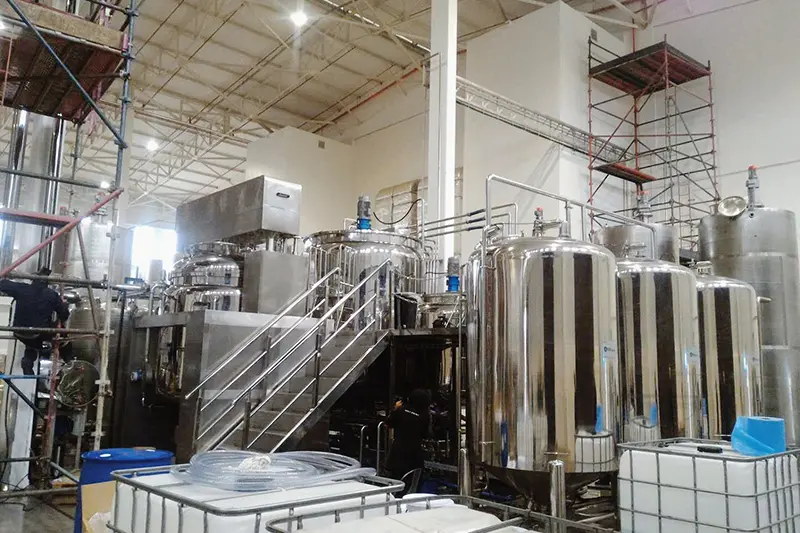
Successfully completed an $800,000 USD cosmetic production line for Unilever South Africa, and a $1,500,000 USD OEM cosmetics machinery order for SK-II & Shiseido.
Designed and deployed an integrated high-efficiency liquid detergent blending line for a leading Japanese manufacturer, totaling a $1,000,000 USD commission.
How regional dynamics, green regulations, and automation technologies are reshaping global production lines.
Modern chemical processing facilities require mixing vessels that optimize thermal energy. Our double-jacketed tanks are engineered to recirculate steam condensate and feature advanced insulation blankets, cutting thermal losses by up to 35% compared to non-jacketed mixing systems.
Real-time viscometric analysis, load cell measurement, and pneumatic pump integration are centralized via Siemens touch screen units. The PLC system allows tracking of formulation viscosity changes in real-time, preventing over-shearing and reducing structural breakdown of delicate soap molecules.
As direct-to-consumer cosmetic and cleaning formulations proliferate, manufacturers frequently alternate between low-viscosity detergents and thick, premium conditioning gels. Highly flexible, custom mixing vessels permit swift mechanical modifications to accommodate these diverging viscosities.
In highly regulated markets such as North America (FDA requirements, ASME pressure vessel standards) and the European Union (CE compliance, ATEX explosion-proof directives), mixing tanks require custom certifications. At SINAEKATO, we match the mechanical configurations to regional certifications. Our specialized equipment features explosion-proof motors (ABB/Siemens), high-grade sanitary piping connections, and automated Clean-in-Place (CIP) systems that dramatically reduce batch changeover times.
Conversely, for emerging processing facilities in South America, Africa, and Southeast Asia, the priority focus centers on mechanical reliability and low maintenance overhead. Our manual and semi-automatic control panels are designed to perform reliably under varying ambient temperatures and electrical supply stability, ensuring uncompromised production continuity.
Expert technical insights regarding fluid dynamics, high-shear emulsification, and scaling up liquid soap production lines.
Sodium Lauryl Ether Sulfate (SLES) and Linear Alkylbenzene Sulfonic Acid (LABSA) have highly non-Newtonian, shear-thinning characteristics at high concentrations. For proper dispersion without creating excessive aeration (which causes micro-foaming that delays downstream bottling), the peripheral speed of the main scraper should remain within 0-63 RPM, while the bottom homogenizer or high-shear rotor-stator head is run at 1500 to 3000 RPM. Introducing SLES slowly through a specialized bottom-injection port prevents the formation of highly viscous gel phases (M-phase gels).
Liquid laundry detergents, dishwashing soaps, and personal care products contain active salts, chelating agents, and organic acids (such as citric acid) that can trigger pitting and stress corrosion cracking in lower-grade stainless steels. SUS316L contains 2-3% molybdenum, which dramatically enhances resistance to chloride corrosion compared to SUS304. For non-contact elements like jackets, outer claddings, and supporting frames, SUS304 is used to maintain cost efficiency.
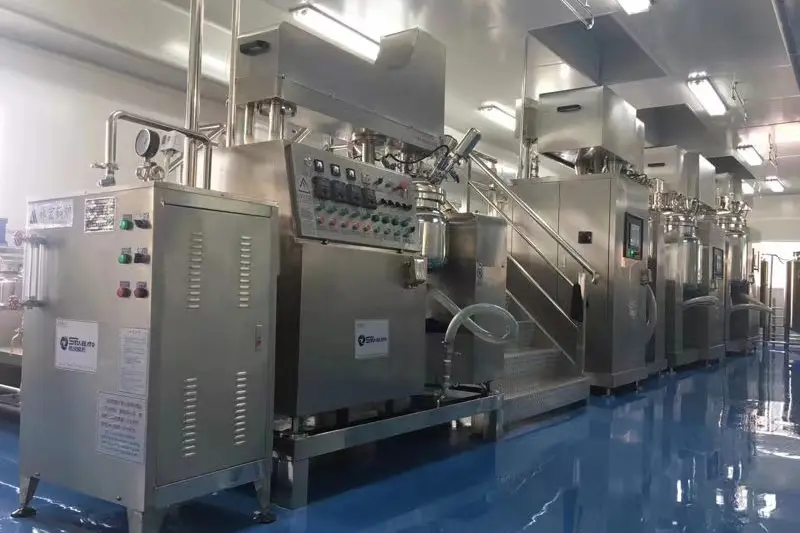
A vacuum system (operating under negative pressures of up to -0.09 MPa) prevents the entrapment of air bubbles within the product during high-speed shearing and homogenizing. Micro-bubbles degrade product clarity, destabilize emulsions, cause volumetric errors in automated downstream filling machines, and accelerate the oxidation of active botanical compounds or perfumes. Vacuum deaeration ensures a dense, glassy, and completely uniform finish.
The selection depends on factory infrastructure. Steam heating via an external boiler (or our CE-certified oil-fired boiler) is the most efficient method for large-scale operations (1000L and above) because it offers extremely fast heat-transfer rates. For small to medium facilities without external steam piping, electric heating elements submerged in thermal oil jackets provide precise heat distribution up to 100°C without localized scorching.
Yes. The physical principle of emulsification is highly comparable. However, skincare creams typically require high-shear homogenization under complete vacuum, whereas standard liquid soaps may only require simple open-type agitating vessels. By using our hybrid vacuum homogenizing mixers with interchangeable scraper blades, a single system can switch between processing high-viscosity body creams and low-viscosity liquid soaps.
Our engineering design incorporates sanitary bottom outlet valves (often pneumatic piston valves) that are flush-mounted to the bottom contour of the vessel shell. This ensures no unmixed formula remains at the bottom port. Additionally, all raw materials entering the tank are directed through high-velocity dispersion paths directly into the active agitation zone.
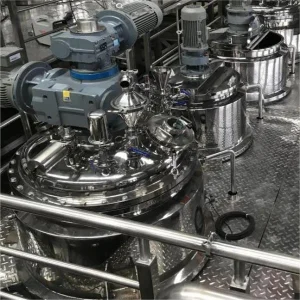
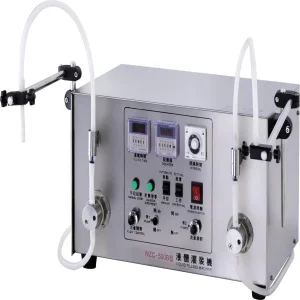
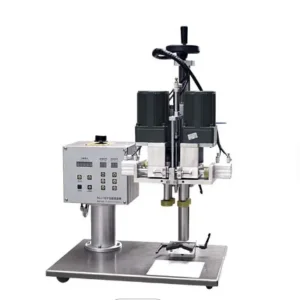
Achieve a fully automated, continuous production line from initial water filtration to individual final packaging containers.
 Sina Ekato