
Choosing the right Reactor For Medicine is a manufacturing decision, not a simple equipment comparison. Vessel geometry, mixing, heat transfer, cleanability, and scale-up behavior can determine product consistency. A polished stainless-steel vessel may look ideal, yet poor agitation can leave temperature gradients near the impeller. Small details matter.
The World Health Organization’s Global Vaccine Market Report highlights continuing pressure for flexible, scalable, and reliable biomanufacturing capacity. Meanwhile, the FDA’s Process Analytical Technology framework encourages manufacturers to control quality during production, rather than relying only on final testing. Grand View Research also reports strong growth in biopharmaceutical manufacturing, increasing demand for single-use and stainless-steel reactor systems. These reports support a practical question: which reactor designs perform best under real pharmaceutical conditions?
Dr. Ajaz S. Hussain, former director within the FDA’s Office of Pharmaceutical Science, offers a principle that guides this review: “Quality cannot be tested into products; it has to be built in.” His statement applies directly to reactor selection. The top ten reactors should therefore be judged by contamination control, process visibility, validation demands, and lifecycle cost. Not only by capacity.
This ranking is not absolute. A stirred-tank reactor may suit one vaccine process, while a single-use bioreactor may better serve another. Facility experience also changes the outcome. Operators, maintenance teams, and cleaning procedures can matter as much as the vessel itself. The following guide compares ten reactor categories through that practical lens, while acknowledging one uncomfortable truth: no reactor is perfect for every medicine.
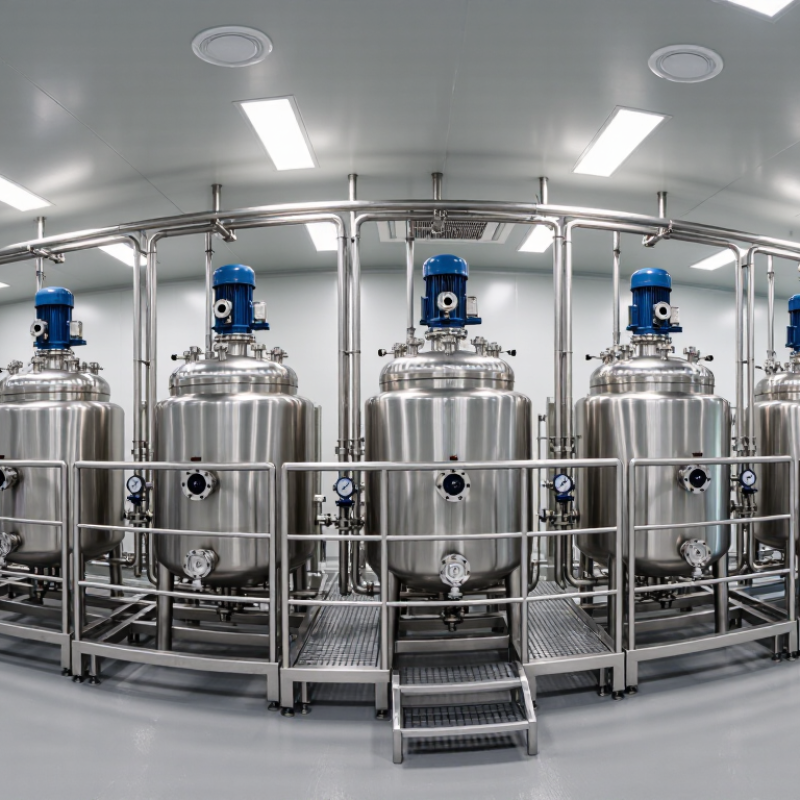
In medicine manufacturing, reactor choice must match chemistry, cell sensitivity, cleaning strategy, and batch size. The strongest candidates span 1 to 20,000 L GMP production, but no single design fits every process. The ranking is practical, not absolute.
Stirred-tank reactors remain the broadest class, supporting microbial, mammalian, and chemical operations. Single-use stirred reactors reduce cleaning work and suit smaller campaigns. Packed-bed reactors provide high surface area for immobilized cells or catalysts. Fixed-bed systems offer stable residence conditions, although channeling can complicate scale-up. Fluidized-bed reactors improve contact between solids and liquids, but particle control demands careful monitoring. Airlift reactors use gentle circulation and limited mechanical stress. They can help protect sensitive cultures.
Tubular reactors support continuous processing and predictable flow paths. Plug-flow reactors suit fast reactions with controlled residence time. Loop reactors improve heat transfer and mixing through recirculation. Photochemical reactors use controlled light exposure for selected synthesis steps. Each class can be engineered from laboratory volumes to large GMP vessels, but the scaling path is rarely linear. A 20,000 L system magnifies small problems, including dead zones, oxygen gradients, and temperature drift. In practice, teams should compare mixing data, material compatibility, sterilization evidence, sampling access, and operator safety. Some projects still choose a reactor by capacity alone. That is a costly shortcut. A sound decision also considers validation burden, maintenance access, and process flexibility. Even experienced teams may revise the choice after pilot trials. Feedback matters.
Practical overview of widely used reactor classes in biopharmaceutical and small-molecule manufacturing. Capacity ranges are approximate, representative GMP working volumes or reactor hold-up; actual limits depend on process design and facility configuration. The list is a category guide, not a universal performance ranking.
| No. | Reactor class | Typical GMP scale | Common manufacturing use | Typical construction and configuration | Key process controls | Scale-up and selection considerations |
|---|---|---|---|---|---|---|
| 1 | Stainless-steel stirred-tank bioreactor | Approximately 200–20,000 L working volume | Large-scale culture of mammalian cells for monoclonal antibodies, recombinant proteins, and other biologics. | Reusable, cleanable vessel with mechanical agitation, sparging, temperature control, and validated cleaning and sterilization systems. | Temperature, pH, dissolved oxygen, agitation, gas flow, pressure, and (where applicable) feed and culture-volume control. | Well suited to established high-volume processes. Scale-up must address oxygen transfer, mixing time, shear, heat removal, and facility utility capacity. |
| 2 | Single-use stirred-tank bioreactor | Approximately 50–2,000 L working volume | Seed trains and production culture for biologics, especially multiproduct or campaign-based manufacturing. | Reusable support vessel with a presterilized disposable process bag and integrated single-use fluid paths. | Temperature, pH, dissolved oxygen, agitation, gas flow, bag integrity, and sterile connections. | Can reduce cleaning and changeover requirements. Assess bag compatibility, extractables and leachables, sensor performance, waste handling, and supply continuity. |
| 3 | Stainless-steel microbial fermenter | Approximately 100–20,000 L working volume | Production of microbial biomass, enzymes, recombinant proteins, plasmids, and fermentation-derived medicinal intermediates. | Reusable pressure-rated stirred vessel, commonly designed for high aeration and vigorous mixing, with clean-in-place and sterilize-in-place capability. | Temperature, pH, dissolved oxygen, airflow, agitation, back pressure, foam, feed rate, and exhaust-gas handling. | High oxygen demand and heat generation can drive equipment sizing. Strain behavior, foaming, broth rheology, and contamination control affect scale-up. |
| 4 | Rocking-motion wave bioreactor | Approximately 10–500 L working volume | Seed expansion and smaller-scale culture of mammalian cells or other shear-sensitive cells. | Disposable culture bag on a rocking platform; mixing and gas transfer are generated by the motion and bag geometry. | Temperature, pH, dissolved oxygen, rocking rate and angle, gas flow, and bag integrity. | Useful for flexible seed-train operations. Scale-up depends on bag geometry, rocking conditions, liquid depth, and oxygen-transfer requirements. |
| 5 | Packed-bed perfusion bioreactor | Approximately 1–500 L of packed-bed volume; system scales vary | High-cell-density perfusion culture for selected biologics and cell-based production processes. | Cells are retained on or within a packed support while culture medium flows through the bed; configurations may be reusable or single-use. | Perfusion flow, pressure drop, temperature, pH, dissolved oxygen, nutrient supply, and cell-retention performance. | High cell density can reduce facility footprint, but bed uniformity, channeling, mass transfer, sampling, and harvest strategy require process-specific evaluation. |
| 6 | Hollow-fiber bioreactor | Approximately 0.1–50 L module or culture working volume; capacity is not directly comparable with tank volume | Specialty cell culture, high-density cell growth, and production of selected proteins or cell-derived products. | Fiber modules provide separate flow paths for culture and nutrient-containing medium, with cells retained in or around the fibers. | Flow rates, pressure, temperature, pH, dissolved oxygen, nutrient delivery, and control of fouling or fiber blockage. | Offers a high surface-area-to-volume ratio. Product recovery, gradients within the module, scale-out strategy, and module integrity are important considerations. |
| 7 | Glass-lined stirred chemical reactor | Approximately 100–20,000 L working volume | Batch synthesis of active pharmaceutical ingredients and intermediates involving corrosive or reactive chemistry. | Agitated vessel with a glass-lined wetted surface, commonly fitted with a jacket or external heat-transfer system. | Temperature, agitation, addition rate, pressure, vacuum, pH where applicable, and reaction endpoint. | Glass lining can provide broad chemical resistance, but suitability must be checked for the specific reagents, temperature, pressure, and risk of lining damage. |
| 8 | Stainless-steel jacketed synthesis reactor | Approximately 100–20,000 L working volume | Batch chemical synthesis, solution preparation, neutralization, and crystallization-related reaction steps. | Reusable agitated vessel with a jacket or coil for heating and cooling; wetted metallurgy is selected for process compatibility. | Temperature, agitation, feed addition, pressure or vacuum, and reaction or mixing endpoint. | Commonly used for scalable batch operations. Confirm corrosion compatibility, heat-transfer capacity, cleanability, and control of exothermic reactions. |
| 9 | Pressure hydrogenation reactor | Approximately 10–5,000 L working volume; specialized configurations vary | Catalytic hydrogenation and related gas–liquid reactions in active pharmaceutical ingredient synthesis. | Pressure-rated, agitated vessel with suitable metallurgy, gas handling, and engineered safeguards for hydrogen service. | Temperature, pressure, hydrogen feed, agitation, gas uptake, catalyst handling, and safety interlocks. | Gas–liquid mass transfer and heat removal are central to performance. Pressure-system design, hazardous-area controls, and validated catalyst removal are essential. |
| 10 | Continuous-flow reactor | Approximately 0.1–100 L of reactor hold-up in representative systems; production is generally described by throughput rather than vessel volume | Continuous synthesis of selected intermediates or active pharmaceutical ingredients, including reactions with rapid heat release or short reaction times. | Flow channels, tubing, or modular reactor sections with metered feeds and controlled residence time; materials are chosen for chemical compatibility. | Flow rate, temperature, pressure, residence time, feed ratio, mixing, and in-process monitoring. | Can improve heat and mass transfer and reduce reaction inventory. GMP implementation requires control of start-up, steady state, shutdown, diversion, and batch traceability. |
A 2 L single-use reactor fits small experiments and quick process changes. It uses little material. Results may not predict production perfectly.
It supports seed expansion and early process validation. Operators can test growth conditions with modest liquid volumes. Sampling remains manageable.
A 50 L single-use reactor suits limited batches and compact facilities. It reduces cleaning demands. Supply planning still matters.
These sizes balance output and flexibility. A 200 L system suits frequent product changes. Larger volume is not always better.
Stainless steel can suit repeated production campaigns. A 500 L vessel may offer stronger long-term economics. Cleaning failures can cause costly shutdowns.
Measure kLa, mixing time, and heat transfer. Record gas flow, liquid volume, probe location, and agitation speed. Repeat each test.
No. Excessive agitation may harm sensitive cells or increase foam. A high kLa value can hide another problem.
Review validated CIP coverage, detergent concentration, rinse conductivity, and dead-leg design. During SIP, confirm cold spots reach required conditions. Small weld flaws matter.
Secure access, electronic signatures, audit trails, and tested backups support reliable records. Sensor calibration also needs scheduled review. Trend screens can mislead.
Use test runs, calibrated sensors, documented operating ranges, and site-specific risk reviews. Challenge restored databases and alarm handling. One clean result proves little.
Selecting the right Reactor For Medicine requires balancing process scale, material compatibility, product quality, and regulatory control across GMP production volumes from 1 to 20,000 liters. This overview examines ten major reactor classes, comparing glass-lined, 316L stainless-steel, and Hastelloy designs for corrosion resistance, cleanliness, durability, and pharmaceutical process suitability. It also compares single-use and stainless-steel bioreactors from 2 to 2,000 liters, highlighting how each platform supports flexibility, contamination control, scalability, and operational efficiency.
Reactor performance is evaluated through key engineering measures, including volumetric mass-transfer coefficient (kLa), mixing time, temperature control, and heat-transfer capability. The discussion further considers GMP expectations such as validated CIP and SIP systems, process analytical technology (PAT), data integrity, and 21 CFR Part 11 controls. Together, these criteria provide a practical framework for choosing reactor systems that deliver consistent manufacturing performance, reliable documentation, and compliant operation throughout development and commercial production.
