
The global detergent industry is expanding, but growth is changing what manufacturers expect from production equipment. Grand View Research reports continued growth in the global laundry detergent market through 2030, supported by liquid formats, premium formulations, and demand for convenient cleaning products. Liquid products require controlled heating, stable agitation, accurate dosing, and reliable transfer performance. A poorly designed vessel can create foam pockets, uneven viscosity, or difficult cleaning cycles.
This article introduces the Top 10 Liquid Detergent Mixing Boiler Manufacturers, based on practical engineering criteria rather than brand visibility alone. The evaluation considers tank capacity, heating efficiency, agitator design, stainless-steel quality, temperature control, automation, customization, documentation, and after-sales support. Reports from Fortune Business Insights and Mordor Intelligence also identify liquid detergents as an important growth segment, reinforcing the need for scalable and hygienic processing systems.
Performance matters.
A strong Liquid Detergent Mixing Boiler should support repeatable batches, smooth heat distribution, and safe operation near operators. Manufacturers serving chemical and personal-care producers may offer jacketed tanks, high-shear mixers, vacuum systems, and PLC-based controls. However, public specifications are often incomplete. That limitation matters. A company may appear technically impressive, yet provide weak validation records or uncertain service coverage. Therefore, this ranking should be treated as a structured starting point, not an absolute verdict. Buyers should verify materials, heating calculations, mixing tests, certification documents, factory experience, and references before placing an order. Real production conditions can expose details that brochures never mention.
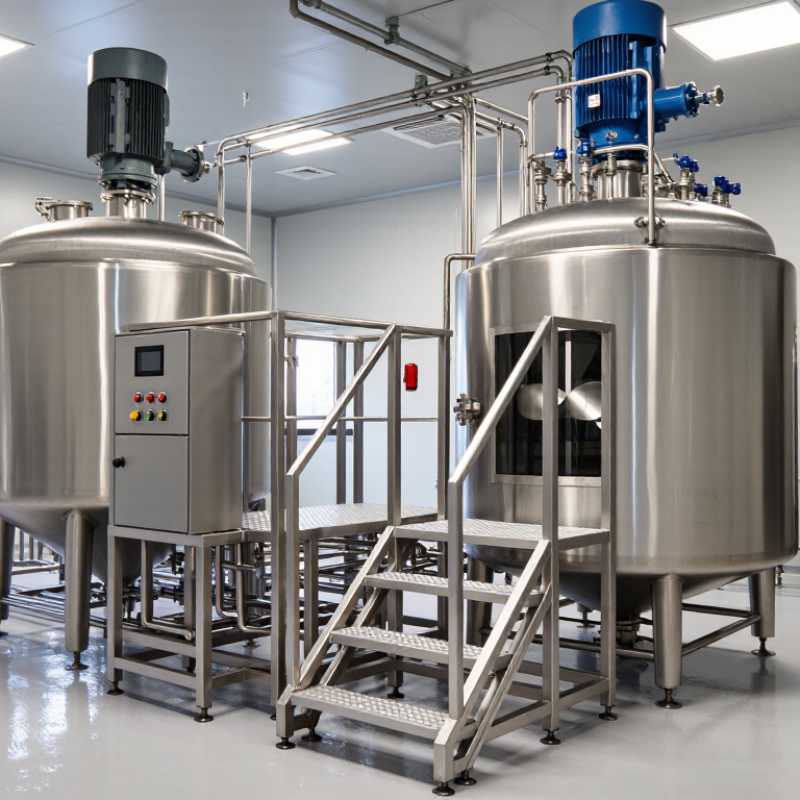
A liquid detergent mixing boiler is a heated processing vessel with an agitator, temperature controls, and often a circulation system. It blends water, surfactants, builders, solvents, fragrances, and stabilizers into a uniform product. The word “boiler” can be misleading. Most units are not steam-pressure boilers; they are jacketed mixing tanks that transfer heat safely through the vessel wall.
During production, the agitator controls viscosity and prevents sediment near the bottom. Low-shear mixing protects foam-sensitive formulas, while stronger agitation helps disperse powders and thickeners. A 2024 Grand View Research report estimated the global laundry detergent market at over USD 70 billion in 2023, with continued annual growth above 4%. This demand makes accurate heating and repeatable batch control increasingly important. Yet, market reports usually discuss detergent products, not mixing equipment. That gap deserves attention.
Tips: Check the working volume, heating method, agitator speed range, and drain design. Ask for temperature uniformity test records. Stainless steel 304 suits many formulas, while 316L may offer better resistance. Confirm whether the vessel supports vacuum operation and clean-in-place procedures. A practical trial batch is still valuable. Specifications alone can hide poor foam control, slow discharge, or difficult cleaning.
Choosing among the top ten liquid detergent mixing boiler manufacturers requires more than comparing prices. Evaluate the equipment, process knowledge, and after-sales discipline together. During factory evaluations, I look for working trials, not polished photographs. Photos can mislead. Ask how the vessel handles your actual detergent formula, viscosity, temperature, and batch size. Request recorded heating curves and mixing samples from comparable production conditions. Small details matter.
Check the tank’s material certificates, weld finish, insulation, and heating control. Stainless steel grade should match corrosive ingredients and cleaning chemicals. Inspect the agitator design, shaft seal, baffles, and variable-speed drive. Dead zones may leave fragrance, pigment, or surfactant residue behind. Ask whether the system supports clean-in-place routines and easy inspection. Control panels should show alarms, batch records, calibration status, and emergency protections. Avoid vague claims.
Reliable manufacturers provide drawings, manuals, material traceability, test reports, and clear warranty terms. They should explain delivery stages, operator training, spare-part availability, and remote support. Speak with recent customers about downtime, response speed, and maintenance costs. One weakness deserves attention: a low purchase price can conceal expensive modifications later. Ideally, witness a factory acceptance test before shipment, although schedules sometimes make this difficult. Document every unresolved point. That record protects both sides.
Top 10 Liquid Detergent Mixing Boiler Manufacturers
The top 10 liquid detergent mixing boiler manufacturers should be assessed by engineering depth, not advertising claims. Reliable manufacturers usually provide stainless-steel vessels, controlled heating systems, and variable-speed agitators. These features help maintain stable viscosity during mixing. They also support safer temperature control for surfactants, builders, fragrances, and other approved ingredients.
Manufacturing experience matters. A capable supplier can recommend vessel capacity, heating load, anchor design, and batch timing from real production conditions. Ask for documented material grades, weld quality records, factory testing, and maintenance guidance. A responsive technical team is valuable when foam rises unexpectedly or powder settles near the vessel base. Small details matter. However, no supplier is perfect. Some published performance figures may depend on ideal laboratory conditions, so buyers should request practical test data before ordering.
Tips: Compare at least three technical proposals. Check whether the boiler includes temperature sensors, emergency controls, insulation, and easy-clean access. Request a trial using your actual formula, if possible. Confirm spare-part availability and operator training. A polished quotation can still hide weak after-sales support. Reliability must be verified.
Anonymized comparison of commonly offered liquid detergent mixing boiler configurations
| Rank | Typical Equipment Category | Working Capacity | Vessel Construction | Agitator Configuration | Typical Mixing Speed | Heating Method | Operating Temperature | Discharge Arrangement | Common Automation Level |
|---|---|---|---|---|---|---|---|---|---|
| 1 | Large-scale industrial detergent mixing boiler | 5,000–20,000 L | 304 stainless steel; 316L available for corrosive formulations | Low-speed anchor with wall scrapers | 15–60 rpm | Steam jacket or thermal-oil jacket | Ambient to 95°C | Bottom outlet with sanitary valve | PLC control with temperature and level monitoring |
| 2 | High-volume liquid soap production system | 3,000–15,000 L | Polished 304 stainless steel, typically Ra ≤ 0.8 µm | Anchor agitator with auxiliary disperser | 20–120 rpm | Electric heating or hot-water circulation | Ambient to 90°C | Gravity or sanitary pump transfer | Recipe-based semi-automatic operation |
| 3 | Vacuum-capable detergent mixing vessel | 1,000–10,000 L | 304 or 316L stainless steel with reinforced vacuum-rated shell | Anchor or frame agitator | 10–80 rpm | Steam jacket, hot-water jacket, or thermal oil | 20–85°C | Vacuum-assisted bottom discharge | PLC with vacuum, temperature, and pressure interlocks |
| 4 | Medium-scale detergent blending boiler | 500–5,000 L | 304 stainless steel with insulated external jacket | Propeller or pitched-blade turbine | 60–250 rpm | Electric jacket or immersion heating system | Ambient to 80°C | Bottom drain with flexible hose or fixed piping | Digital temperature controller with variable-speed drive |
| 5 | High-viscosity detergent processing kettle | 300–3,000 L | 316L stainless steel on product-contact surfaces | Double planetary or heavy-duty anchor mixer | 5–50 rpm | Jacketed hot water or thermal oil | Ambient to 100°C | Positive-displacement pump discharge | Automatic torque and temperature monitoring |
| 6 | Multi-purpose chemical mixing boiler | 200–2,000 L | 304 stainless steel; optional 316L contact surfaces | Interchangeable anchor, turbine, or propeller mixer | 20–300 rpm | Electric, steam, or hot-water jacket | Ambient to 95°C | Sanitary butterfly or ball valve | Manual or semi-automatic batch control |
| 7 | Compact liquid detergent pilot mixer | 50–500 L | 304 stainless steel with polished internal finish | Variable-speed propeller or disperser | 80–1,200 rpm | Electric heating jacket or heating plate | Ambient to 80°C | Manual bottom outlet or small transfer pump | Digital speed and temperature display |
| 8 | Continuous detergent premix system | 500–10,000 kg/h | 304 or 316L stainless steel process piping and tank | Inline static mixer with holding-tank agitator | Process-dependent; typically 1–20 m/s in the mixing line | Inline heat exchanger or jacketed holding tank | Ambient to 75°C | Metering-pump transfer to filling or storage | PLC with flow, temperature, and dosing control |
| 9 | Small-batch detergent formulation kettle | 100–1,000 L | 304 stainless steel with insulated jacket | Anchor and high-shear disperser combination | 20–1,500 rpm | Electric or hot-water jacket | Ambient to 85°C | Bottom sanitary outlet | Touch-panel control with programmable batches |
| 10 | Laboratory and research detergent mixer | 5–100 L | 316L stainless steel or borosilicate glass contact vessel | Interchangeable propeller, turbine, or disperser | 50–3,000 rpm | Electric heating mantle or compact jacket | Ambient to 95°C | Manual drain or laboratory transfer pump | Basic digital control with data logging option |
Specifications represent commonly published industry ranges for liquid detergent mixing boilers and related process vessels. Actual performance depends on formulation viscosity, surfactant concentration, heating load, batch size, and required production standard.
Top 10 Liquid Detergent Mixing Boiler Manufacturers: Key Features and Technologies Compared Across Manufacturers
A practical top-ten comparison should examine process control, not only vessel capacity. The strongest manufacturers typically offer stainless-steel vessels, jacketed heating, anchor or high-shear mixing, and programmable temperature control. According to Grand View Research, the global liquid detergent market reached approximately USD 33 billion in 2023, increasing pressure for repeatable, scalable production. Manufacturers using variable-frequency drives can adjust agitation for thin liquids, concentrated gels, and fragrance-sensitive formulas. The U.S. Department of Energy reports that variable-speed controls may reduce motor energy use by 20% to 50% in suitable applications, although actual savings depend on load and operating time.
Hygienic design separates experienced fabricators from ordinary equipment sellers. Look for smooth internal welds, sloped drainage, clean-in-place spray devices, insulated jackets, and documented surface finishes. EHEDG guidance emphasizes cleanability and the removal of dead zones where residue can accumulate. Reliable suppliers also provide calibration records, material certificates, batch traceability, and factory acceptance testing. Small details matter. A weak temperature probe location can create false readings near the jacket. Poor scraper alignment may leave a visible ring of product after discharge. Energy performance also deserves scrutiny; the International Energy Agency identifies industry as a major global energy consumer, making insulation and heat recovery practical evaluation points. Some specifications remain vague. Request measured heating times, mixing uniformity data, and service-response terms before ranking any manufacturer.
This normalized technology benchmark compares commonly specified capabilities in modern liquid detergent mixing boilers. Higher scores indicate stronger integration of automation, process control, hygiene, heating, and product-quality technologies.
The most important evaluation areas are PLC-based automation, temperature stability, high-shear homogenization, vacuum deaeration, clean-in-place capability, corrosion-resistant wetted surfaces, and energy-efficient heating control.
Choosing among the top ten liquid detergent mixing boiler manufacturers starts with your production reality, not a ranking list. A suitable manufacturer should understand batch size, viscosity, heating method, and cleaning requirements. Ask for drawings, material certificates, weld standards, and documented factory testing. Stainless steel grade matters. For mild formulas, 304 may work, while aggressive ingredients may require 316L after technical review. Request a live or recorded test using a formula close to yours. This reveals dead zones, foam control, and mixing time better than brochures.
Check the agitator design against your hardest product, not your easiest sample. Anchor, paddle, and high-shear systems behave differently with gels, powders, and fragrances. A reliable supplier should explain torque, motor capacity, temperature control, and discharge performance clearly. Do not accept vague claims. Review calibration records, pressure-test reports, electrical documents, and after-sales response times. Confirm whether technicians can support installation, operator training, spare parts, and future modifications. A low purchase price can hide weak insulation, difficult cleaning, or costly downtime.
Visit the workshop when possible. Look at weld finishing, surface protection, assembly discipline, and change records. Speak with users running similar batches after several months of operation. Their maintenance problems may differ from the sales presentation. I would also score communication during quotation. One missed detail can matter. Leave room for doubt, because every specification must match your formula, utilities, floor space, and local safety requirements. A technically strong manufacturer should welcome these questions instead of rushing the decision.
It is a heated mixing vessel for producing uniform liquid detergent. The term “boiler” can mislead. Most units are jacketed tanks, not steam-pressure boilers.
Important parts include an agitator, heating jacket, temperature controls, and a drain system. Some models also include circulation and vacuum functions. Each feature affects processing quality.
The agitator controls viscosity and reduces sediment near the vessel bottom. Low-shear mixing protects foam-sensitive formulas. Stronger agitation disperses powders and thickeners more effectively.
Jacketed heating transfers heat through the vessel wall. Programmable controls improve batch repeatability. Ask for temperature uniformity records, not only advertised settings.
Stainless steel 304 suits many detergent formulas. Stainless steel 316L may provide better resistance for demanding ingredients. Material certificates should confirm the actual construction.
Variable-speed drives adjust mixing for thin liquids, gels, and fragrance-sensitive formulas. They may also reduce motor energy use under suitable conditions. Actual savings depend on load and operating time.
Look for smooth internal welds, sloped drainage, and clean-in-place spray devices. Insulated jackets can reduce heat loss. Dead zones may trap residue and create cleaning problems.
Request heating-time measurements, mixing-uniformity data, calibration records, and factory testing results. Check the probe location carefully. A poor location can show the wrong temperature.
Yes, when possible. A trial can reveal foam instability, slow discharge, or difficult cleaning. Specifications alone may look convincing. Try a real batch.
This guide explains what a Liquid Detergent Mixing Boiler is and how it supports the efficient preparation of liquid cleaning products. It reviews the main functions of the equipment, including heating, mixing, temperature control, material compatibility, batch consistency, and production safety. The article also presents a practical framework for evaluating manufacturers by examining engineering experience, equipment quality, customization options, automation systems, energy efficiency, after-sales support, and compliance with relevant manufacturing standards.
The overview compares ten leading types of manufacturers according to their technologies, production capabilities, vessel designs, mixing systems, and control solutions, without focusing on any individual brand. It also highlights key differences in heating methods, agitator performance, capacity ranges, hygienic construction, and operational flexibility. Finally, readers will learn how to select the most suitable manufacturer based on production volume, formula requirements, facility conditions, budget, future expansion plans, maintenance needs, and expected delivery and technical support.
