
How to Start Solid Shampoo Equipment Production in 2026?

Time:2026-10-23 Author:Oliver
0%

Starting Solid Shampoo Equipment Production in 2026 requires more than buying mixers and forming machines. Demand is shifting toward waterless, plastic-reducing personal-care formats. Euromonitor International identifies solid beauty products as an important sustainable innovation area. Grand View Research also reports continued growth in the global shampoo market, supported by premium and environmentally conscious products. These signals create opportunity, but they do not guarantee profitability.

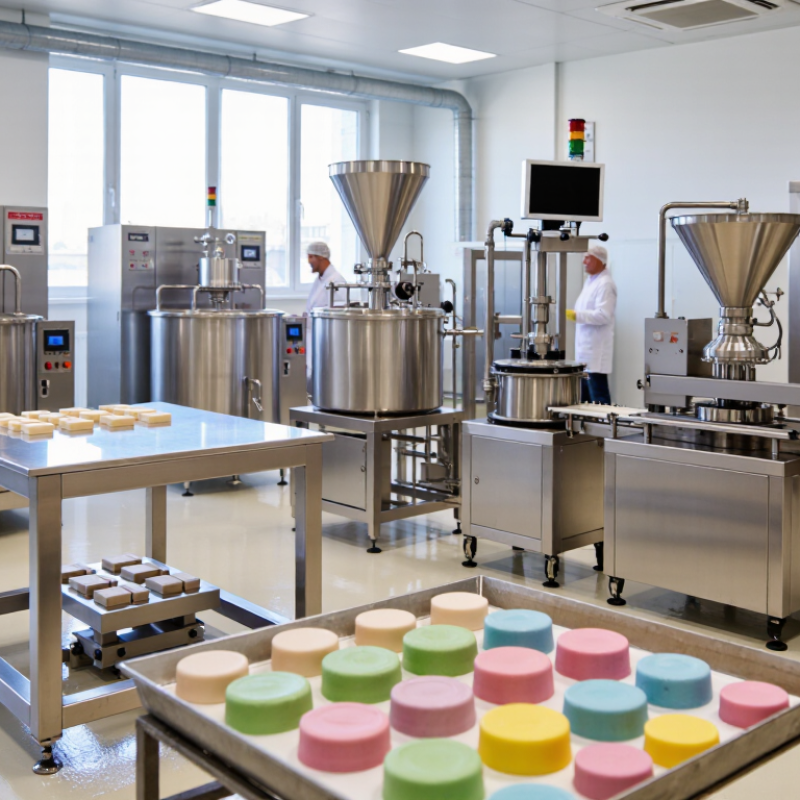
Equipment must match the formula, batch size, bar geometry, and cleaning requirements. A small factory may need a heated mixer, vacuum homogenizer, cooling table, hydraulic press, cutter, drying cabinet, and controlled packing line. Each machine should support stable temperature control and repeatable dosing. ISO 22716 guidance remains useful for cosmetic good manufacturing practice. Records, calibration, traceability, and sanitation cannot be treated as paperwork.

Cosmetic manufacturing educator Perry Romanowski often emphasizes, “Good manufacturing starts with good process control.” That principle applies directly to Solid Shampoo Equipment Production. A glossy machine can still create soft edges, uneven fragrance distribution, or cracked bars. Small errors compound. Production trials should measure moisture, hardness, weight variation, mixing time, and cleaning effort. Real factories also face awkward details, including dust around the press and product sticking to stainless-steel surfaces. These details are easy to underestimate. They deserve attention before equipment contracts are signed. The most reliable 2026 plan will connect market evidence, formulation testing, supplier audits, operator training, and documented quality controls. It may grow slower than expected. That is uncomfortable, but safer.
How to Start Solid Shampoo Equipment Production in 2026?

Define the Solid Shampoo Equipment Market and Product Scope

How to Start Solid Shampoo Equipment Production in 2026?

Defining the product scope comes before choosing equipment. Solid shampoo may mean syndet bars, soap-based bars, or concentrated powder formats. These products need different mixers, forming pressures, drying conditions, and packaging systems. The Global Solid Shampoo Bar Market report by Future Market Insights projects continued growth through 2034, with sustainability and water reduction driving demand. However, market estimates differ by definition. That uncertainty matters.

Start with a narrow production brief. Specify bar weight, monthly output, ingredient sensitivity, moisture target, and packaging format. A small line may need a heated mixer, vacuum plodder, cutter, stamper, drying cabinet, and checkweigher. Larger operations may require automated feeding and wrapping. Grand View Research reports steady expansion in the global hair care market, but this does not guarantee equal demand for every solid format. Local consumer testing remains necessary.

Tips: Build a sample line first. Test a 50-gram bar under real humidity. Measure hardness, dissolution time, surface cracking, and fragrance loss. Leave space for cleaning access. It is easy to overestimate automation needs. A beautiful machine layout may still create slow changeovers. Verify food-grade contact materials, electrical safety, dust control, and applicable cosmetic requirements before purchase. Review supplier documentation, factory acceptance tests, and spare-part availability. A weak specification can cost more than a larger machine.

Plan Equipment Designs, Features, and Manufacturing Specifications

How to Start Solid Shampoo Equipment Production in 2026?

Solid shampoo equipment production should begin with the product’s physical behavior, not a fashionable machine layout. Grand View Research projects the global solid shampoo market to expand strongly through 2030, increasing demand for repeatable molding and drying systems. Pilot tests should measure powder flow, moisture, hardness, and release force. Small errors matter.

A practical line may include a ribbon mixer, servo-controlled press, heated forming dies, cooling conveyor, and low-humidity packing area. Stainless steel 316L contact surfaces support cleanability and corrosion resistance.

The design should target ±2% fill-weight variation and record batch temperatures continuously. A 0.1-gram sensor resolution is useful for small bars. Keep cleaning access visible.

Packaging decisions also affect equipment specifications. The Ellen MacArthur Foundation reports that packaging represents about 40% of global plastic use, so paper-based packs may influence sealing pressure and humidity control. Smithers’ sustainable packaging forecasts also emphasize recyclable formats and production efficiency. Do not assume every paper wrapper runs smoothly. In our engineering reviews, porous materials sometimes caused weak seals and product scuffing. That assumption needs testing. Manufacturers should document motor loads, die tolerances, sanitation procedures, spare-part standards, and operator training before approving full-scale production.

Establish Materials, Suppliers, and Production Processes

How to Start Solid Shampoo Equipment Production in 2026?

Establish Materials, Suppliers, and Production Processes

Start with the formula, not the machine. Solid shampoo usually requires surfactants, conditioning agents, botanical powders, binders, fragrance, and controlled moisture. A 2024 market assessment by Grand View Research identified sustainability and water reduction as major drivers in solid hair-care demand. This affects equipment selection directly. Low-moisture blends need accurate dosing, gentle mixing, and reliable dust control.

Build a supplier file for every raw material. Record purity, particle size, allergen information, country of origin, and batch consistency. Request certificates of analysis and test samples before signing supply agreements. The 2024 Cosmetics Europe market report valued European cosmetics and personal care sales at approximately €104 billion in 2023. That scale increases competition for compliant, traceable ingredients.

A practical line may include a ribbon or planetary mixer, sieve, granulator, tablet press, cooling area, and moisture-resistant packing equipment. Verify contact surfaces and cleaning access before purchase. Run pilot batches at different compression pressures. Measure hardness, dissolution time, weight variation, and microbial quality. Keep records.

Do not overtrust supplier specifications. One powder may bridge inside the hopper during humid weather. Another may produce uneven fragrance distribution. ISO 22716-based hygiene controls can guide production discipline, but they do not replace local regulatory review. The weak point is often underestimated: operators need documented training, not only expensive equipment. Measure twice. Test again.

How to Start Solid Shampoo Equipment Production in 2026? — Materials, Suppliers, and Production Processes
Production Dimension Recommended Material or Equipment Typical Technical Data Key Process Purpose Supplier Qualification Requirements Quality and Safety Checkpoints 2026 Planning Considerations
Product Format Pressed solid shampoo bars, molded bars, or extruded billets Typical finished mass: 50–100 g per bar Defines the equipment layout, tooling, production speed, packaging format, and quality-control method. Request technical drawings, changeover procedures, sample tooling, and documented output capacity under comparable formulations. Confirm bar weight tolerance, dimensional stability, surface finish, hardness, moisture content, and user safety. Start with one core bar shape and a limited range of sizes to reduce tooling and inventory complexity.
Primary Surfactant System Sodium cocoyl isethionate, sodium lauryl sulfoacetate, sodium cocoyl glutamate, or other approved solid surfactants Common combined surfactant level: approximately 40–70% of the formula Provides cleansing and foam. The selected surfactant system determines mixing torque, dust control, extrusion behavior, and bar hardness. Obtain specification sheets, safety data sheets, allergen statements where applicable, batch traceability, and consistent particle-size information. Check identity, purity, residual moisture, odor, color, microbial status, and compatibility with the intended market regulations. Prefer suppliers able to provide stable regional supply, documented sustainability information, and packaging that limits moisture uptake.
Conditioning and Structural Materials Plant-derived powders, starches, clays, cellulose derivatives, fatty alcohols, natural butters, or approved conditioning agents Typical combined level: approximately 10–35%, depending on formula design Improves hair feel, slip, bar strength, appearance, and control of powder flow. Evaluate origin, processing method, particle size, moisture level, heavy-metal limits, and consistency between production lots. Verify that powders disperse uniformly and that oils or butters do not cause sweating, cracking, or excessive softness during storage. Use materials with clear documentation for restricted substances, natural-origin claims, and regional cosmetic requirements.
Liquid and Heat-Sensitive Ingredients Water, hydrosols, liquid humectants, fragrances, essential oils, preservatives, and selected active ingredients Usually added at low levels; heat-sensitive materials are commonly added below approximately 40–45°C Controls plasticity, fragrance, conditioning properties, and final user experience. Require stability data, flash-point information for fragrance materials, allergen declarations, and dosage recommendations. Use calibrated scales and controlled addition. Assess fragrance compatibility, preservative effectiveness when water is present, and worker exposure. Design the process for low-water or anhydrous products when appropriate, while validating microbial and stability performance.
Raw-Material Storage Sealed powder bins, stainless-steel containers, liquid tanks, and temperature-controlled storage areas Recommended controls: dry environment, documented temperature and humidity limits, first-in/first-out stock rotation Prevents moisture absorption, clumping, oxidation, contamination, and loss of fragrance quality. Storage equipment should be cleanable, corrosion-resistant, labeled, and compatible with cosmetic raw materials. Apply lot identification, quarantine status, pest-control procedures, spill controls, and segregation of rejected materials. Include digital inventory tracking and humidity monitoring if hygroscopic surfactants or powders are used.
Pre-Blending and Powder Handling Sieving machine, dust-controlled transfer system, ribbon blender, paddle mixer, or high-shear powder mixer Typical contact surfaces: stainless steel 304 or 316L; mixer sizing should match the validated batch load Breaks agglomerates and distributes surfactants, powders, pigments, and solid conditioners evenly before liquid addition. Compare working volume, mixing uniformity, discharge design, cleaning access, dust extraction, and validated mixing time. Control airborne dust, prevent cross-contamination, and verify blend uniformity using defined sampling locations. Prioritize enclosed transfer, automated dosing, and clean-in-place features where production volume justifies the investment.
Heating and Liquid Addition Jacketed planetary mixer, sigma mixer, heated mixing vessel, or controlled liquid dosing system Typical working range: approximately 30–70°C, depending on waxes, butters, surfactants, and fragrance sensitivity Softens structural ingredients and distributes liquids without excessive thermal degradation or evaporation. Require temperature sensors, overload protection, variable-speed control, dosing accuracy, and accessible product-contact components. Validate temperature uniformity, mixing torque, addition sequence, and maximum residence time. Use recipe-controlled temperature profiles and data logging to improve batch-to-batch repeatability.
Granulation or Mass Conditioning Low-speed granulator, screen mill, kneader, or controlled resting hopper Target mass: cohesive and moldable, without visible dry pockets or excessive oil separation Converts the mixed material into a consistent feed suitable for extrusion, compression, or molding. Assess particle-size control, screen-change time, cleaning method, heat generation, and compatibility with the formulation. Check texture, cohesion, moisture distribution, and absence of foreign particles before forming. Design the line to minimize manual handling and reduce material loss between mixing and forming.
Forming and Compression Hydraulic press, rotary tablet press, single-punch press, or bar molding machine with interchangeable tooling Typical compression force must be established by product trials; weight and dimensions require in-process control Creates the final bar shape, surface profile, logo-free identification mark, and mechanical strength. Confirm press force range, tooling material, safety guarding, mold-release design, cycle time, and ease of format changeover. Measure weight, thickness, hardness, friability, edge integrity, and cracking after compression. Choose modular tooling to support future sizes without replacing the complete forming machine.
Extrusion Option Cold or low-temperature screw extruder with billet cutter and bar-die system Suitable when a continuous billet and repeatable cross-section are preferred Provides continuous production and can reduce manual loading for medium- to high-volume operations. Evaluate screw design, torque capacity, die-change system, cooling control, cutter accuracy, and cleanability. Monitor billet density, surface defects, temperature rise, cutting length, and dimensional consistency. Use extrusion only after confirming that the formulation has adequate plasticity and does not generate excessive heat.
Cooling and Conditioning Cooling racks, controlled-air tunnel, dehumidified room, or temperature-controlled conveyor Conditioning time is formulation-dependent; release criteria should include stable weight and hardness Allows the bar to set, reduces deformation, and stabilizes fragrance, moisture, and mechanical properties. Check airflow uniformity, temperature control, humidity control, capacity, and product-contact hygiene. Test for sweating, cracking, deformation, odor change, and weight loss after conditioning. Plan adequate buffer capacity so packaging does not become the bottleneck after forming.
Cutting, Trimming, and Surface Finishing Programmable cutter, trimming station, dust-removal unit, and non-abrasive finishing tools Cutting tolerance should be defined according to the declared net content and packaging design Produces consistent dimensions and removes excess material or visible forming defects. Require guarded moving parts, adjustable cutting length, tool-change procedures, and easy sanitation. Check sharp edges, surface uniformity, net weight, foreign matter, and material yield. Capture and rework only material that meets documented hygiene and formulation controls.
Packaging Paperboard carton line, recyclable wrap system, flow-wrapper, or manual semi-automatic packing station Packaging must protect the bar from humidity, abrasion, fragrance loss, and contamination Maintains product integrity and provides batch coding, net quantity, ingredients, directions, and required warnings. Assess packaging-material barrier properties, print quality, coding compatibility, sealing performance, and recyclability documentation. Perform seal or closure checks, label verification, barcode inspection, and packaging-line clearance. Favor packaging designs that reduce unnecessary material and support region-specific recycling requirements.
Quality-Control Laboratory Calibrated balance, moisture analyzer, pH testing equipment, hardness tester, friability tester, thermometer, and stability cabinets Typical checks: appearance, odor, weight, dimensions, moisture, hardness, pH of a defined aqueous dispersion, and microbial quality where applicable Confirms that each batch meets approved specifications before release. Equipment should have calibration records, maintenance schedules, operating instructions, and traceable reference standards. Establish sampling plans, acceptance criteria, retain samples, deviation handling, and corrective-action procedures. Use electronic batch records and trend analysis to identify drift in moisture, hardness, weight, or production yield.
Supplier Approval Documented supplier-qualification program for raw materials, machinery, tooling, packaging, and maintenance services Minimum records: specifications, safety data sheets, certificates of analysis, change-notification policy, and lot traceability Reduces supply interruptions and ensures that purchased inputs meet technical and regulatory expectations. Review quality systems, audit history, production capacity, lead times, backup sources, complaint handling, and delivery performance. Approve materials only after incoming inspection and formulation or process compatibility trials. Use dual sourcing for critical surfactants, tooling components, control electronics, and packaging materials when practical.
Production Capacity Planning Modular line combining weighing, mixing, forming, conditioning, inspection, and packaging Capacity should be calculated from actual cycle time, batch size, changeover time, yield, staffing, and planned operating hours Prevents overinvestment and identifies the true production bottleneck. Request factory acceptance tests, site acceptance tests, spare-parts lists, training, manuals, and commissioning support. Validate throughput using the intended formulation rather than relying only on empty-machine ratings. Begin with a scalable semi-automatic setup and reserve floor space, utilities, and controls for later automation.
Utilities and Workplace Safety Electrical supply, compressed air where required, local exhaust ventilation, dust collection, temperature control, and sanitation facilities Utility requirements depend on motor power, heating method, automation level, and local electrical standards Supports reliable operation and protects workers from dust, heat, noise, moving equipment, and fragrance exposure. Machine documentation should include electrical diagrams, guarding requirements, emergency stops, noise data, and maintenance instructions. Conduct risk assessments, provide personal protective equipment, control combustible dust risks where relevant, and document training. Include energy monitoring and efficient heating or variable-speed drives to reduce operating costs and environmental impact.
Process Validation and Scale-Up Engineering trial, pilot batch, validation batch, and routine production batch Critical parameters may include mixing time, temperature, liquid-addition rate, compression force, conditioning time, and packaging speed Demonstrates that the equipment and process consistently produce bars meeting approved specifications. Require documented factory trials and a commissioning protocol with measurable acceptance criteria. Record deviations, investigate failures, confirm cleaning effectiveness, and approve changes through controlled procedures. Use risk-based validation and retain process data so future formulations can be introduced with fewer interruptions.

Build, Test, and Certify Solid Shampoo Equipment

Starting solid shampoo equipment production in 2026 requires more than assembling mixers and presses. Grand View Research reports continued growth in the global solid shampoo market, driven by low-water formats and reduced packaging. This creates demand for compact, hygienic equipment. Build the line around a high-shear mixer, controlled-temperature plodder, cutter, and stamping unit. Use stainless steel contact surfaces, smooth welds, and tool-free access where possible. Operators should inspect powder buildup around seals and discharge points. Small details matter.

Testing must reflect real factory conditions. Check batch uniformity, bar weight, hardness, moisture, dissolution time, and microbial quality. Run repeated cycles, not one impressive trial. A perfect line is unlikely on the first attempt. Document failures honestly. ISO 22716 offers practical guidance for cosmetic good manufacturing practices, including hygiene, production controls, and records. Machinery safety assessment should also cover guarding, emergency stops, electrical systems, noise, and cleaning access. Certification depends on the destination market, so verify current regional requirements before placing equipment on sale.

Tips: Keep a pilot unit for customer trials. Test three formulas with different oils and powders. Record temperature, mixing time, pressure, and output weight. The European Commission’s 2024 Safety Gate reporting shows how frequently unsafe products are identified across consumer markets. Strong traceability reduces this risk. Do not treat certification as paperwork added at the end; design evidence collection into every test.

Launch Sales, Installation, and After-Sales Support

How to Start Solid Shampoo Equipment Production in 2026?

Launching solid shampoo equipment requires more than selling machines. Buyers need clear capacity data, material compatibility, energy use, and floor-space requirements. A reliable sales process starts with a technical consultation, not a generic quotation. Ask about bar size, formula viscosity, daily output, packaging flow, and cleaning routines.

Installation should include layout checks, utility testing, calibration, and operator training. Leave enough space around mixers, presses, cutters, and conveyors for safe maintenance.

Demonstrate one complete production cycle on site. Show operators how to adjust pressure, temperature, speed, and filling accuracy. Small details matter. Record each setting.

After-sales support often decides whether a customer recommends your equipment. Provide illustrated manuals, spare-parts lists, remote troubleshooting, and scheduled inspections. Keep critical parts available locally when possible. Define response times before the contract is signed. Some teams focus too heavily on delivery and underestimate commissioning delays. That mistake is costly. A better plan includes installation risks, staff turnover, and future capacity changes. Review service data regularly, even when the feedback is uncomfortable. A failed sensor or unclear instruction can reveal a larger design weakness. Reliable support grows from honest records, practical training, and steady communication.

FAQS

What should be planned before buying solid shampoo equipment?

Start with the formula. Identify surfactants, conditioning agents, powders, binders, fragrance, and moisture levels. Equipment should match the material behavior.

Which supplier records should be maintained?

Record purity, particle size, allergens, origin, and batch consistency. Request test samples and analysis certificates before making supply commitments. Keep records.

What equipment may a basic production line require?

A practical line may include a mixer, sieve, granulator, tablet press, cooling area, and moisture-resistant packing equipment. Provide enough cleaning access around each unit.

How can production quality be tested?

Run pilot batches using different compression pressures. Check hardness, dissolution time, weight variation, and microbial quality. Repeat the tests when results seem unusually perfect.

What material problems can occur during production?

Humid weather may cause powder bridging inside a hopper. Fragrance may distribute unevenly. These problems can reveal weaknesses in storage, mixing, or dosing.

What information should equipment buyers provide?

Share bar size, formula viscosity, daily output, packaging flow, and cleaning routines. Clear details produce better capacity and compatibility recommendations.

What should installation and training include?

Check the layout, utilities, calibration, and maintenance space. Demonstrate one complete production cycle. Train operators to adjust pressure, temperature, speed, and filling accuracy.

What after-sales support should equipment suppliers provide?

Provide illustrated manuals, spare-parts lists, remote troubleshooting, and scheduled inspections. Define response times before signing the agreement. Keep critical parts available locally when possible.

What common planning mistake should manufacturers avoid?

Do not focus only on equipment delivery. Installation delays, staff changes, unclear instructions, and future capacity increases can disrupt production. The weak point may be overlooked.

Conclusion

Starting Solid Shampoo Equipment Production in 2026 requires a clear understanding of the target market, product categories, and customer needs. Begin by defining whether the equipment will serve small workshops, medium-sized factories, or large-scale manufacturers. Then develop designs with practical features such as accurate mixing, efficient heating and cooling, uniform molding, easy cleaning, operator safety, energy efficiency, and flexible production capacity. Detailed manufacturing specifications should cover dimensions, output, control systems, maintenance requirements, and quality standards.

The next steps are to select durable, suitable materials, build dependable supplier relationships, and establish consistent production procedures. Each machine should be assembled, tested, and inspected to confirm performance, reliability, and safe operation before delivery. Appropriate certification and technical documentation can strengthen customer confidence. Finally, prepare a professional launch plan supported by clear pricing, product demonstrations, installation guidance, operator training, spare parts availability, troubleshooting, and responsive after-sales service. A complete approach will help create efficient, scalable, and customer-focused solid shampoo manufacturing solutions.

Oliver

Oliver

Oliver is a seasoned marketing professional with a wealth of expertise in driving brand awareness and engagement. With a deep understanding of our company's product offerings, he consistently delivers high-quality content that enriches our professional blog. His insights not only shed light on......