
China Top Plastic Filler Making Machine Manufacturer

Time:2026-10-30 Author:Madeline
0%

Choosing a China top Plastic Filler Making Machine manufacturer starts with understanding the material, output target, and production conditions. These machines commonly combine controlled feeding, mixing, extrusion, and pelletizing to disperse mineral fillers, such as calcium carbonate or talc, within a polymer base. Each stage matters. Uneven feeding can affect consistency, while poor temperature control may change melt behavior and pellet quality.

A useful supplier discussion should go beyond a catalog. Ask about screw configuration, feeder accuracy, motor power, expected throughput, and the materials used in wear-prone components. Request test data based on a formulation close to your own, and clarify what the quoted capacity assumes. A figure without operating conditions can be misleading. Details matter.

Reliable manufacturers explain equipment limits as clearly as its advantages. They can discuss commissioning, operator training, spare parts, and routine maintenance, while helping buyers match the line to available space and utilities. Look for documented quality checks and practical technical support, not claims that sound impressive but lack evidence. A factory visit or live production test may reveal small issues that a brochure misses, such as noisy feeding or awkward cleaning access. Those observations are useful.

No single machine suits every formula. That is easy to overlook. A careful comparison of process requirements, sample results, service arrangements, and total operating costs can help buyers choose a Plastic Filler Making Machine with realistic expectations. Even a good specification deserves a second look before an order is placed.
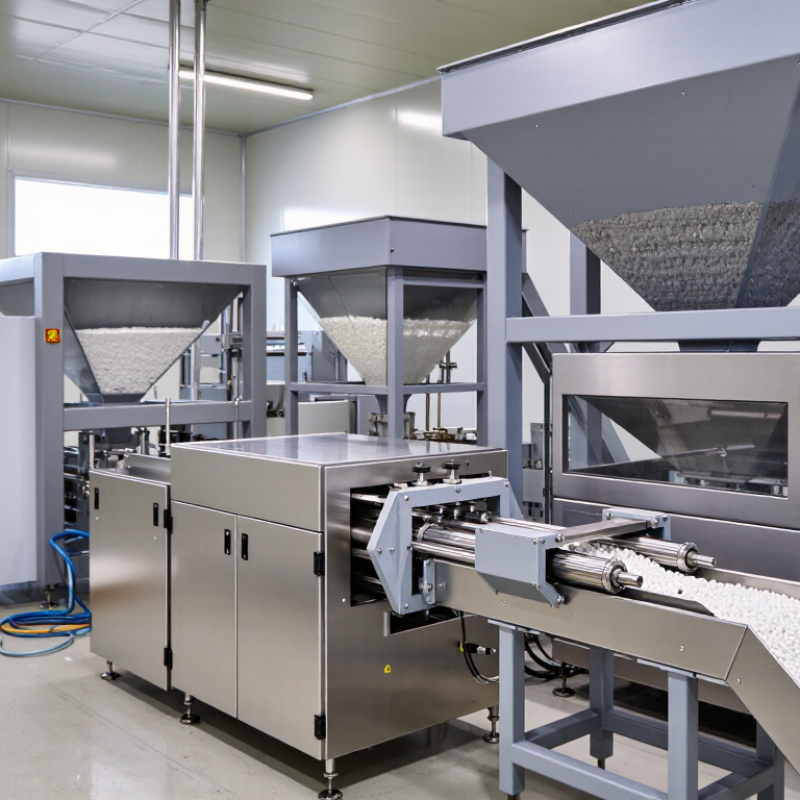
China Top Plastic Filler Making Machine Manufacturer

What Is a Plastic Filler Making Machine?

A plastic filler making machine is a compounding line that blends polymer resin with mineral powders, such as calcium carbonate or talc, to produce filler masterbatch pellets. It does not manufacture the mineral filler itself. A typical line uses feeders, a heated twin-screw extruder, cooling equipment, and a pelletizer. Operators monitor feed consistency, melt temperature, and screw speed. These settings affect powder dispersion and pellet quality.

The OECD’s Global Plastics Outlook (2022) estimates that global plastic production reached 460 million tonnes in 2019. The report also found that only 9% of plastic waste was ultimately recycled.

Filler masterbatch can reduce the amount of virgin polymer in some products, but it is not automatically a sustainability solution. Results depend on the application and material formulation. Poor powder dispersion can weaken a molded part; excess moisture can cause bubbles.

That distinction matters. A reliable setup needs trials, material testing, and routine checks—not just a high output rate. Some details are easy to overlook, especially when feedstock changes.

How Plastic Filler Machines Produce Mineral-Filled Compounds

China Top Plastic Filler Making Machine Manufacturer
How Plastic Filler Machines Produce Mineral-Filled Compounds

Mineral-filled compounds start with a controlled blend of polymer resin and fine mineral powder, often calcium carbonate or talc. A plastic filler making machine meters each ingredient into the process, helping maintain a consistent recipe. In a twin-screw extruder, rotating screws convey, melt, and mix materials under managed heat and shear. Good dispersion matters. Poorly distributed powder can cause specks, weak spots, or uneven surface texture in molded parts. Operators monitor melt pressure, motor load, and temperature, adjusting feed rates when readings drift.

Vacuum venting can remove trapped air and some moisture, while cooling and pelletizing turn the mixture into manageable granules. The settings depend on resin type, particle size, filler percentage, and the product’s intended use. Higher filler loads may reduce material costs, but can also affect impact strength and flow. That trade-off deserves testing. Small trials help. Check pellet appearance, feeding stability, and molded samples rather than relying on a recipe copied from another line. Production gets messy. Powder can bridge in a hopper, and humidity may shift behavior between batches. Careful records make those surprises easier to trace.

How Plastic Filler Machines Produce Mineral-Filled Compounds

Representative composition of a calcium-carbonate-filled polypropylene compound, by mass.

This illustrative formulation totals 100%: mineral filler is blended with polymer resin and additives during compounding. Actual recipes vary with the intended application, material grades, and performance requirements.

Main Components and Manufacturing Capabilities

China Top Plastic Filler Making Machine Manufacturer

Main Components and Manufacturing Capabilities

A plastic filler making machine must feed mineral powder steadily and disperse it evenly through polymer. Its core assembly typically includes a gravimetric feeder, twin-screw extruder, heating zones, vacuum vent, and pelletizer. The feeder controls powder flow; intermeshing screws help break up agglomerates. Small details matter. A leaking vent or unstable feed can leave pellets uneven in color and filler content.

Machine capability depends on more than the screw design. A qualified manufacturer should document machining, assembly, electrical integration, and trial runs with the intended material recipe. Test records can show output stability, motor load, and pellet consistency.

OECD’s Global Plastics Outlook (2022) reported 460 million tonnes of plastics production in 2019, while only 9% of plastic waste was ultimately recycled. These figures underline the need for dependable compounding and material-use data, but they do not prove that any single machine reduces waste.

Ask for a test using your powder, resin, and target filler ratio. Check samples for dispersion and moisture, not just appearance. A limitation remains: laboratory trials may not predict every production shift. Good documentation helps, but operators still need to monitor feeding and temperature.

How to Evaluate Leading Chinese Machine Manufacturers

China Top Plastic Filler Making Machine Manufacturer

When evaluating leading Chinese machine manufacturers, look beyond polished brochures and showroom displays. Ask how the equipment handles your actual resin, filler type, and target output. A useful trial should show feeding stability, mixing consistency, and finished-pellet quality under recorded settings. Watch the operators change settings and clear material from contact areas. Small details matter.

Request a factory acceptance test using representative materials, not only an easy demonstration blend. Review motor power, screw configuration, throughput, and energy use against your production needs. Ask for test data and clarify how each figure was measured. A supplier’s stated capacity may depend on formulation and operating conditions. That distinction is easy to miss.

Check whether technicians can explain routine maintenance, wear parts, and cleaning steps in plain terms. Confirm what training, installation support, and spare-parts response times are included in writing. Speak with reference customers who run similar formulations, if possible. Even a careful test cannot predict every production issue; note unanswered questions before signing. A neat machine is not enough.

Applications and Trends in Plastic Filler Production

Plastic filler production serves packaging, household goods, building materials, and automotive components.

Calcium carbonate is a common mineral filler, used to adjust material cost, stiffness, and surface finish. The right formulation depends on the polymer, product design, and processing conditions. A pipe compound and a thin packaging film do not need the same filler distribution.

A filler-making line typically combines feeding, mixing, compounding, cooling, and pelletizing. Consistent feeding matters: uneven powder flow can cause color variation, unstable output, or visible specks in finished products.

Small details matter.

Operators monitor temperature, screw speed, and melt pressure, then adjust settings when raw materials change. A machine can run steadily and still produce pellets that are too dusty or inconsistent.

Current production trends emphasize energy efficiency, tighter process control, and higher use of recycled polymers. Better dosing and mixing can help maintain dispersion when recycled feedstock varies from batch to batch. Automation also makes it easier to track operating data, but sensors cannot replace sensible quality checks. A quick pellet inspection still has value. More filler is not automatically better; excessive loading may reduce impact strength or create processing difficulties.

The practical goal is a stable formulation that meets the product’s needs without wasting material.

FAQS

What does a plastic filler making machine produce?

It blends polymer resin with mineral powders, such as calcium carbonate or talc. The output is filler masterbatch pellets. It does not make the mineral powder itself.

What equipment is usually included in the production line?

A typical line has feeders, a heated twin-screw extruder, cooling equipment, and a pelletizer. Each stage affects the final pellets.

Which operating settings need regular attention?

Operators monitor feed consistency, melt temperature, and screw speed. Melt pressure is also checked. Small details matter.

What can cause poor pellet or product quality?

Uneven powder feeding may cause color variation, unstable output, or visible specks. Poor dispersion can weaken molded parts. Excess moisture can create bubbles.

Can filler masterbatch make a plastic product more sustainable?

It may reduce the amount of virgin polymer in some products. Not by itself. Results depend on the material formulation and application.

Do different products need the same filler formulation?

No. A pipe compound and a thin packaging film have different needs. The polymer, product design, and processing conditions all matter.

Does adding more mineral filler always improve a product?

No. Excessive loading may reduce impact strength or make processing difficult. A stable formulation is usually more useful than simply adding more.

How can manufacturers manage changes in recycled feedstock?

Better dosing and mixing can help maintain dispersion between batches. Operators can track process data and inspect the pellets. Sensors do not replace sensible checks.

What should operators check during a production trial?

Check feeding consistency, temperature, screw speed, and pellet quality. A high output rate can hide dusty or inconsistent pellets. I might overlook that at first.

Conclusion

A Plastic Filler Making Machine combines plastic resin with mineral fillers, such as calcium carbonate, to create compounds with tailored properties. The production process typically involves feeding and accurately dosing materials, melting and mixing them through controlled extrusion, then cooling and cutting the output into uniform pellets. Careful control of temperature, screw speed, and material proportions helps achieve consistent dispersion and product quality.

When evaluating a Chinese manufacturer, buyers can consider equipment design, component quality, production capacity, customization options, technical support, and quality-control practices. Applications for mineral-filled compounds include packaging, household products, construction materials, and other plastic goods. As the industry develops, manufacturers are focusing on improved energy efficiency, automation, stable processing, and flexible production to meet changing material requirements.

Madeline

Madeline

Madeline is a dedicated marketing professional with a wealth of expertise in our company's core offerings. With a keen understanding of the industry, she brings a unique perspective to her role, consistently delivering high-quality content that highlights the superior aspects of our products. As......