
China Best Production Line for Water and Oil Bottles

Time:2026-10-02 Author:Henry
0%

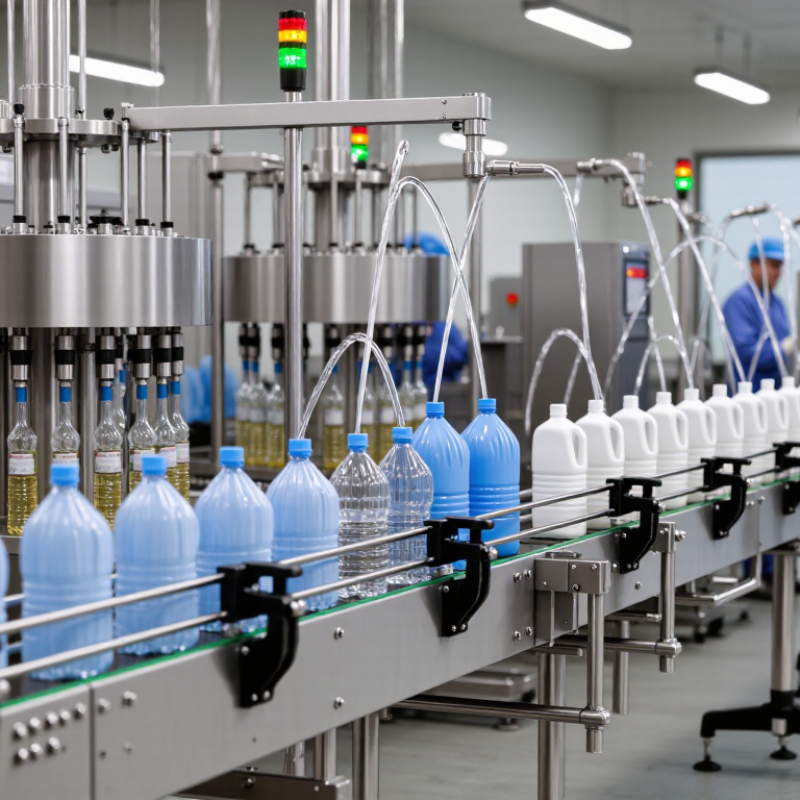
Choosing the right China Best Production Line for Water and Oil Bottles requires more than comparing machine prices. It demands careful attention to output, product safety, energy use, and long-term service. A modern Production Line For Water Bottle Oil Bottle can include preform heating, bottle blowing, rinsing, filling, capping, labeling, and final inspection. Each stage affects the finished container. A small temperature change can distort a PET bottle. An uneven filling valve can create visible volume differences. These details matter on a busy production floor.

Reliable Chinese manufacturers usually support complete line design, installation, operator training, and spare-parts planning. Their experience covers different bottle shapes, production capacities, and materials, including PET and HDPE. Technical teams should review water viscosity, edible oil flow, bottle neck sizes, cleaning requirements, and factory space before recommending equipment. Food-contact components must be selected carefully and documented clearly. Automated sensors can monitor caps, labels, liquid levels, and damaged bottles. Useful data. It helps operators respond before waste increases.

However, no production line is perfect. Even a well-engineered system needs regular maintenance, skilled supervision, and honest performance testing. Some catalog figures may look attractive but require practical verification. Buyers should request sample trials, layout drawings, energy estimates, and references from comparable factories. This article examines the main equipment, technical choices, quality controls, and supplier evaluation points behind a dependable solution. The goal is not simply higher speed. It is stable production, consistent packaging, and safer daily operation.
China Best Production Line for Water and Oil Bottles

Bottle Design and Material Selection for Water and Oil Packaging

Bottle design should begin with the product, not the filling machine. Water usually needs clarity, light weight, and a comfortable grip. Oil needs stronger barrier control because oxygen and light can affect flavor and color. A narrow neck can reduce pouring spills. Yet it may slow filling and cleaning. That trade-off matters.

For water bottles, PET is common because it offers transparency, stiffness, and efficient forming. Recycled content may support sustainability goals, but its color and performance can vary. HDPE suits some oil packs because it resists impact and provides a practical opaque wall. For sensitive oils, multilayer structures or barrier additives may deserve testing. Material approval should include migration, odor, seal integrity, and drop performance. Do not rely on a resin datasheet alone.

Experienced production teams match the preform, mold, cap, and label to the bottle’s final use. A thin shoulder may save material, but it can deform during hot storage or transport. This risk is easy to underestimate. Small changes matter. Test filled bottles under vibration, stacking pressure, temperature changes, and repeated opening. Check the real bottle, not only the drawing. A reliable production line is built around measured results, clear specifications, and honest review of failures.

Raw Material Preparation and Preform Manufacturing

China Best Production Line for Water and Oil Bottles

Raw Material Preparation and Preform Manufacturing

A reliable bottle line begins with disciplined raw material preparation. PET resin for water bottles must stay dry before injection molding. Moisture above about 50 ppm can reduce intrinsic viscosity and create brittle preforms. Dehumidifying dryers, sealed conveying, and clean storage are essential. Oil containers may require HDPE or PP instead of PET. The material choice depends on chemical resistance, stiffness, and filling temperature.

The 2024 PlasticsEurope “Plastics – the Fast Facts” report recorded 413.8 million tonnes of global plastics production in 2023. China contributed roughly one-third of this volume. This scale supports strong local supply chains, but it does not guarantee consistent quality. Resin batches should be checked for moisture, color, intrinsic viscosity, and contamination. A 2024 Smithers packaging report also identifies lightweighting and recycled content as major PET development trends. These changes can complicate preform design. Thinner does not always mean better.

Tips: Keep resin silos sealed. Record dryer dew point and actual material moisture. Test preform weight hourly during production. Small deviations can cause weak necks, uneven walls, or unstable bottle blowing. Mold temperature also deserves attention. Operators sometimes adjust injection pressure too quickly, hiding a cooling or drying problem. That shortcut may work briefly. It often creates defects later.

Bottle Forming Through Blow Molding Technology

Blow molding technology shapes the performance of water and oil bottles. In injection stretch blow molding, PET preforms are heated, stretched, and formed inside precision cavities. This process aligns polymer molecules, improving clarity and impact strength. For thicker oil containers, extrusion blow molding can produce durable HDPE bodies with integrated handles. The choice depends on viscosity, filling temperature, wall thickness, and transport conditions.

Market research reflects continued demand for lightweight packaging. Smithers’ 2024 report estimates that global PET packaging demand will keep expanding through 2028, supported by beverage consumption and improved recycling systems. Grand View Research also reports steady growth in the global blow molded plastics market, with food, beverage, and household packaging among major applications. These figures support investment, but they should not replace line-specific testing.

A reliable production line controls preform temperature, stretch ratio, mold cooling, and air pressure in real time. Small temperature differences can create cloudy sections, thin shoulders, or unstable bases. Oil bottles need extra attention around sealing surfaces and panel strength. Practical trials should test drop resistance, top-load performance, leakage, and dimensional stability. Not every lightweight design is efficient. Sometimes, reducing resin too far increases rejects and weakens transport performance. The best result comes from balancing material savings with consistent bottle forming.

China Best Production Line for Water and Oil Bottles - Bottle Forming Through Blow Molding Technology
Production Stage Main Function Applicable Materials Typical Technical Range Suitable Bottle Applications Quality and Process Considerations
Material Preparation Stores, conveys, and prepares polymer resin before bottle forming. PET for water bottles; HDPE or PP for many edible-oil bottles. Resin moisture control is essential. PET is commonly dried at approximately 160–180°C for several hours, depending on the resin and dryer design. Clear water bottles, lightweight PET containers, opaque HDPE oil bottles. Moisture and contamination control help reduce haze, brittleness, black specks, and inconsistent wall thickness.
Preform or Parison Production Creates a PET preform for stretch blow molding or a hot parison for extrusion blow molding. PET preforms; HDPE and PP extrusion parisons. Preform mass and neck finish are selected according to bottle volume, design, and required top-load strength. Preforms are common for PET water bottles; parisons are common for handled or wide-neck oil containers. Stable molding temperature, accurate dosing, and uniform preform or parison dimensions are required.
Preform Heating Heats PET preforms to make the material suitable for axial and circumferential stretching. PET Typical preform surface temperatures are approximately 95–120°C, subject to bottle geometry, resin grade, and machine settings. Lightweight water bottles and pressure-resistant PET containers. Heating must be balanced around the preform. Uneven heating can cause pearlescence, thin areas, deformation, or poor material distribution.
Extrusion Parison Heating Plasticizes resin and continuously forms a tubular parison for extrusion blow molding. HDPE, PP, and selected engineering thermoplastics. Barrel and die temperatures are commonly adjusted within approximately 160–230°C, depending on the polymer grade and equipment. Cooking-oil bottles, detergent-style containers, technical bottles, and wide-mouth packaging. Parison programming can compensate for stretching and improve wall-thickness distribution in complex shapes.
Bottle Forming by Blow Molding Expands the heated preform or parison against a cooled mold cavity to create the bottle shape. PET, HDPE, and PP PET stretch blow molding commonly uses high-pressure air around 25–40 bar. Extrusion blow molding generally uses lower blow-air pressure, often approximately 6–10 bar. Single-layer water bottles, edible-oil bottles, household liquid containers, and custom-shaped packaging. Blow pressure, stretch ratio, mold temperature, and air timing influence clarity, strength, cycle time, and dimensional accuracy.
Mold Cooling Removes heat from the bottle and stabilizes the final dimensions. All blow-molded thermoplastics Chilled water is commonly supplied at approximately 8–15°C, with the actual setting determined by ambient conditions and bottle design. High-speed PET water bottle lines and continuous HDPE oil bottle production. Uniform cooling prevents deformation, uneven shrinkage, stress concentration, and difficulties during mold release.
Mold Opening and Bottle Ejection Opens the mold and transfers finished bottles to the discharge conveyor. PET, HDPE, and PP containers Cycle time varies with bottle volume, number of cavities, resin, wall thickness, and cooling efficiency. Small water bottles, medium oil bottles, and larger handled containers. Controlled ejection reduces scratches, neck deformation, sticking, and damage to lightweight bottles.
Trimming and Deflashing Removes excess plastic from the bottle neck, handle area, base, or parting line when required. Primarily HDPE and PP extrusion-blow containers; selected PET applications. Automated trimming is selected according to flash location, bottle geometry, and production speed. Handled oil bottles, wide-neck containers, and bottles with complex molded features. Trimmed edges should be smooth and free from loose plastic. Regrind use must follow the packaging application requirements.
Leak and Pressure Testing Checks bottle integrity before filling, labeling, and packing. PET, HDPE, and PP Testing pressure and duration are defined by bottle design, closure system, filling process, and applicable quality specifications. Water bottles, edible-oil bottles, and containers requiring reliable seal performance. Typical checks include leakage, neck dimensions, base stability, wall thickness, weight, and visual appearance.
Inspection and Sorting Identifies defects and separates nonconforming bottles from acceptable production. All bottle materials Inspection may be manual or automated using vision systems, weight checks, dimensional gauges, and leak detectors. High-volume beverage and edible-oil packaging lines. Common defects include short shots, thin walls, deformation, contamination, poor transparency, flash, and incorrect neck dimensions.
Conveying and Accumulation Transfers bottles between forming, inspection, filling, and packing operations. All bottle materials Line speed and conveyor layout are matched to the number of mold cavities and downstream filling capacity. Integrated water-bottle and oil-bottle packaging systems. Low-friction guides, stable air pressure, and adequate accumulation space help prevent bottle jams and damage.
Typical Production Capacity Defines expected output based on cavities, cycle time, bottle size, and operating efficiency. PET, HDPE, and PP A single machine may produce from several hundred to tens of thousands of bottles per hour, depending on the technology and configuration. Small PET water bottles, medium oil containers, and larger specialty bottles. Actual output should be calculated using rated cycles, cavity count, changeover time, reject rate, and planned operating hours.
Utility Requirements Provides compressed air, cooling water, electrical power, and ventilation required for stable operation. All blow-molding systems Utilities depend on machine size and process. PET systems usually require high-pressure blowing air; extrusion systems require process cooling and compressed air. Standalone bottle-forming machines and complete packaging lines. Correct air filtration, dew-point control, cooling capacity, and electrical protection are important for product consistency.
Changeover and Maintenance Adapts the line to different bottle sizes, shapes, neck finishes, and materials. PET, HDPE, and PP Changeover time depends on mold design, preform or parison specifications, automation level, and operator experience. Multi-format water and edible-oil bottle production. Routine maintenance includes mold cleaning, heater inspection, air-filter replacement, lubrication, sensor checks, and calibration.

Filling, Capping, Labeling, and Quality Inspection

A reliable production line for water and oil bottles must connect filling, capping, labeling, and quality inspection without weak links. In practical factory settings, operators first adjust the filling volume to match each bottle’s shape and liquid behavior. Water moves quickly, while oil often needs slower, controlled filling to reduce dripping. Stainless steel contact parts support easier cleaning and stable daily operation.

Capping follows immediately. Torque control helps prevent loose closures and damaged threads. Too much pressure can deform a cap. Too little pressure may cause leakage during transport. Labels should remain straight on clean, dry surfaces. Sensors can detect missing caps, tilted labels, and bottles outside the filling position. Small errors become expensive when they repeat for several hours.

Quality inspection should include fill level, cap presence, label position, seal condition, and bottle appearance. A camera can identify scratches or dents, but human checks still provide useful judgment. No line is perfect. A rushed format change can leave incorrect settings behind. Clear records, sample checks, and operator training reduce that risk. Production teams should review rejected bottles instead of hiding the numbers. This habit improves reliability over time and supports safer, more consistent packaging for water and edible oils.

Packaging Automation and Production Line Efficiency

China Best Production Line for Water and Oil Bottles

Packaging Automation and Production Line Efficiency

A modern bottle production line must manage different materials, shapes, and filling speeds. Water bottles usually require fast, clean handling and accurate volume control. Oil bottles need stronger sealing performance and careful protection against surface contamination. In practical factory assessments, I examine the complete process, from bottle feeding to palletizing. Small delays often appear between machines, not inside them.

Automation improves efficiency when equipment communicates clearly. Sensors can detect missing bottles, incorrect caps, and unstable liquid levels. Servo-driven systems support precise filling and smoother changeovers. Automated conveyors also reduce manual carrying, which lowers handling errors and workplace strain. The best setup records production data continuously. Operators can review speed, downtime, rejected units, and energy use. Clear records make maintenance decisions more reliable.

Simple details matter. A clean transfer point prevents bottles from tipping. A properly adjusted capper reduces leaks during transport. Good line spacing helps workers inspect products safely. However, automation is not a magic answer. Poorly planned layouts can create new bottlenecks. A fast filler may wait for a slow labeler. That weakness is easy to miss.

Real efficiency requires testing with actual bottle sizes, closures, and liquids. Trial runs should include start-up, changeover, cleaning, and unexpected stops. One overlooked setting can affect an entire shift. That is where experience matters. Review the data, question the assumptions, and improve the line gradually.

FAQS

How should a bottle design begin?

Start with the product and its handling conditions. Water needs clarity, light weight, and a comfortable grip. Oil often needs stronger protection from oxygen and light. The filling machine should not lead the design.

Which materials suit water and oil bottles?

PET commonly suits water because it is clear, stiff, and easy to form. HDPE or PP may suit oil containers needing impact resistance. Sensitive oils may require multilayer structures or barrier additives. Material choice still needs testing.

Can a narrow bottle neck improve packaging?

Yes, a narrow neck can reduce pouring spills. However, it may slow filling and cleaning. This trade-off is easy to overlook. Better pouring is not always better production.

How should PET resin be prepared?

Keep PET resin dry before injection molding. Moisture above roughly 50 ppm may create brittle preforms. Use sealed storage and dehumidifying dryers. Record dew point and actual moisture levels.

What should production teams check in each resin batch?

Check moisture, color, intrinsic viscosity, and contamination. Do not trust a resin datasheet alone. Small variations can weaken necks or create uneven bottle walls. The paperwork may look perfect.

What makes a preform reliable?

Measure preform weight regularly during production. Match the preform with the mold, cap, and final bottle use. Control mold temperature and injection settings carefully. Changing pressure too quickly may hide drying problems.

When is stretch blow molding useful?

It heats, stretches, and forms PET preforms inside precision cavities. Molecular alignment can improve clarity and impact strength. Control temperature, stretch ratio, cooling, and air pressure. Tiny temperature differences matter.

How should finished bottles be tested?

Test filled bottles under vibration, stacking pressure, temperature changes, and repeated opening. Check drop resistance, leakage, top-load strength, and dimensions. Inspect the real bottle, not only its drawing. A drawing can mislead.

Is lightweight packaging always more efficient?

No, reducing resin too far may increase rejects and transport damage. Thin shoulders can deform during hot storage. Lightweighting needs measured evidence. Sometimes, heavier performs better.

Conclusion

A modern Production Line For Water Bottle Oil Bottle is designed to transform carefully selected materials into safe, durable, and attractive packaging. The process begins with bottle design and material selection, considering capacity, shape, strength, transparency, chemical resistance, and suitability for water or edible oil. Raw materials are then prepared and heated to produce high-quality preforms with consistent dimensions and weight. Through advanced blow molding technology, these preforms are expanded into finished bottles with precise shapes and reliable wall thickness.

After forming, the bottles move through filling, capping, labeling, and quality inspection stages. Automated systems help maintain accurate filling levels, secure closures, clear labels, and hygienic production conditions. Inspection procedures check appearance, dimensions, sealing performance, and overall integrity before packaging. Finally, coordinated packaging automation improves counting, sorting, grouping, and shipment preparation, helping reduce manual work, increase production efficiency, and maintain stable output. This integrated approach supports flexible packaging solutions for both water and oil products while promoting consistent quality and efficient operation.

Henry

Henry

Henry is a dedicated marketing professional with a profound expertise in the company's offerings. With years of experience in the industry, he possesses an impressive understanding of the market dynamics and consumer behaviors that drive success. Henry is committed to sharing his insights through......