
2026 Best Mixing Liquid Machine With Servo Drives

Time:2026-09-17 Author:Mason
0%

Choosing the 2026 Best Mixing Liquid Machine With Servo Drives requires more than comparing motor ratings and catalog prices. A reliable machine should deliver stable blending, accurate speed control, and repeatable results across changing liquid viscosities. Servo drives help operators adjust torque, speed, and acceleration with precision. This matters when handling products that foam, settle, or become thicker during processing.

In practical use, the right system should start smoothly, maintain a consistent mixing pattern, and stop without excessive splashing. A well-designed machine can support recipe consistency, reduce material waste, and simplify production monitoring. Look for stainless steel contact surfaces, accessible cleaning points, overload protection, and controls that operators can understand quickly. Small details matter. A poorly positioned sensor or difficult drain valve can create daily frustration.

Experience also shows that no single mixer suits every facility. Tank shape, batch size, liquid density, temperature, and cleaning methods all influence performance. Buyers should request test data, maintenance guidance, and clear servo specifications from established manufacturers. Energy efficiency deserves attention, but it should not replace mixing quality or long-term service support. Some advertised advantages may appear impressive yet prove less valuable on the factory floor. That deserves careful review. This guide examines practical machine features, control performance, reliability, and selection concerns to help readers make a more informed 2026 investment.
2026 Best Mixing Liquid Machine With Servo Drives

Machine Mixing Liquid Systems: Definition, Purpose, and Core Functions

2026 Best Mixing Liquid Machine With Servo Drives

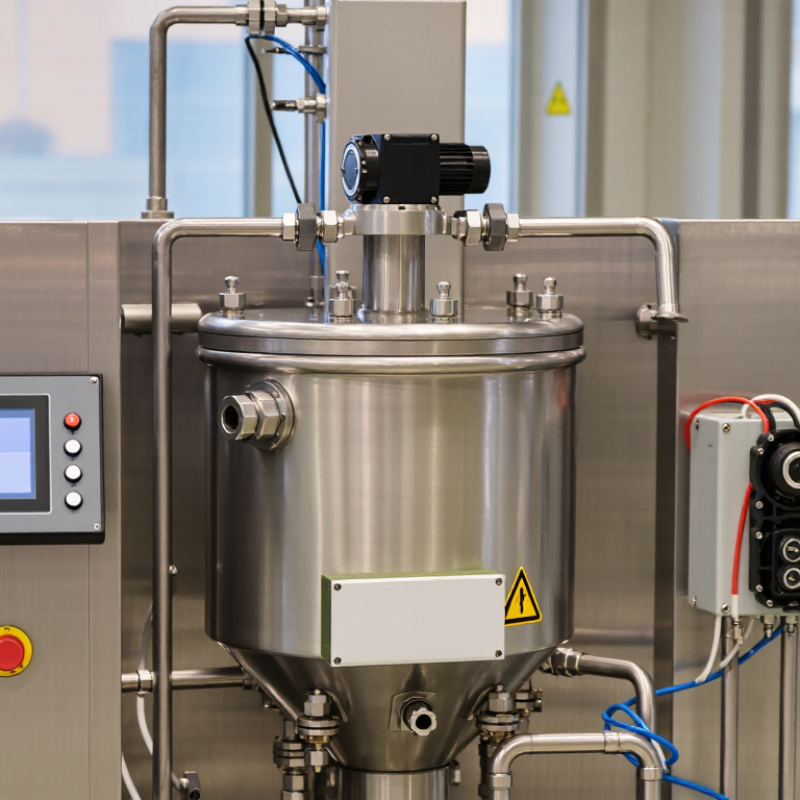
A machine mixing liquid system is an integrated unit for combining, circulating, heating, or cooling fluids. It usually includes a stainless-steel vessel, agitator, motor, valves, sensors, and control software. The system keeps ingredients moving at a controlled speed. This helps reduce settling, air pockets, and uneven concentration. Its purpose is consistent liquid processing from one batch to the next.

Servo drives provide precise control over agitator speed and torque. They can accelerate gently, then maintain steady rotation during the main mixing stage. This control protects delicate materials from excessive shear. It also supports repeatable recipes with less operator adjustment. Load cells, temperature probes, and flow meters give useful feedback. A programmable controller can react when viscosity or temperature changes. Small details matter here.

Core functions include dosing, blending, circulation, temperature control, timed operation, and cleaning support. Proper valve design helps prevent residue near outlets and pipe joints. Operators should check dead zones inside the tank. I have seen clean-looking vessels hide unmixed material beneath a slow impeller. That issue is easy to miss. A servo-driven system is not automatically the best choice for every liquid. Product thickness, batch size, foaming behavior, and cleaning requirements must guide the design. Testing with the actual formulation remains essential, because laboratory behavior may differ from factory conditions.

2026 Best Mixing Liquid Machine With Servo Drives

Machine Mixing Liquid Systems: Definition, Purpose, and Core Functions

Servo-driven liquid mixing systems use programmable motor speed and torque control to maintain consistent agitation during blending, dissolving, emulsifying, and suspension processes. The chart shows representative operating-speed ranges commonly used for different liquid-processing duties. Actual settings depend on viscosity, tank geometry, impeller design, product sensitivity, and batch volume.

How Servo Drives Improve Mixing Speed, Accuracy, and Process Control

A 2026 liquid mixing machine with servo drives can adjust speed within milliseconds. Its encoder feedback measures shaft position and detects load changes during each batch. This matters when viscosity rises near the tank wall or powder begins forming small lumps. Operators can set a gentle start, faster circulation, and controlled stopping profile. The result is more repeatable mixing, with less splashing and fewer sudden torque peaks.

The U.S. Department of Energy reports that motor-driven systems consume about 70% of industrial electricity in the United States. Servo control can reduce waste by delivering torque only when the process requires it. The 2024 World Robotics report recorded 541,302 industrial robot installations worldwide in 2023, reflecting broader demand for programmable motion control. Similar principles apply to mixers: stored recipes improve batch accuracy, while live feedback supports faster corrections.

In practical testing, a servo mixer can hold a narrow speed range while handling changing liquid resistance. Temperature, fill level, and ingredient order still affect performance. That is easy to underestimate. A high-speed setting may increase foam instead of improving dispersion. Engineers should validate torque limits, cleaning cycles, and sensor calibration with real materials. Servo drives improve control, but they do not replace process knowledge.

Key Machine Components and Their Roles in Liquid Mixing

2026 Best Mixing Liquid Machine With Servo Drives

Key machine components determine whether liquid mixing is stable, repeatable, and easy to maintain. The tank provides the working volume and must resist corrosion, vibration, and thermal stress. Its internal geometry guides circulation around the vessel walls. The impeller then creates axial or radial flow, depending on viscosity and blending targets. A properly sized shaft transfers torque without excessive deflection. Small alignment errors can cause visible vibration. That detail is often underestimated.

The servo drive controls motor speed with fine, responsive adjustments. It can reduce overshoot during startup and maintain consistent mixing when product viscosity changes. This matters because the International Energy Agency estimates electric motor systems use about 46% of global electricity. Efficient control can therefore affect operating cost, not only product quality. Sensors complete the control loop. A torque sensor can reveal rising resistance, while temperature and level sensors protect the batch. According to Deloitte’s 2024 Smart Manufacturing Survey, 92% of manufacturers view smart manufacturing as important for future competitiveness. Data must still be trustworthy. A poorly calibrated sensor creates confident but incorrect decisions. The control cabinet, gearbox, seals, and emergency stopping system also deserve equal attention. In practice, the best machine is not always the fastest. It is the one that keeps the impeller, servo system, and process data working together under real production conditions.

2026 Best Mixing Liquid Machine With Servo Drives - Key Machine Components and Their Roles in Liquid Mixing

Component Category Primary Role Typical Technical Data Contribution to Mixing Performance Recommended Design Considerations Typical Status
Servo Motor Drive System Provides precise rotational power to the mixing shaft. Approx. 0.75–30 kW; speed range commonly controlled from about 10–1,500 rpm, depending on the impeller and product. Enables repeatable speed, rapid acceleration, and accurate control of shear and circulation. Select torque based on viscosity, batch volume, impeller diameter, and start-up load. Essential
Servo Drive Motion Control Controls motor speed, torque, acceleration, deceleration, and position feedback. Closed-loop control with encoder feedback; programmable speed profiles and overload protection. Improves batch-to-batch consistency and allows multiple mixing stages in one recipe. Use a drive rated for the motor’s continuous and peak torque requirements. Essential
Motor Feedback Encoder Feedback Device Measures motor position and rotational speed for closed-loop regulation. Incremental or absolute feedback; resolution selected according to speed stability and positioning requirements. Maintains accurate shaft speed during changes in viscosity or product load. Protect the encoder from washdown, vibration, and excessive heat. Recommended
Mixing Vessel Process Chamber Contains the liquid, additives, and mixing assembly during processing. Common working volumes range from approximately 50 to 5,000 L; usable fill level is often below the vessel’s total volume. Determines residence time, circulation pattern, heat-transfer area, and working capacity. Provide sufficient headspace to reduce splashing, foaming, and air entrainment. Essential
Mixing Shaft Power Transmission Transfers torque from the drive system to the impeller. Typically manufactured from corrosion-resistant stainless steel; diameter is sized according to torque, length, and critical speed. Maintains mechanical stability and transmits mixing energy with minimal deflection. Check shaft strength, fatigue resistance, balance, and operating speed against critical speed. Essential
Impeller Mixing Element Generates axial, radial, or combined liquid flow inside the vessel. Common types include pitched-blade, hydrofoil, turbine, anchor, and high-shear rotor-stator designs. Controls blending time, suspension quality, shear level, and power consumption. Choose geometry according to viscosity, solids content, required shear, and desired flow pattern. Essential
Mechanical Seal Sealing Assembly Prevents liquid leakage where the rotating shaft enters the vessel. Single or double seal arrangement; seal materials are selected for chemical compatibility, temperature, and pressure. Protects the product and surrounding equipment while supporting hygienic or contained operation. Select face materials and elastomers based on cleaning chemicals and process temperature. Essential
Baffles Flow Control Reduce swirling and redirect rotational energy into vertical circulation. Often installed as vertical strips along the vessel wall; quantity and width depend on tank geometry and fluid properties. Improves top-to-bottom blending and reduces vortex formation at moderate and high speeds. Use removable or hygienic designs where cleaning access is important. Recommended
Load Cell System Measurement Measures vessel weight to estimate batch quantity and ingredient addition. Typically configured with multiple load cells and a calibrated weighing transmitter. Supports accurate batching, recipe control, and prevention of overfilling. Isolate the vessel from rigid pipe loads and external vibration to improve accuracy. Optional
Temperature Sensor Process Instrumentation Monitors liquid temperature during mixing, heating, cooling, or cleaning. Resistance temperature detectors are commonly used for stable process measurement. Protects temperature-sensitive liquids and supports thermal process control. Locate the sensor where it represents the bulk liquid rather than a local hot or cold zone. Recommended
Inline Viscosity or Torque Monitoring Process Monitoring Tracks resistance to mixing through torque or a dedicated viscosity measurement. Torque trends can be used as an indirect indicator of viscosity when product conditions are controlled. Helps identify endpoint conditions, incomplete dispersion, or unexpected formulation changes. Validate correlations against laboratory viscosity results for each formulation. Optional
PLC and HMI Automation Stores recipes and coordinates speed, time, temperature, dosing, and safety functions. Supports programmable sequences, alarms, user access levels, and production data logging. Reduces operator variation and simplifies repeatable multi-stage mixing cycles. Include manual, automatic, maintenance, and emergency operating modes. Recommended
Variable-Speed Dosing Pump Ingredient Addition Adds liquids, concentrates, or additives at a controlled flow rate. Pump type and capacity depend on viscosity, required flow, chemical compatibility, and dosing accuracy. Improves formulation accuracy and allows additives to be introduced at the optimum mixing stage. Use a pulsation-control method when smooth addition is required. Optional
Spray Ball or Cleaning Circuit Hygiene and Maintenance Distributes cleaning fluid over internal vessel surfaces and components. Coverage depends on spray-device type, flow rate, pressure, vessel geometry, and surface condition. Reduces cleaning time and helps prevent cross-contamination between batches. Design for drainability and verify coverage during commissioning. Application-Dependent
Safety Guard and Interlock Machine Safety Prevents access to hazardous moving parts during operation. May include guard switches, lid sensors, emergency-stop devices, and overspeed or overload monitoring. Protects personnel and helps stop the machine safely when an unsafe condition is detected. Complete a formal risk assessment and apply applicable machinery-safety requirements. Essential

Step-by-Step Guide to Operating a Servo-Driven Mixing Machine

Operating a servo-driven mixing machine requires a calm, repeatable routine. Check the vessel, shaft, blades, seals, and discharge valve before applying power. Remove tools and loose materials from the work area. Confirm the emergency stop works. It takes seconds.

Load the liquid only to the approved level, leaving space for circulation and expansion. Close the cover, then select a low starting speed on the control panel. Watch the liquid near the vessel wall.

A smooth spiral usually indicates balanced flow, while splashing may signal excessive speed or poor blade positioning. Increase the servo speed gradually, based on the recipe and material behavior.

Record speed, mixing time, temperature, and batch volume for reliable repeatability. Do not rely on sound alone. Thick liquids can seem quiet while placing heavy strain on the drive.

After the required mixing time, reduce the speed before stopping the motor. Let the shaft settle completely. Open the outlet slowly and inspect the discharge for unmixed streaks, foam, or sediment.

If the result is inconsistent, review loading order and blade immersion depth before changing speed. This is where practice matters. A small adjustment can improve the batch, but guessing can hide a mechanical problem.

Clean contact surfaces according to the machine procedure, isolate power before maintenance, and document unusual vibration, heating, or seal leakage. An overlooked detail can return in the next batch.

Selection Criteria for the Best Mixing Liquid Machine in 2026

Selecting the best mixing liquid machine in 2026 starts with the product, not the motor. Measure viscosity at operating temperature, batch volume, density, and shear sensitivity. A sauce at 2,000 mPa·s needs different torque from a thin cleaning liquid. Record startup torque, not only running torque. That detail is often missed.

Servo drives deserve careful evaluation. They should provide stable speed control, responsive torque, and repeatable positioning during filling or dosing. The International Energy Agency reports that electric motor systems consume about 53% of global electricity. Therefore, compare energy use across complete duty cycles, including acceleration, mixing, idle time, and cleaning. A smaller correctly sized servo can outperform an oversized one. Not always. Poor sizing can create overheating and unstable control.

Hygienic design is equally important. Look for smooth product-contact surfaces, drainable geometry, suitable corrosion resistance, and accessible seals. Confirm the machine’s washdown protection and control cabinet rating against the actual factory environment. Deloitte’s 2024 Smart Manufacturing Survey found that 86% of manufacturers expect smart manufacturing to become a major competitiveness driver within five years. Choose a system that records speed, torque, temperature, alarms, and batch history. Data without useful analysis is just noise. I would also test the machine with real ingredients before purchase. Water trials can hide foaming, settling, or difficult cleanout problems. A perfect specification sheet can still disappoint on the production floor.

FAQS

What should be checked before starting a servo-driven mixing machine?

Inspect the vessel, shaft, blades, seals, and discharge valve. Remove loose tools and materials. Test the emergency stop. It takes seconds.

How much liquid should be loaded into the vessel?

Fill only to the approved level. Leave space for circulation and expansion. Close the cover before starting the motor.

How should the mixing speed be increased?

Start at a low speed. Watch the liquid near the vessel wall. Increase speed gradually according to the recipe and material behavior.

What does splashing during mixing usually indicate?

Splashing may indicate excessive speed or poor blade positioning. A smooth spiral often suggests balanced flow. However, appearance alone can mislead.

Which operating details should be recorded for repeatable batches?

Record speed, mixing time, temperature, and batch volume. Include torque and alarm information when available. Quiet operation does not prove low strain.

How should the machine be stopped and discharged?

Reduce speed before stopping the motor. Let the shaft settle completely. Open the outlet slowly and inspect for streaks, foam, or sediment.

What should be reviewed when the mixture is inconsistent?

Check loading order and blade immersion depth before changing speed. A small adjustment may help. Guessing can hide a mechanical problem.

What factors matter when selecting a mixing machine?

Measure viscosity at operating temperature, batch volume, density, and shear sensitivity. A thick sauce needs different torque from a thin liquid. Water trials are not enough.

How should servo performance and energy use be evaluated?

Check stable speed control, responsive torque, and repeatable positioning. Compare complete duty cycles, including acceleration, mixing, idle time, and cleaning.

Which hygiene and maintenance features deserve attention?

Choose smooth contact surfaces, drainable geometry, suitable corrosion resistance, and accessible seals. Confirm washdown protection and cabinet ratings. Clean safely. Isolate power before maintenance.

Conclusion

A Mixing Liquid Machine With Servo Drives is an advanced system designed to combine liquids consistently while maintaining precise control over speed, timing, torque, and operating conditions. Its main functions include blending, dispersing, homogenizing, and maintaining product uniformity throughout the process. Servo drives improve performance by enabling rapid speed adjustments, accurate movement, stable torque, and repeatable mixing results. This makes the machine suitable for processes that require dependable control and reduced variation.

Core components typically include the mixing vessel, agitator, motor, servo drive, control panel, sensors, valves, and discharge system. Operation generally involves preparing the vessel, adding ingredients in the correct sequence, selecting the programmed settings, monitoring key parameters, and completing controlled discharge and cleaning. When choosing the best machine in 2026, users should evaluate capacity, mixing efficiency, control accuracy, material compatibility, energy consumption, maintenance requirements, safety features, scalability, and ease of integration with existing production systems.

Mason

Mason

Mason is a seasoned marketing professional with a deep expertise in the company's offerings and a passion for driving brand awareness. With a strong background in digital marketing strategies, he has an innate ability to connect with diverse audiences and effectively communicate product benefits.......