In the realm of food processing, the importance of a reliable equipment cannot be overstated. The Homogenizer Mixer Machine stands out as a crucial tool for achieving consistency and quality in various products. Its ability to blend, emulsify, and homogenize ingredients is unparalleled. This machine ensures that food and beverage products have a uniform texture and taste, enhancing consumer satisfaction.
Beyond its mixing capabilities, the Homogenizer Mixer Machine also significantly improves product shelf life. It reduces separation, which helps in maintaining the quality of the ingredients over time. Additionally, this machinery aids in optimizing production processes, often leading to increased efficiency.
However, it is essential to choose the right machine according to specific needs. Not all homogenizers are created equal. Factors such as capacity, power requirements, and maintenance need careful consideration. Thus, understanding the advantages of using a Homogenizer Mixer Machine is vital for businesses aiming to stand out in a competitive market.
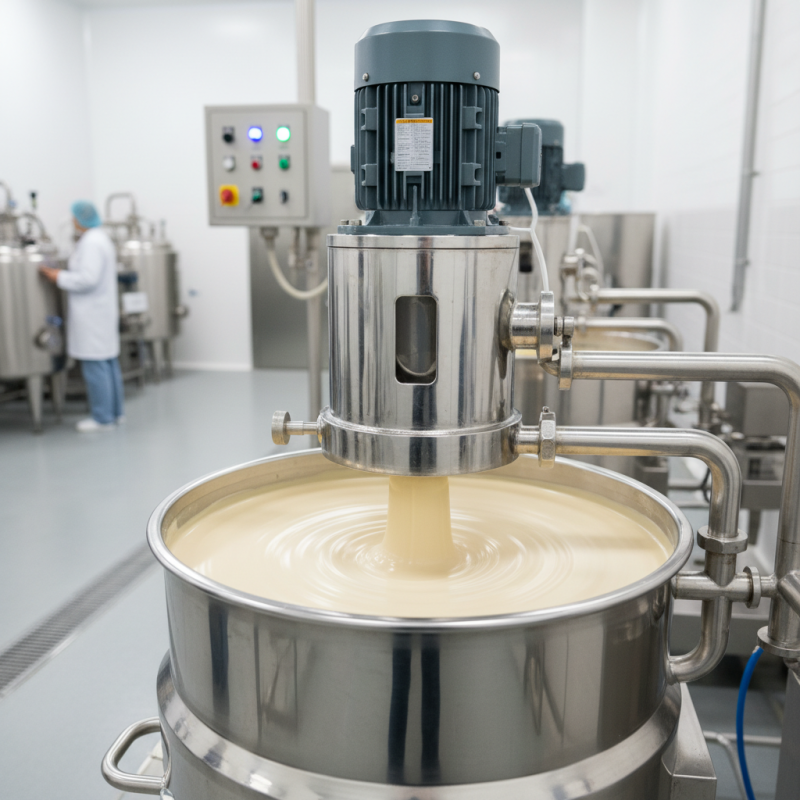
Understanding Homogenizer Mixer Machines and Their Purpose
Homogenizer mixer machines play a crucial role in various industries, particularly in food and pharmaceutical sectors. They ensure uniformity and consistency in products by blending different substances at high speeds. This process reduces particle size and enhances the product's stability. For instance, in dairy processing, homogenizers are used to create smooth milk and yogurt, preventing cream from separating.
Understanding how these machines work is vital for optimizing their use. They apply shear forces to mix, emulsify, and disperse materials. Operators must choose the right settings for each application. Tasks can be intricate, and errors in settings may lead to inconsistent textures or inadequate emulsification.
The versatility of homogenizer mixer machines is remarkable. They handle various materials, from thick creams to thin liquids. However, achieving the desired consistency requires skill and experience. It’s important to monitor the process closely.
Keeping a watchful eye on operating conditions can prevent potential waste of materials. Operators might reflect on their techniques for improvement, ensuring better outcomes in future batches.
Improved Product Consistency through Homogenization
Homogenization plays a crucial role in achieving consistent product quality across various industries. Through the process of using a homogenizer mixer, manufacturers can reduce the size of particles, leading to a more uniform distribution of ingredients. This is particularly vital in food, cosmetic, and pharmaceutical products, where consistency directly impacts consumer trust and satisfaction. According to the Journal of Food Engineering, achieving an average particle size of fewer than 1 micron can lead to improved texture and palatability in food products.
The enhanced product consistency not only improves perceived quality but also extends shelf life. A report from the International Dairy Journal indicates that homogenized dairy products exhibit significantly lower separation and sedimentation, making them more appealing to consumers. Homogenization helps in creating stable emulsions, which are essential in sauces and dressings. Additionally, it can optimize the mixing of high-viscosity ingredients, ensuring that every batch meets the same high standards.
Not all homogenization processes yield the same results. Variables such as pressure, energy input, and machine design can lead to inconsistencies. It's vital for operators to regularly maintain and calibrate their homogenizer equipment to achieve optimal results. Failing to do so can result in batch variances that could disappoint customers. The discomfort of unpredictability highlights the importance of ongoing training and quality control measures in the production process.
Top 10 Benefits of Using a Homogenizer Mixer Machine
This chart illustrates the various benefits of using a homogenizer mixer machine, showcasing the improvement in product consistency and quality across different dimensions.
Enhanced Shelf Life of Products with Homogenizers
Homogenizer mixer machines play a crucial role in extending the shelf life of various products. These machines create a uniform mixture by breaking down particles into smaller sizes. This process leads to improved consistency in emulsions, which are essential for many food and cosmetic products. A stable emulsion is less likely to separate, reducing spoilage.
The enhanced shelf life provided by homogenization cannot be underestimated. For instance, in dairy products, homogenization prevents cream from rising to the top. This not only maintains visual appeal but also avoids spoilage due to uneven composition. Similarly, in sauces and dressings, a uniform texture helps to maintain flavor and aroma over time.
However, homogenization isn’t without its flaws. Over-processing can lead to changes in taste, and excessive heat generation may cause nutrient loss. It's essential to fine-tune the homogenization process to balance quality and shelf stability. Achieving this balance can lead to better product performance and consumer satisfaction. Proper training and knowledge in operating these machines are vital for optimal results.
Efficiency and Cost-Effectiveness in Production Processes
In production processes, efficiency and cost-effectiveness are crucial. A homogenizer mixer machine enhances both aspects significantly. This technology reduces processing time, leading to faster production cycles. With its ability to create uniform mixtures, it minimizes waste and improves product quality.
Investing in a homogenizer can seem daunting. However, the long-term savings often outweigh initial costs. By lowering energy consumption, these machines can reduce operational costs over time. Moreover, consistency in product formulation leads to better customer satisfaction, ultimately boosting sales.
Yet, challenges exist. Routine maintenance is necessary to keep the machine functioning optimally. Neglecting this can lead to downtime and increased costs. Training staff on proper usage is vital to avoid errors that could impact the production process. Continuous reflection on these practices can enhance both efficiency and reliability in your operations.
Versatility of Homogenizers Across Various Industries
Homogenizers are essential in many industries, showcasing impressive versatility. In the food industry, they improve product stability. For instance, the global food homogenizers market reached approximately $580 million in 2021 and is projected to grow at a CAGR of 4.5% through 2028. This growth underscores the increasing demand for consistent textures in dairy products, sauces, and beverages.
In the pharmaceutical sector, homogenizers play a crucial role in the production of emulsions and suspensions. According to a report by Grand View Research, the pharmaceutical emulsifier market size was valued at $1.2 billion in 2020. High shear homogenizers create stable formulations, ensuring effective drug delivery. Furthermore, the uniform distribution of active ingredients enhances therapeutic effects.
The cosmetic industry also relies on homogenizers for lotion and cream production. These machines help achieve smooth textures and improve product stability. Anecdotal evidence suggests challenges in balancing viscosity and sphericity, leading to variations in product quality. Therefore, the importance of homogenizers cannot be understated. They are vital for maintaining consistency across various industries, addressing both efficiency and innovation in production processes.
Conclusion
A Homogenizer Mixer Machine is an essential tool in modern production, designed to create uniform consistency in various products. By effectively blending and reducing particle size, these machines significantly enhance product texture and quality, ensuring consumers receive a consistent experience. The process of homogenization not only improves consistency but also extends the shelf life of products, making them more appealing to both manufacturers and consumers alike.
In addition to their consistency and longevity benefits, Homogenizer Mixer Machines contribute to increased efficiency and cost-effectiveness in production processes. Their versatility allows them to be utilized across diverse industries, from food and beverage to pharmaceuticals, adapting to different materials and formulations. Overall, using a Homogenizer Mixer Machine streamlines operations, reduces waste, and enhances product performance, making it a valuable investment for any business.

 Sina Ekato